The Ahool: The Giant Bat of Java
The Ahool, a legendary giant bat from Java, intrigues many with its immense wingspan and mysterious origins. Rooted in ancient folklore, it’s believed to be a guardian spirit of the forests, yet it also brings with it a sense of foreboding. Over the years, numerous sightings have sparked various theories and debates. What lies behind this fascinating creature’s mythos and its impact on local culture? The answers might surprise those who seek them.
Introduction
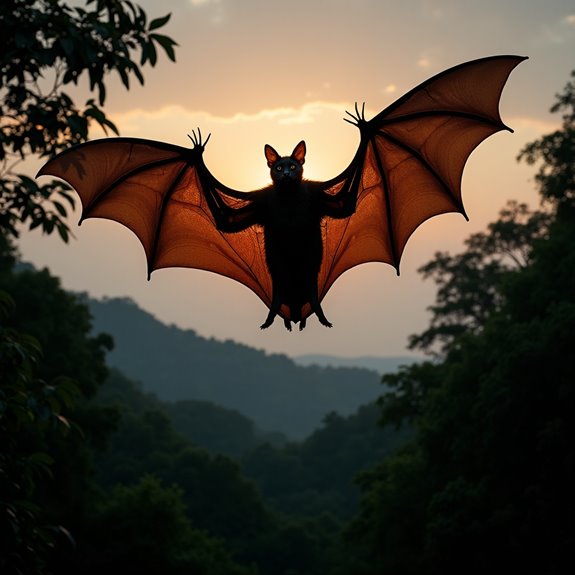
Although myths often embellish the truth, the legend of the Ahool—the giant bat of Java—has sparked intrigue and curiosity among cryptozoologists and enthusiasts alike. This colossal creature is said to boast a wingspan of up to ten feet, resembling both a bat and a flying primate. Sightings of the Ahool mainly occur in the lush forests of Java, where locals claim to hear its haunting calls echoing through the jungle. Many believe the creature is a relic from a bygone era, perhaps a remnant of prehistoric megafauna. Despite the lack of conclusive evidence, the Ahool remains a fascinating subject for those fascinated by the mysteries of the natural world, blending folklore with the hopeful pursuit of discovering hidden creatures.
Ancient Javanese Folklore References
While the legend of the Ahool has captivated modern audiences, its roots run deep in ancient Javanese folklore. Tales of this giant bat have been passed down through generations, often woven into the fabric of local myths and legends. Elders recount stories where the Ahool serves as both a guardian of the forests and a harbinger of misfortune. Some say it emerges during the witching hour, its eerie cry foretelling a storm. Others believe that sightings of the Ahool indicate spiritual disturbances. These narratives reflect cultural beliefs about nature and the supernatural, emphasizing the connection between the environment and community well-being. Consequently, the Ahool remains a symbol of intrigue and reverence in Javanese history.
Notable Cases or Sightings
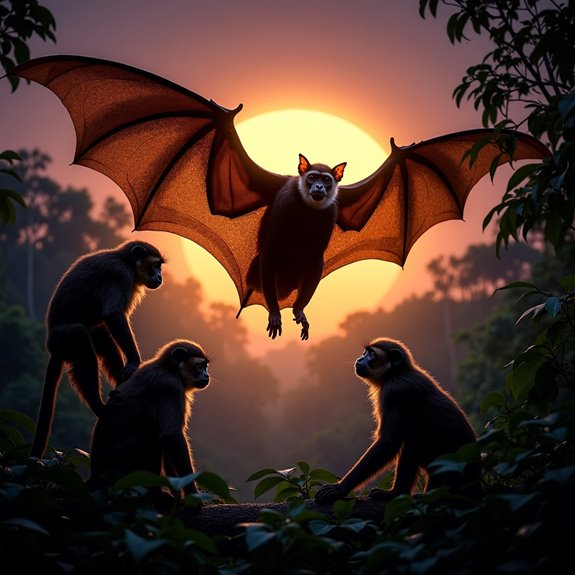
Over the years, there have been several notable sightings of the Ahool that have fueled both fear and fascination. In the 1920s, a group of villagers reported seeing a massive creature gliding silently over the trees near the Garut mountains. They described its enormous wingspan and distinctive, eerie cry. Another significant encounter occurred in the 1970s when a hiker claimed to spot the creature soaring above him while trekking through the dense jungles of Java. Witnesses described a bat-like form, dark and shadowy against the twilight sky. These accounts, though often met with skepticism, have added to the legend of the Ahool. They continue to inspire interest, bringing together researchers and thrill-seekers enthusiastic to uncover the truth behind this elusive giant.
Common Theories or Explanations
Researchers and enthusiasts have generated various theories to explain the sightings of the Ahool. Some suggest that this creature could be an undiscovered species of bat, possibly a giant variant of the flying fox. Others believe it’s an exaggerated version of known wildlife, fueled by local folklore and the human tendency to amplify stories. Skeptics argue that many sightings stem from misidentifications of more common animals, like large birds or even other bat species. Alternatively, some propose that the Ahool could symbolize the region’s environmental folklore, rooted in cultural narratives about nature’s mysteries. Overall, these theories reflect a mix of scientific inquiry, local legend, and the challenge of distinguishing facts from fiction regarding this elusive creature.
Frequently Asked Questions
What Is the Expected Lifespan of an Ahool?
Experts estimate that the ahool could live around 20 to 30 years in the wild. Its longevity is influenced by environmental factors, predation, and availability of food, which all play significant roles in its lifespan.
Are There Any Scientific Studies on the Ahool?
There haven’t been any extensive scientific studies on the Ahool. Researchers often dismiss it as a legend, focusing instead on confirmed species. Curiosity about its existence remains, fueling interest among cryptozoologists and enthusiasts alike.
How Does the Ahool Hunt for Food?
The Ahool hunts at night, using echolocation to detect prey. It flies silently through the forest, listening for sounds made by insects or small animals, swooping down swiftly to catch its dinner with precision.
What Habitats Do Ahools Prefer in Java?
Ahools prefer dense, tropical rainforests with ample trees for roosting and abundant food sources. They thrive in Java’s lush ecosystems, where humidity and vegetation provide the ideal environment for their survival and hunting activities.
Can the Ahool Be Dangerous to Humans?
The Ahool isn’t generally dangerous to humans. It prefers to avoid interactions and typically remains in its habitat. However, like any large creature, it could defend itself if provoked or threatened.

Do Lake Monsters Exist on Every Continent?

Is Bigfoot Roaming the Pacific Northwest?

The Mongolian Death Worm: Fact or Desert Legend?
About The Author
