The Battle of Nuremberg: UFOs in the 1500s?
The Battle of Nuremberg presents a fascinating intersection of early military history and unexplained celestial events. In the early 1500s, witnesses claimed to see strange orbs and flying crafts ominously hovering above the battlefield. This occurred during a period of significant astronomical inquiry, prompting questions about the nature of these sightings. Were they simply reflections of a starry sky, or something more extraordinary? The answers might reveal intriguing insights into both history and human perception.
Introduction
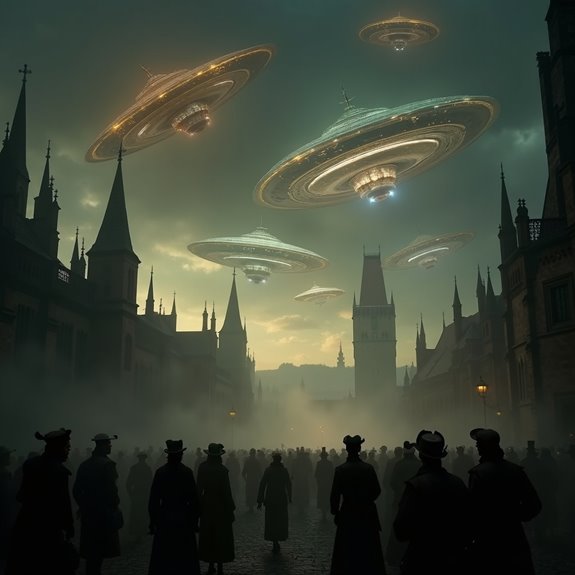
While many associate the term “UFO” with modern sightings, the intriguing possibility of unidentified flying objects existed long before the 20th century. Historical accounts suggest that unexplained aerial phenomena captured people’s imaginations across various cultures and eras. One significant incident occurred during the early 1500s in Nuremberg, Germany, where witnesses reported witnessing strange objects in the sky. These sightings, described as brilliant orbs and unexpected crafts, prompted debates and curiosity among townsfolk and authorities alike. The reports indicated that people were bewildered and fearful, raising questions about what these mysterious objects could be. This early fascination with UFOs laid the groundwork for future investigations into unexplained aerial phenomena, proving that humanity’s quest for understanding the skies has deep historical roots.
Early 1500S Astronomical Observations
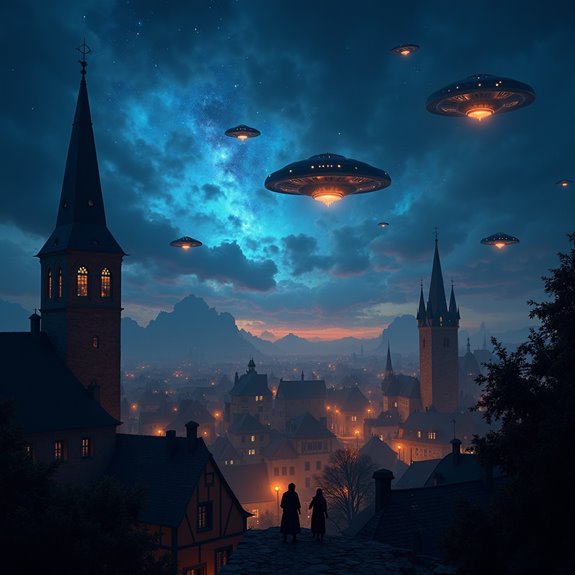
The early 1500s marked a time of significant advancement in astronomical observations, with scholars and enthusiasts increasingly fascinated by the cosmos. Figures like Copernicus began challenging the geocentric model, advocating for heliocentrism, which sparked intense debates. Observatories, though rudimentary, emerged across Europe, enabling more systematic observations of celestial phenomena. Tools like the astrolabe and quadrant became more prevalent, allowing for improved tracking of stars and planets. Additionally, detailed records of celestial events, such as lunar phases and planetary movements, started to surface. These developments laid the groundwork for future astronomy, shifting perspectives on humanity’s place in the universe. As curiosity expanded, people began pondering not only the heavens but also the unusual occurrences that might inhabit them, including potential visitors from other worlds.
Notable Cases or Sightings
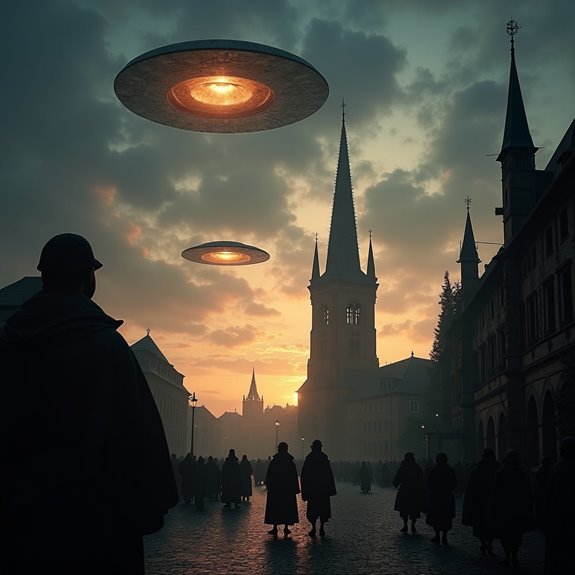
As interest in the cosmos grew during the early 1500s, several notable cases and sightings of unidentified flying objects began to capture the imagination of both scholars and the public. One prominent incident occurred in Nuremberg in 1561, where residents reported witnessing a dramatic aerial battle, claiming to see spheres, crosses, and tubular shapes engaging in a fiery conflict. Another significant sighting took place in Basel, Switzerland, where people described similar phenomena—glowing orbs moving erratically across the sky. These events were documented in town records and engravings, illustrating the local fascination and fear of these mysterious objects. Curiosity about these strange occurrences sparked debates about their origins, leaving a lasting impact on the collective consciousness of the time.
Common Theories or Explanations
Many theories emerged to explain the mysterious sightings of UFOs during the 1500s, particularly the remarkable events in Nuremberg. Some scholars suggest these were mere atmospheric anomalies, like comets or meteorological phenomena, misinterpreted by the superstitious populace. Others argue that the sightings stemmed from military conflicts, with the chaotic skies reflecting the effects of battle smoke or fire. Paranormal enthusiasts often claim these events indicate extraterrestrial visitations, suggesting advanced civilizations observed Earth. Historical records also support the possibility of pranks or exaggerated tales, as rumors spread rapidly in tight-knit communities. Ultimately, the blend of historical context, cultural beliefs, and limited scientific understanding at the time shaped various interpretations of these enigmatic occurrences, leaving many questions unanswered.
Frequently Asked Questions
Were There Any Historical Documents About UFOS in the 1500S?
Historical documents from the 1500s reference unusual aerial phenomena, but they don’t definitively confirm UFOs as understood today. Instead, they often describe natural occurrences, religious interpretations, or misunderstandings of the skies.
How Did People During That Time Perceive UFO Sightings?
People during that time perceived UFO sightings as divine omens or supernatural phenomena. They often attributed these occurrences to angels or demons, reflecting their limited understanding of the natural world and reliance on religious interpretations.
Did Other Countries Report Similar UFO Sightings in the 1500S?
Yes, other countries reported similar UFO sightings in the 1500s. Historical accounts from regions like Italy and England noted strange aerial phenomena, suggesting that these sightings weren’t limited to just one area, reflecting a wider mystery.
Were There Any Scientific Responses to These Sightings in the 1500S?
During the 1500s, scientific responses to UFO sightings were limited. Most scholars dismissed them as superstitions or miraculous phenomena, lacking the empirical methods that characterize modern science. Curiosity, rather, spurred theories and folklore rather than rigorous investigation.
How Did the Battle of Nuremberg Influence Future UFO Theories?
The Battle of Nuremberg inspired future UFO theories by suggesting extraterrestrial involvement in historical events. Scholars began interpreting similar sightings as potential alien encounters, forever altering perceptions of unidentified flying objects throughout history.

The Chilean Navy UFO Submersible Case

The Shag Harbor UFO: New Evidence

Are Some UFOs Really Time Travelers?
About The Author
