What Secrets Are Hidden in the Great Zimbabwe Ruins?
The Great Zimbabwe ruins, with their weathered stone walls and winding paths, whisper tales of a vibrant civilization long past. Once a bustling trading hub, these remnants hint at untold wealth and intricate cultural exchanges. Yet, stories of the “Invisible People” guarding the site linger, inviting curiosity. What could these legends reveal about the lives of those who thrived here? The answers lie buried within the shadows of history.
Introduction
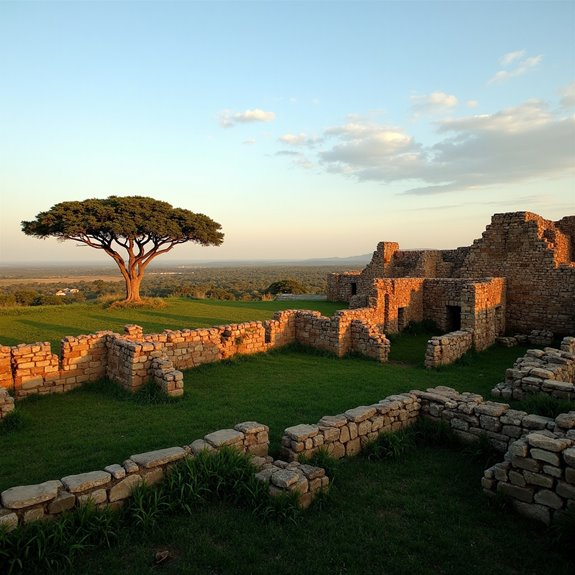
Nestled in the heart of Zimbabwe, the Great Zimbabwe ruins stand as a tribute to an ancient civilization that thrived long ago. Once the center of a powerful kingdom, these majestic stone structures disclose the ingenuity and skill of their builders. Rising high above the landscape, the walls and towers of the Great Enclosure and the Hill Complex demonstrate a mastery of dry-stone construction without mortar. Surrounded by breathtaking plains, the site captivates visitors with its rich history and cultural significance. Today, it serves as a reminder of the complexities of prehistoric societies. Archaeologists continue to uncover clues about life in Great Zimbabwe, shedding light on its past and revealing secrets tied to its architectural marvels and the people who once inhabited this remarkable place.
Ancient Trading Hub Significance
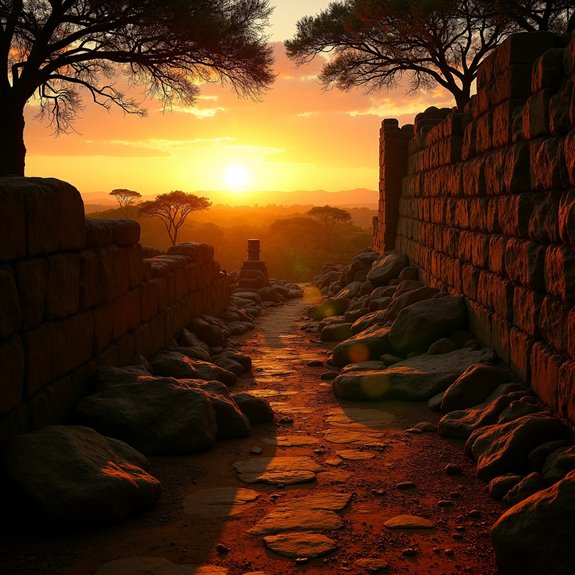
The Great Zimbabwe ruins served as an essential trading hub during its peak from the 11th to the 15th centuries, connecting distant lands and cultures. Merchants exchanged gold, ivory, and cattle with visitors from places as far as Asia and the Middle East. This vibrant trade network fostered economic prosperity and cultural exchange, allowing for the spread of ideas and technologies. Great Zimbabwe’s strategic location near abundant resources, such as metal ores and fertile lands, further bolstered its significance in regional commerce. The thriving marketplace attracted traders and craftspeople, who established a lively community. Consequently, the ruins highlight not only the economic prowess of its society but also its integral role in shaping interactions between diverse civilizations throughout history.
Notable Cases or Sightings
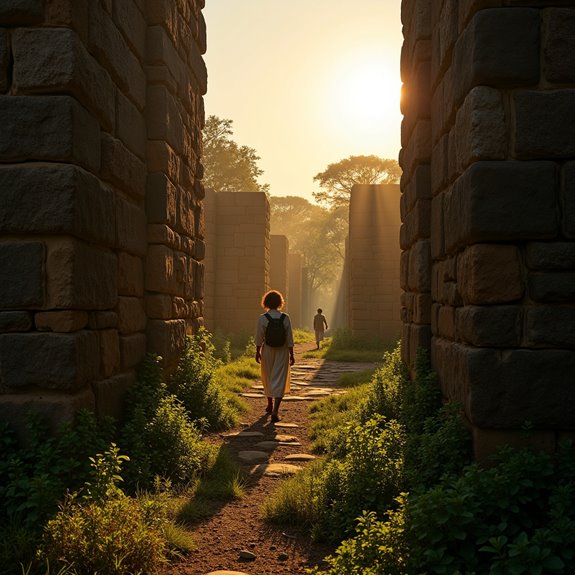
How can the remnants of Great Zimbabwe evoke such intrigue and mystery? Numerous sightings and notable cases contribute to its enigmatic allure. In the early 1900s, explorers reported discovering ancient artifacts suggesting a complex civilization, igniting debates among historians. In the 1980s, a team of archaeologists unearthed objects made of copper and gold, further hinting at the wealth and sophistication of the inhabitants. More recently, local legends speak of the “Invisible People,” described as guardians of the ruins, sparking interest among paranormal enthusiasts. Visitors often recount experiences of unexplained energy or sights that deepen the mystery. Each discovery or anecdote adds layers to the narrative surrounding Great Zimbabwe, ensuring its status as a compelling archaeological destination.
Common Theories or Explanations
While many theories abound, researchers generally agree that Great Zimbabwe was a center of trade and culture during its peak from the 11th to the 15th centuries. This ancient city likely facilitated commerce between the interior of Africa and coastal trading cities like Sofala, where gold and ivory were exchanged for textiles and manufactured goods. Another theory posits that Great Zimbabwe served as a political and religious hub, with power structures evident in the impressive stone structures. Additionally, scholars suggest that its inhabitants were skilled metalworkers, contributing to regional trade networks. The decline of Great Zimbabwe remains a topic of debate, with factors such as environmental changes and political strife often cited as potential causes. Each explanation contributes to a richer understanding of this historical site.
Frequently Asked Questions
What Architectural Techniques Were Used in the Great Zimbabwe Construction?
The builders of Great Zimbabwe utilized dry-stone construction techniques, fitting granite blocks without mortar. They implemented curved walls and massive enclosures, showcasing advanced skills in structural design and adaptation to the local landscape’s resources.
Are There Any Recorded Archaeological Excavations at the Site?
Yes, archaeologists have conducted various excavations at Great Zimbabwe, uncovering artifacts, architecture, and evidence of a complex society. These digs reveal insights about trade, culture, and the sophisticated engineering techniques employed in the ancient city.
How Does the Climate Affect the Preservation of the Ruins?
The climate plays a vital role in preserving the ruins; moisture can cause erosion, while extreme heat leads to cracking. Both conditions threaten the structural integrity, making effective conservation efforts essential for long-term preservation.
What Local Legends or Myths Surround the Great Zimbabwe?
Local legends about Great Zimbabwe often tell of a powerful queen and the ancient spirit guardians protecting the site. These myths contribute to the area’s mystique, fascinating both locals and visitors alike with enchanting tales.
Are There Visitor Guidelines for Exploring the Site?
Visitors must follow guidelines when exploring. They should stay on marked paths, respect the ruins, avoid littering, and not disturb wildlife. It’s essential to maintain the site’s integrity while enjoying its historical significance and beauty.

The Hidden City of Caral

Is There a Hidden Civilization Beneath the Grand Canyon?
The Lost Mines of the Pharaohs
About The Author
