The Lost City of the Monkey God
Deep within Honduras’ Mosquitia rainforest, archaeologists have uncovered stone plazas and pyramids that match centuries-old indigenous tales of a lost metropolis. Local legends spoke of Hueitapalan, the “White City,” where ancient priests supposedly worshipped a monkey god among vast stone structures. These myths weren’t just stories. Recent expeditions have confirmed a sophisticated civilization once thrived there, though its sudden abandonment remains unexplained.
Introduction

When Spanish conquistador Hernán Cortés first heard whispers of a magnificent city deep in the Honduran rainforest—a place where nobles ate from golden plates and giant monkey sculptures guarded vast treasures—he couldn’t resist the allure. In 1526, he wrote to Emperor Charles V about this fabled “Ciudad Blanca,” or White City, though he’d never find it himself. For centuries, explorers chased the legend through Honduras’s treacherous Mosquitia region, where dense jungle, deadly snakes, and tropical diseases claimed many lives. Indigenous peoples spoke of “Hueitapalan,” a cursed city abandoned by their ancestors. The myth persisted through generations, inspiring countless expeditions that returned empty-handed or didn’t return at all. Modern archaeologists dismissed it as fantasy until cutting-edge technology would prove everyone wrong.
Ancient Honduras Legends Emerged
Long before Cortés penned his letter to the Spanish crown, the indigenous Pech and Tawahka peoples had woven elaborate tales about a sacred metropolis hidden in the jungle’s heart. They called it the White City, or Casa Blanca, where their ancestors had fled to escape Spanish conquistadors. The legends spoke of massive stone structures and a giant monkey god statue that protected the city’s inhabitants.
These oral traditions persisted through centuries, passed down through generations of storytellers. Local hunters and rubber tappers occasionally reported glimpsing white ramparts through dense canopy, though they’d never venture closer. The city supposedly contained vast treasures and held profound spiritual significance. According to tradition, anyone who entered would either die or emerge cursed, ensuring the site’s isolation from outsiders.
Notable Cases or Sightings
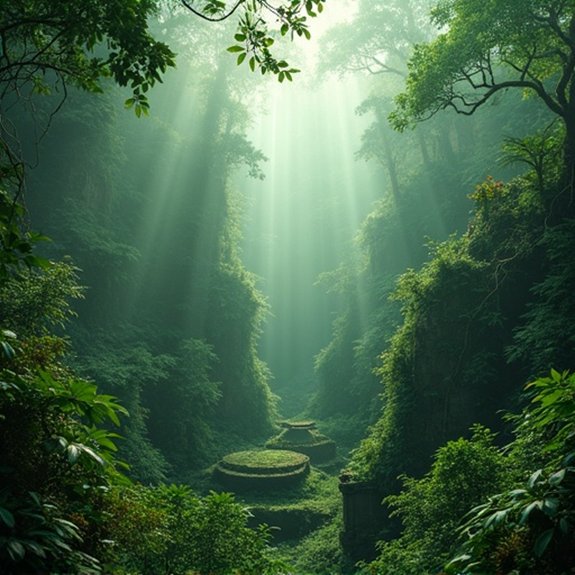
Since the early 20th century, explorers and adventurers have mounted dozens of expeditions searching for the legendary White City, producing tantalizing but inconclusive evidence. In 1940, explorer Theodore Morde claimed he’d found the lost city in Honduras’s Mosquitia region but died before revealing its location. Charles Lindbergh reported seeing white ruins from his plane while flying over eastern Honduras in 1927.
Steve Elkins’s 2012 expedition used advanced LIDAR technology to scan the rainforest canopy, revealing massive earthworks and structures. Three years later, archaeologists confirmed the discovery of an untouched city with plazas, pyramids, and stone sculptures. They’ve uncovered cache offerings including carved vessels depicting were-jaguars. While researchers haven’t definitively linked this site to the Monkey God legend, it’s proven that sophisticated civilizations thrived in Honduras’s remote jungles.
Common Theories or Explanations
Although archaeologists debate whether the discovered ruins represent the fabled White City, most experts agree the Monkey God legend likely stems from real pre-Columbian settlements that flourished in Honduras’s interior. These civilizations vanished around 1500 CE, possibly due to European diseases, leaving behind elaborate stone structures that locals later mythologized.
Some researchers propose the legend merged multiple archaeological sites into one mythical location. Others suggest Spanish colonizers invented tales of golden cities to justify expeditions. Anthropologists note that indigenous groups often created protective myths around sacred sites, warning outsiders of curses to prevent desecration.
The 2015 discovery in T1 valley doesn’t definitively prove it’s the legendary city, but it confirms sophisticated societies existed where oral traditions claimed they did.
Frequently Asked Questions
What Modern Technology Was Used to Discover the Site in 2012?
Researchers used LiDAR (Light Detection and Ranging) technology mounted on aircraft to penetrate the dense rainforest canopy. The laser scanning revealed extensive ancient ruins and earthworks hidden beneath Honduras’s Mosquitia jungle, confirming the site’s existence.
What Artifacts Were Recovered From the Excavation Sites?
Archaeologists recovered carved stone vessels, metates for grinding, ceramic jars, and most importantly, a cache of ritual stone sculptures depicting animals and human-animal hybrid figures. They’ve dated these artifacts to approximately 1000-1500 CE.
Which Diseases Threatened the Expedition Team Members?
Leishmaniasis threatened the expedition team members after sand fly bites infected them during their jungle exploration. The parasitic disease caused severe skin lesions, and many team members required extensive medical treatment following their return from Honduras.
How Much Did the Expedition Cost to Organize and Execute?
The expedition’s exact cost wasn’t publicly disclosed in detail. However, it involved millions of dollars in funding from private donors, documentary filmmakers, and the Honduran government who’d invested heavily in the archaeological search and exploration.
What Conservation Efforts Are Protecting the Site From Looting Today?
Honduras’s government has stationed military forces at the site, while archaeologists haven’t disclosed its exact location. They’ve also created buffer zones and work with local communities to monitor access and prevent illegal excavations nearby.

Mysterious Megaliths of the World

The Baghdad Battery: Evidence of Ancient Electricity?

The Ruins Beneath the Bermuda Triangle
About The Author
