Hidden Chambers Beneath the Great Pyramid
Scientists have discovered mysterious voids within the Great Pyramid of Giza that shouldn’t exist according to traditional architectural plans. The ScanPyramids project‘s detection of a massive cavity above the Grand Gallery has sparked intense debate among Egyptologists. These hidden spaces might’ve served purposes that modern researchers don’t yet understand. What ancient secrets lie sealed within these chambers, and why did the pyramid’s builders conceal them for over four thousand years?
Introduction
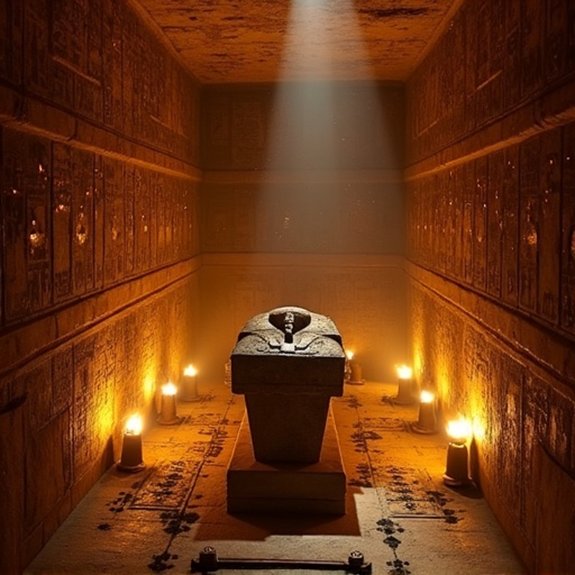
For over 4,500 years, the Great Pyramid of Giza has stood as humanity’s most enigmatic architectural achievement, and recent discoveries suggest it’s still keeping secrets. Scientists using advanced scanning technologies have detected mysterious voids and anomalies deep within the pyramid’s limestone core. These findings challenge what archaeologists thought they knew about the monument’s internal structure.
The pyramid, built for Pharaoh Khufu around 2560 BCE, contains three known chambers: the King’s Chamber, Queen’s Chamber, and an unfinished subterranean chamber. However, cosmic ray imaging and thermal scanning have revealed previously unknown spaces that weren’t accessible through traditional exploration methods. These hidden areas could contain burial goods, construction materials, or architectural features that’ll reshape understanding of ancient Egyptian engineering. Each discovery raises more questions about the pyramid’s true purpose and construction.
Ancient Egyptian Burial Practices
While modern archaeologists continue uncovering hidden spaces in the Great Pyramid, they’re drawing on extensive knowledge of how ancient Egyptians prepared their dead for the afterlife. The mummification process removed internal organs, which priests placed in canopic jars. Embalmers then dried the body with natron salt for forty days before wrapping it in linen strips.
Pharaohs received elaborate burials with treasures they’d need in the afterlife—gold artifacts, furniture, food, and weapons. Priests sealed these items in burial chambers alongside the mummy. They carved hieroglyphic spells on walls to guide the deceased through the underworld. The pyramids themselves served as eternal resting places designed to protect the pharaoh’s body and possessions from tomb robbers while ensuring his successful journey to join Ra in the heavens.
Notable Cases or Sightings
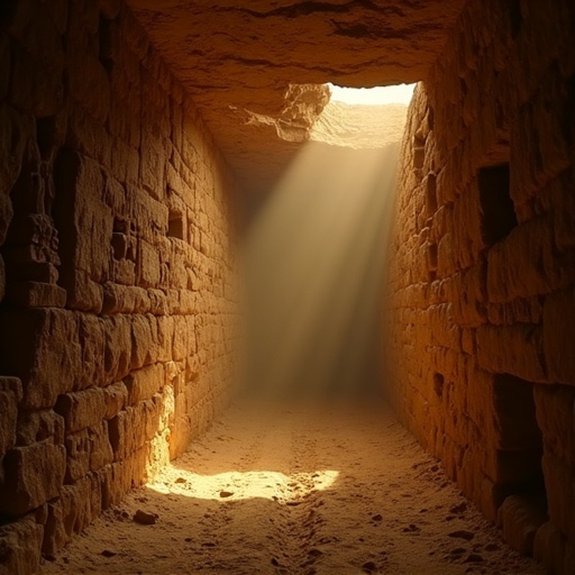
Discovery teams have documented several significant findings within the Great Pyramid over the past two centuries. In 2017, the ScanPyramids project detected a large void above the Grand Gallery using cosmic-ray imaging technology. This chamber spans at least 30 meters and represents the pyramid’s first major internal discovery since the 1800s.
French architects Gilles Dormion and Jean-Yves Verd’hurt identified anomalies suggesting hidden rooms behind the Queen’s Chamber walls in 1986. Their ground-penetrating radar revealed unexplained cavities that haven’t been fully explored.
In 2002, robots discovered mysterious copper handles and limestone doors in the pyramid’s narrow shafts. These findings sparked theories about additional sealed chambers. Most recently, thermal imaging has shown temperature variations along the pyramid’s eastern wall, indicating possible unknown passages behind the stone blocks.
Common Theories or Explanations
Although archaeologists have proposed numerous explanations for these hidden spaces, three main theories dominate scientific discussion. The structural support theory suggests builders intentionally created voids to redistribute weight and prevent the pyramid’s collapse. Engineers point to similar techniques in other ancient monuments where empty spaces reduce stress on lower chambers.
The construction logistics theory argues these chambers served practical purposes during building. Workers might’ve used them as storage areas for tools or as temporary passages for moving materials. Once construction ended, they’d seal these spaces permanently.
The symbolic purpose theory proposes religious significance. Some Egyptologists believe the chambers represent stages of the pharaoh’s journey through the afterlife. Ancient texts describe hidden rooms containing spiritual artifacts meant to assist the deceased king’s transformation into a deity.
Frequently Asked Questions
What Modern Technologies Are Used to Detect Hidden Chambers Without Damaging the Pyramid?
Scientists use cosmic ray muon radiography to scan the pyramid’s interior, detecting density variations that reveal voids. They’ve also employed ground-penetrating radar, thermal imaging cameras, and ultrasonic testing to map hidden spaces non-invasively.
Can Tourists Visit Any of the Discovered Hidden Chambers Inside the Pyramid?
No, tourists can’t visit the recently discovered hidden chambers. They’re inaccessible without drilling through the pyramid’s structure, which Egypt’s authorities won’t permit. Visitors can only explore the Grand Gallery, King’s Chamber, and Queen’s Chamber.
How Much Would a Full Archaeological Excavation of Hidden Chambers Cost?
Experts estimate a thorough archaeological excavation of the Great Pyramid’s hidden chambers would cost $50-100 million. They’d need advanced technology, international permits, years of careful work, and specialized teams to preserve the ancient structure.
Are There Any Legal Restrictions on Exploring New Chambers in the Pyramid?
Egypt’s Ministry of Tourism and Antiquities strictly controls all pyramid exploration. Researchers can’t access new chambers without government permits, archaeological oversight, and Supreme Council of Antiquities approval. International agreements also protect the site’s cultural heritage.
What Safety Risks Do Archaeologists Face When Accessing Newly Discovered Chambers?
Archaeologists face oxygen depletion, structural collapse, and toxic gas accumulation when entering sealed chambers. They’re also at risk from unstable ancient masonry, extreme temperatures, and potential fungal spores that’ve grown in millennia-old enclosed spaces.

The Sunken City Legends: Ys, Lemuria
The Indus Valley’s Forgotten Contributions
The Underground Catacombs of Tokyo
About The Author
