The Lost Temple of Tikal
Guatemala’s dense jungle conceals one of archaeology’s most perplexing sites. Tikal’s massive limestone pyramids pierce through the canopy, yet they’ve guarded their secrets since the city’s mysterious abandonment around 900 AD. Despite decades of excavation, researchers can’t fully explain how the Maya built these towering structures without modern tools or why they suddenly left. The answers lie buried beneath centuries of vegetation and unanswered questions.
Introduction
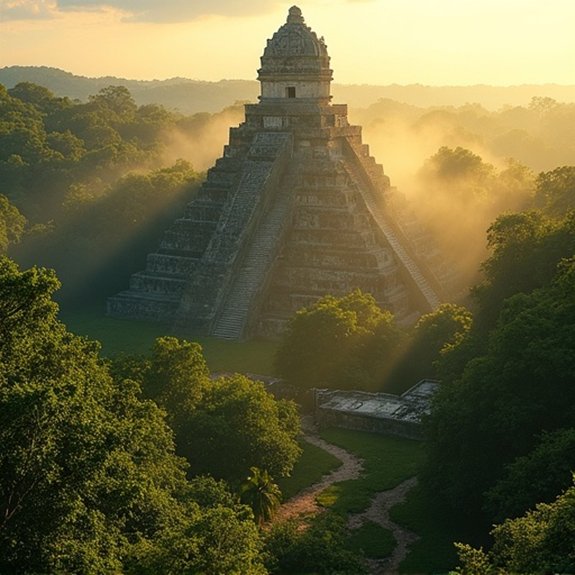
Archaeologists haven’t found this temple despite extensive excavations since the 1950s. Ground-penetrating radar has revealed numerous underground anomalies, but dense vegetation and flooding complicate investigations. Dr. Maria Santos, who’s led excavations for fifteen years, believes the temple’s deliberately hidden. She’s convinced ancient priests sealed it during Tikal’s mysterious abandonment around 900 CE, protecting knowledge they deemed too powerful for future generations.
Maya Civilization’s Architectural Pinnacle
Tikal’s surviving structures showcase the Maya’s extraordinary engineering abilities at their zenith. The city’s six limestone pyramids rise above the jungle canopy, with Temple IV reaching 65 meters—making it one of the tallest pre-Columbian structures in the Americas. These monuments weren’t just tall; they demonstrated sophisticated architectural planning.
The Maya built these temples without metal tools, draft animals, or wheels. They’d quarried massive limestone blocks using harder stones and wooden wedges, then transported them using log rollers and human labor. Each pyramid’s stepped design distributed weight perfectly, ensuring structural stability for over a millennium. The temples’ corbelled arches, though narrower than Roman arches, proved remarkably durable. Interior chambers featured precise acoustics that amplified priests’ voices during ceremonies, while exterior staircases aligned with astronomical events.
Notable Cases or Sightings
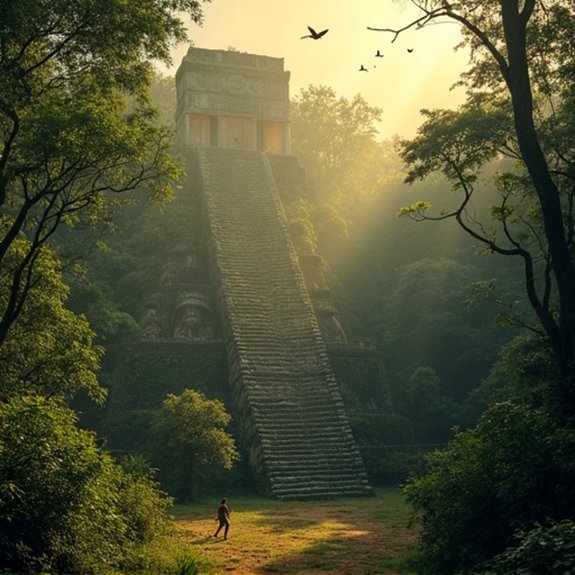
When did modern explorers first stumble upon Tikal’s hidden temples? Spanish missionary Andrés de Avendaño likely encountered the site in 1696, though he didn’t document it extensively. The ruins remained largely forgotten until 1848, when Modesto Méndez and Ambrosio Tut officially rediscovered them. Their expedition produced the first detailed reports that reached the outside world.
In 1881, Alfred Maudslay’s pioneering archaeological work brought Tikal international attention. He’d mapped structures and created precise drawings that revealed the site’s complexity. Sylvanus Morley’s 1914 expedition uncovered numerous stelae and decoded hieroglyphic inscriptions. The University of Pennsylvania’s extensive project from 1956-1970 excavated Temple IV, Tikal’s tallest structure at 65 meters. They’ve since identified over 3,000 structures dating from 600 BC to 900 AD.
Common Theories or Explanations
While multiple theories attempt to explain Tikal’s sudden abandonment around 900 AD, the drought hypothesis has gained the most scientific support. Recent paleoclimatic studies‘ve revealed severe droughts lasting decades during the Terminal Classic period. Tree ring data and sediment cores from nearby lakes confirm rainfall decreased by nearly 40% between 800 and 950 AD.
Archaeological evidence also supports warfare as a contributing factor. Defensive walls constructed hastily around Tikal’s ceremonial center suggest escalating conflicts with neighboring city-states. Some researchers believe overpopulation strained resources beyond capacity. The city’s population had swelled to approximately 100,000 inhabitants, depleting local forests and agricultural lands.
Environmental degradation likely compounded these problems. Deforestation for construction and fuel altered local rainfall patterns, while soil erosion reduced crop yields. Most scholars now agree multiple factors converged simultaneously.
Frequently Asked Questions
How Much Does It Cost to Visit Tikal National Park?
Visitors’ll pay approximately 150 Guatemalan Quetzals (about $20 USD) for foreign adults to enter Tikal National Park. They’ll find additional fees for sunrise or sunset tours, and Guatemalan citizens receive discounted rates at the entrance.
What Is the Best Time of Year to Visit Tikal?
The best time to visit Tikal is during the dry season from November to April. Visitors’ll enjoy clearer skies, less rain, and better wildlife viewing opportunities. December through February offers the coolest temperatures for exploring the ruins.
How Do I Get to Tikal From Guatemala City?
Travelers can fly from Guatemala City to Flores Airport, then drive 65 kilometers to Tikal. Alternatively, they’ll find overnight buses running directly to Flores, followed by shuttle services or tours that transport visitors to the archaeological site.
Are Guided Tours Available at the Temple Site?
Yes, guided tours are available at Tikal. Visitors can hire certified guides at the park entrance who’ll lead groups through the ancient Maya ruins. Private guides offer personalized experiences while group tours provide budget-friendly options.
What Should Visitors Bring When Exploring the Temple Ruins?
Visitors should bring water bottles, sunscreen, insect repellent, comfortable walking shoes, and rain gear. They’ll need hats for sun protection and cameras to capture the ruins. Snacks help maintain energy during the lengthy exploration.
Hidden Chambers Beneath the Great Pyramid

Myths of the Undersea Kingdoms

The Nine Unknown Men: Secret Society
About The Author
