Were the Inca More Advanced Than We Think?
The Inca Empire’s technological achievements have puzzled researchers for decades. They built earthquake-resistant structures without mortar, created agricultural systems that defied gravity, and engineered a road network spanning 25,000 miles across impossible terrain. Recent archaeological findings suggest they possessed knowledge that’s only now being understood. What modern scientists are discovering about Incan engineering and mathematics challenges everything previously assumed about pre-Columbian civilizations.
Introduction
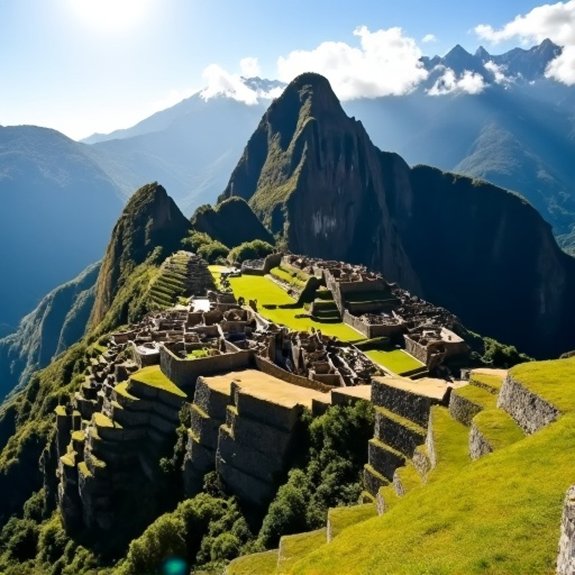
When Spanish conquistadors first encountered the Inca Empire in the 16th century, they’d stumbled upon one of history’s most sophisticated civilizations. The Incas controlled an empire stretching 2,500 miles along South America’s western coast, governing over 12 million people across diverse terrains. They’d built massive stone structures without mortar, developed complex agricultural systems on steep mountain slopes, and created an extensive road network spanning 25,000 miles.
Modern archaeologists continue uncovering evidence that challenges previous assumptions about Inca capabilities. Their achievements in engineering, medicine, and administration rival those of contemporary European and Asian civilizations. Yet many textbooks still underestimate their technological prowess. Recent discoveries reveal the Incas possessed advanced knowledge in metallurgy, astronomy, and mathematics that historians are only beginning to fully appreciate.
Rise From Andean Highlands
The Inca Empire‘s remarkable achievements emerged from humble beginnings in Peru’s Cusco Valley around 1200 CE. Initially, they were just one of many competing ethnic groups struggling for dominance in the harsh Andean environment. The turning point came under Pachacuti Inca Yupanqui‘s leadership in 1438, when he transformed the small kingdom into an expansionist state.
Within merely ninety years, they’d conquered vast territories stretching from modern-day Colombia to Chile. They accomplished this through strategic alliances, military prowess, and innovative administrative systems. The empire incorporated diverse cultures and environments, from coastal deserts to tropical rainforests. They didn’t simply conquer—they integrated local populations through reciprocal labor systems and religious tolerance. This rapid expansion from a single valley to controlling over 12 million people demonstrates organizational capabilities that surpassed many contemporary civilizations.
Notable Cases or Sightings
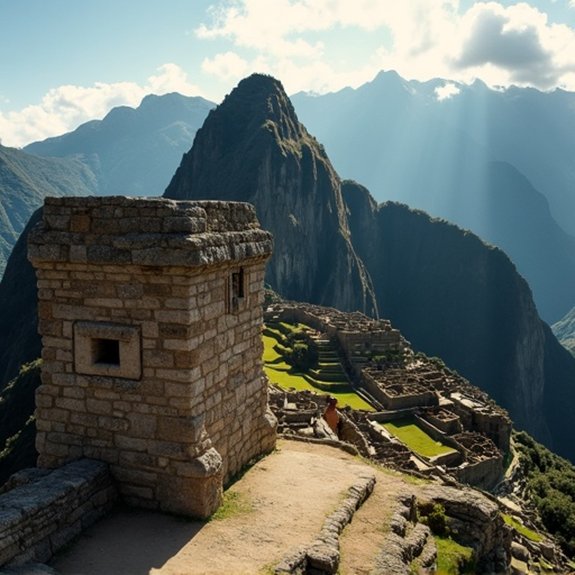
Although the Inca Empire left behind no written records, Spanish chroniclers documented remarkable achievements that continue to astound modern researchers. They’ve described Sacsayhuamán’s massive stone blocks, some weighing over 100 tons, fitted together so precisely that knife blades can’t slip between them. The fortress’s construction methods remain unexplained.
Chroniclers also reported the empire’s extensive road network spanning 25,000 miles through treacherous mountain terrain. They noted suspension bridges made from woven grass that supported entire armies crossing deep gorges.
Spanish accounts detail Machu Picchu‘s sophisticated water management system with sixteen fountains that still function today. They documented agricultural terraces built on impossibly steep slopes and the quipu system’s complex knot patterns that recorded numerical data with accuracy rivaling written records.
Common Theories or Explanations
Because modern engineers struggle to replicate Inca construction techniques even with advanced machinery, researchers have proposed several theories to explain their extraordinary achievements. Some archaeologists suggest the Inca possessed lost knowledge of stone-softening techniques using plant acids, which would’ve allowed them to shape massive blocks precisely. Others theorize they’d developed sophisticated mathematical systems beyond what’s currently understood, enabling complex architectural calculations.
Another explanation centers on their labor organization. The mit’a system might’ve functioned more efficiently than previously thought, coordinating thousands of workers with military precision. Some researchers propose the Inca had advanced surveying tools that haven’t survived in the archaeological record. A controversial theory suggests they inherited techniques from earlier, unknown civilizations. Most scholars agree their accomplishments likely resulted from combining multiple advanced methods rather than one revolutionary technique.
Frequently Asked Questions
How Did the Inca Construct Massive Stone Structures Without Modern Tools?
The Inca used bronze and stone tools to quarry massive blocks. They’d transport stones using ropes, wooden rollers, and ramps. Workers precisely shaped blocks through patient grinding and hammering, fitting them perfectly without mortar.
What Medical Procedures and Treatments Did Inca Healers Successfully Perform?
Inca healers successfully performed brain surgery through trepanation, achieving survival rates over 80%. They’d set broken bones, amputated limbs, and used coca leaves as anesthetic. Their pharmaceutical knowledge included treating malaria with cinchona bark.
How Accurate Was the Inca Calendar Compared to Modern Astronomical Measurements?
The Inca calendar tracked lunar months and solar years with remarkable precision. They’ve calculated the solar year at approximately 365.25 days, matching modern measurements. Their observations helped them predict eclipses and solstices with impressive accuracy.
What Metallurgical Techniques Did the Inca Use to Create Their Artifacts?
The Inca mastered smelting, alloying, and cold-working techniques to create bronze, silver, and gold artifacts. They’d developed sophisticated methods including lost-wax casting, sheet hammering, and precise joining without welding to produce intricate ceremonial objects.
How Did Inca Agricultural Terracing Systems Prevent Erosion and Maximize Yields?
The Inca’s terraces prevented erosion through stone retaining walls that trapped soil while their stepped design slowed water runoff. They’d layer gravel, sand, and topsoil to improve drainage and planted crops matching each terrace’s microclimate.

Are There Forgotten Civilizations Beneath the Ice?
The Hidden Tunnels of Teotihuacan

Did the Minoans Sail to the Americas?
About The Author
