The Megaliths of Sardinia
Sardinia’s ancient landscape holds over 7,000 stone towers that shouldn’t exist. The nuraghi stand without mortar, their basalt blocks fitted so precisely they’ve endured nearly 4,000 years. Archaeologists can’t agree on their true purpose. These Bronze Age megaliths predate Rome’s founding by a millennium, yet their builders left no written records. What drove the Nuragic people to create such monuments remains one of archaeology’s most compelling mysteries.
Introduction
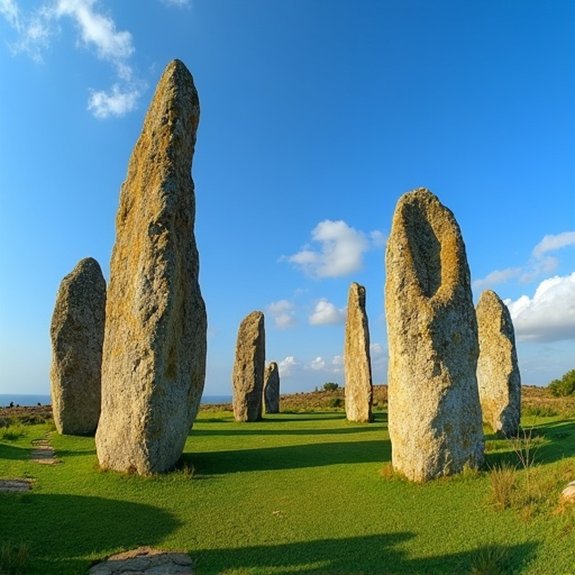
While ancient stone monuments dot landscapes across Europe, Sardinia’s megalithic structures stand apart for their sheer diversity and mysterious origins. This Mediterranean island hosts over 7,000 nuraghi—massive stone towers that’ve puzzled archaeologists for centuries. Beyond these iconic fortresses, Sardinia’s prehistoric builders created domus de janas (fairy houses carved into rock), sacred wells, and giant’s tombs with curved stone facades.
The Nuragic civilization flourished from 1800 BCE to 238 BCE, leaving behind architectural marvels that predate many famous European megaliths. They built without mortar, stacking basalt blocks with remarkable precision. These structures served multiple purposes: defense, worship, burial, and community gathering. Today’s researchers use advanced dating techniques and excavations to unravel how Bronze Age Sardinians developed such sophisticated building methods independently from mainland influences.
Bronze Age Construction Timeline
The earliest nuraghi appeared around 1800 BCE, marking the beginning of Sardinia’s most intensive building period. These tower fortresses multiplied rapidly across the island over the next three centuries. By 1500 BCE, builders had perfected the distinctive tholos dome technique, creating corbelled chambers without mortar.
The peak construction phase occurred between 1500 and 1200 BCE. During this era, Sardinians built over 7,000 nuraghi and expanded simple towers into complex multi-tower fortresses. They’d also construct sacred wells, giant’s tombs, and meeting huts around these central structures.
After 1200 BCE, new construction slowed dramatically. Communities focused on maintaining existing structures rather than building new ones. By 900 BCE, the nuragic civilization had shifted toward bronze production and trade, abandoning many sites.
Notable Cases or Sightings
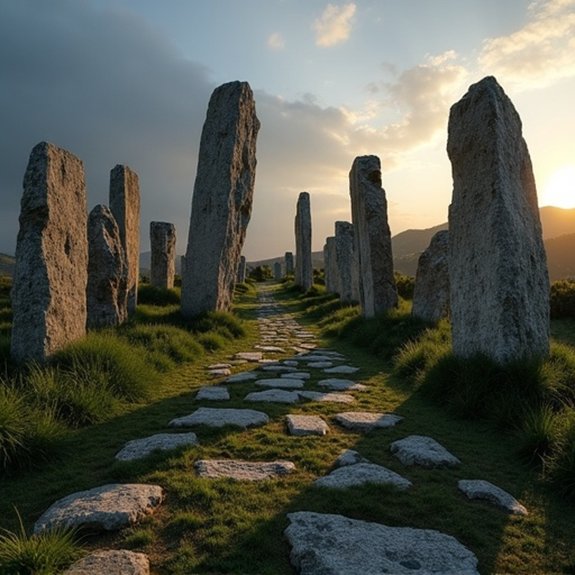
Although thousands of nuraghi dot Sardinia’s landscape, several structures stand out for their exceptional preservation and architectural complexity. Su Nuraxi di Barumini, a UNESCO World Heritage site, showcases a central tower surrounded by four corner towers and a fortified village. Archaeological excavations revealed it’s been continuously occupied from 1500 BCE to the 7th century CE.
Santu Antine in Torralba features three-story construction reaching nearly 20 meters high, with sophisticated corbelled ceilings and internal staircases. The Nuraghe Losa displays remarkable defensive innovations, including angled bastions and multiple courtyard levels. At Santa Cristina’s sacred well, Bronze Age builders achieved perfect geometric precision—the stairway’s inclination matches the moon’s maximum declination angle. These monuments demonstrate the nuragic civilization’s advanced engineering capabilities and astronomical knowledge.
Common Theories or Explanations
Given that archaeologists have studied Sardinia’s megalithic structures for over a century, they’ve developed several competing theories about the nuraghi’s original purpose. The fortress theory remains dominant—these towers served as defensive strongholds for Bronze Age chieftains controlling territory and trade routes. Their strategic positioning on hilltops and coastal areas supports this military interpretation.
Others propose they’re religious temples, citing the sacred wells and ritual objects found nearby. The astronomical observatory theory has gained traction since researchers discovered precise solar alignments in several complexes.
Some scholars argue nuraghi functioned as community centers combining multiple roles: fortification, grain storage, metalworking workshops, and meeting halls. The towers’ complex internal structures, with chambers, stairs, and corbelled ceilings, suggest they weren’t single-purpose buildings but adapted to various needs.
Frequently Asked Questions
Can Tourists Visit the Megalithic Sites Year-Round in Sardinia?
Yes, tourists can visit Sardinia’s megalithic sites year-round. Most outdoor sites remain accessible throughout all seasons, though spring and autumn offer the best weather conditions. Some museum exhibitions with megalithic artifacts might have seasonal schedules.
What Are the Entrance Fees for Major Megalithic Archaeological Sites?
Most major megalithic sites in Sardinia charge €3-5 for entrance, though many nuraghi and domus de janas remain free. The Barumini complex costs €12, while smaller sites typically request voluntary donations from visitors exploring them.
How Do Sardinian Megaliths Compare in Size to Stonehenge?
Sardinian megaliths are generally smaller than Stonehenge’s massive trilithons. While Stonehenge’s tallest stones reach 30 feet high, Sardinia’s nuraghi towers can exceed 60 feet, but individual menhirs and dolmens typically stand under 15 feet tall.
Are There Guided Tours Available in Multiple Languages?
Yes, tour operators offer guided visits to Sardinia’s megalithic sites in Italian, English, French, German, and Spanish. They’ll typically arrange multilingual guides through local archaeological cooperatives, especially for popular nuraghi like Barumini and Santu Antine.
Which Airports Offer the Closest Access to Megalithic Sites?
Cagliari-Elmas Airport provides the closest access to southern megalithic sites like Su Nuraxi. Olbia Costa Smeralda Airport’s ideal for northern sites including Coddu Vecchiu. Alghero-Fertilia Airport serves western monuments. Each airport’s within 90 minutes of major sites.
What Did the Lost Tribe of the Appalachian Mountains Leave Behind?
Is There Proof of Ancient High Technology?

The Myth of Mu: Lost Pacific Continent
About The Author
