The Lost City of Z (Amazon)
Deep in the Amazon rainforest lies a mystery that’s consumed explorers for nearly a century. Colonel Percy Fawcett believed he’d found evidence of an advanced prehistoric civilization hidden in the jungle’s depths. In 1925, he set off to prove it existed, taking his son and a friend into uncharted territory. They never returned. What Fawcett called the Lost City of Z has since sparked countless expeditions, wild theories, and unexpected archaeological revelations.
Introduction
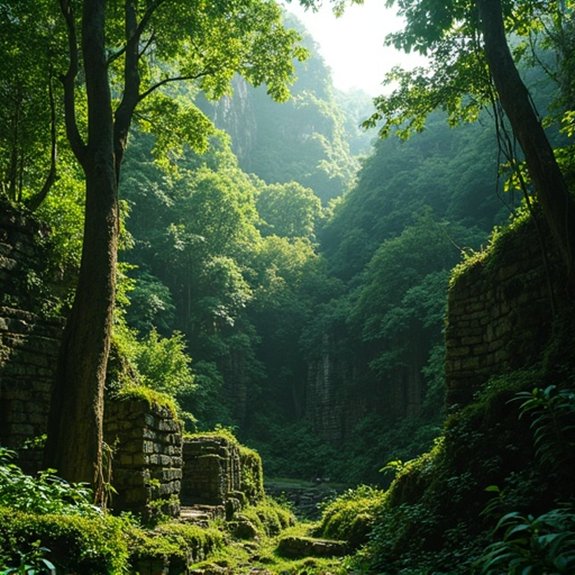
Deep in the Amazon rainforest, where the jungle canopy blocks out the sun and ancient mysteries lie buried beneath centuries of vegetation, explorers have long searched for a legendary metropolis known as the Lost City of Z. This fabled civilization’s supposedly captured the imagination of adventurers, archaeologists, and dreamers for over a century. British explorer Percy Fawcett coined the term “Z” in the 1920s, believing he’d found evidence of an advanced prehistoric society that once thrived in Brazil’s Mato Grosso region. He wasn’t alone in his conviction—Spanish conquistadors had reported gleaming cities and sophisticated indigenous cultures throughout the Amazon basin. Today’s archaeologists continue investigating whether these accounts reflect actual lost civilizations or embellished myths born from glimpses of existing indigenous settlements.
Percy Fawcett’s 1925 Expedition
After years of meticulous planning and securing funding from newspaper magnates and scientific societies, Percy Fawcett set out on his final expedition to find the Lost City of Z in April 1925. He’d convinced himself that an ancient, sophisticated civilization once thrived deep in the Mato Grosso region of Brazil. His party consisted of just three people: himself, his eldest son Jack, and Jack’s friend Raleigh Rimell.
The expedition departed from Cuiabá, traveling northeast into increasingly hostile territory. Fawcett’s last dispatch came from Dead Horse Camp on May 29, 1925. He wrote that they were crossing the Upper Xingu River and entering unexplored territory. The message warned that they might not be heard from for several months. They weren’t. Fawcett, Jack, and Rimell vanished without a trace, sparking one of exploration’s greatest mysteries.
Notable Cases or Sightings
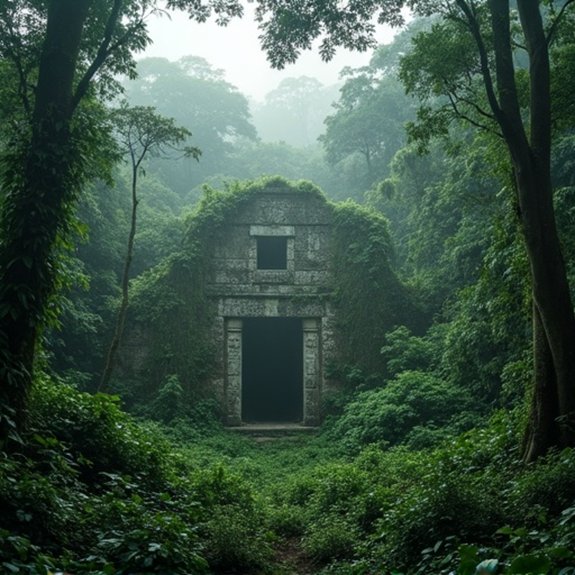
Fawcett’s disappearance triggered decades of search parties and alleged sightings that only deepened the mystery. In 1927, a nameplate from Fawcett’s trunk surfaced among the Bacairi tribe, though its authenticity remained disputed. Swiss trapper Stefan Rattin claimed he’d met an elderly white man matching Fawcett’s description in 1932, living as a tribal chief near the Tapirapé territory.
The Villas-Bôas brothers reported finding skeletal remains in 1951 that they believed belonged to Fawcett’s party, but forensic analysis later disproved this theory. Danish explorer Arne Falk-Rønne investigated rumors of a white boy living with indigenous tribes in 1968, supposedly Fawcett’s grandson. More recently, archaeologist Michael Heckenberger’s discovery of ancient earthworks and settlements in the upper Xingu region has reignited speculation that Fawcett’s lost city wasn’t entirely mythical.
Common Theories or Explanations
While dozens of expeditions have vanished trying to solve Fawcett’s disappearance, several theories have emerged to explain what happened to his party in 1925. The most accepted explanation suggests they were killed by indigenous Kalapalo tribespeople, though the tribe’s oral history claims they warned Fawcett about hostile neighbors before he proceeded anyway. Some researchers believe starvation or disease claimed them in the unforgiving rainforest. Others propose Fawcett intentionally disappeared to establish a commune based on mystical beliefs he’d developed. A controversial theory suggests he lived among indigenous peoples, possibly fathering children. Modern archaeological evidence indicates pre-Columbian settlements did exist in the region, validating Fawcett’s core belief. Satellite imagery has revealed geometric earthworks and sophisticated agricultural systems, proving the Amazon wasn’t the “virgin wilderness” once imagined.
Frequently Asked Questions
What Modern Technology Has Been Used to Search for the Lost City?
Modern explorers have used satellite imagery, LiDAR technology, and ground-penetrating radar to search for the lost city. They’ve employed GPS mapping, drone surveys, and remote sensing to identify ancient earthworks and settlements hidden beneath Amazon’s dense canopy.
How Much Funding Has Been Spent on Expeditions Searching for Z?
Specific funding amounts for Lost City of Z expeditions haven’t been publicly disclosed. Percy Fawcett’s searches relied on private backers and the Royal Geographical Society, while modern expeditions’ve received university grants and documentary production budgets.
What Indigenous Oral Traditions Exist About Ancient Amazonian Cities?
Indigenous peoples of the Amazon have long shared oral traditions describing “houses of the ancestors” and vast settlements connected by roads. They’ve spoken of sophisticated societies that thrived before European contact brought devastating diseases.
Which Museums House Artifacts From Fawcett’s Earlier Expeditions?
The Royal Geographical Society in London holds Fawcett’s surveying instruments and expedition journals. Brazil’s National Museum previously displayed his maps before the 2018 fire. The British Museum’s retained some pottery fragments he’d collected earlier.
What Permits Are Required to Conduct Archaeological Searches in the Area Today?
Archaeological searches in Brazil’s Amazon require permits from IPHAN (Brazil’s National Historical and Artistic Heritage Institute), FUNAI authorization for indigenous territories, and environmental licenses from IBAMA. Researchers must also obtain state-level archaeological permits.



About The Author
