The Antikythera Mechanism: Ancient Computer?
In 1901, sponge divers pulled bronze fragments from a Roman-era shipwreck near the Greek island of Antikythera. What they’d found wasn’t just ancient debris—it was a sophisticated mechanical device with interlocking gears that shouldn’t have existed in 100 BCE. Scientists have spent over a century trying to understand how ancient Greeks built what’s now considered the world’s first analog computer, and why this technology seemingly vanished without a trace.
Introduction
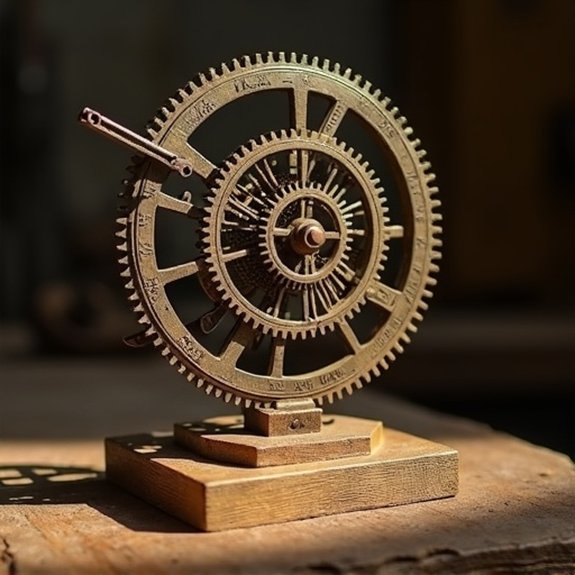
When sponge divers discovered a shipwreck off the Greek island of Antikythera in 1900, they couldn’t have imagined that among the salvaged treasures lay humanity’s oldest known analog computer. The bronze artifact, dating to approximately 100-50 BCE, initially appeared as a corroded lump of metal. Archaeologists stored it with other finds until researcher Valerios Stais noticed gear wheels embedded within the mass in 1902.
The mechanism’s true complexity didn’t emerge until decades later when X-ray technology revealed an intricate system of at least 30 meshing bronze gears. Scientists determined it tracked astronomical positions, predicted eclipses, and calculated calendar cycles with remarkable precision. This sophisticated device challenged assumptions about ancient Greek technological capabilities, proving they’d mastered complex mechanical engineering two millennia before similar instruments appeared in medieval Europe.
Greek Shipwreck Discovery 1901
The discovery that would reshape understanding of ancient technology began with Captain Dimitrios Kondos and his crew of sponge divers from the island of Symi. In April 1901, they’d anchored near Antikythera island to wait out a storm. Diving for sponges, Elias Stadiatis surfaced in panic, reporting he’d seen decomposed corpses and horses on the seabed. Kondos investigated personally and realized they’d found an ancient shipwreck.
The Greek government launched the first major underwater archaeological expedition in history. Over ten months, divers recovered bronze and marble statues, pottery, coins, and jewelry from the Roman-era vessel. Among the artifacts lay corroded bronze lumps that initially attracted little attention. These fragments, later recognized as the Antikythera Mechanism, would prove more significant than all the treasures combined.
Notable Cases or Sightings
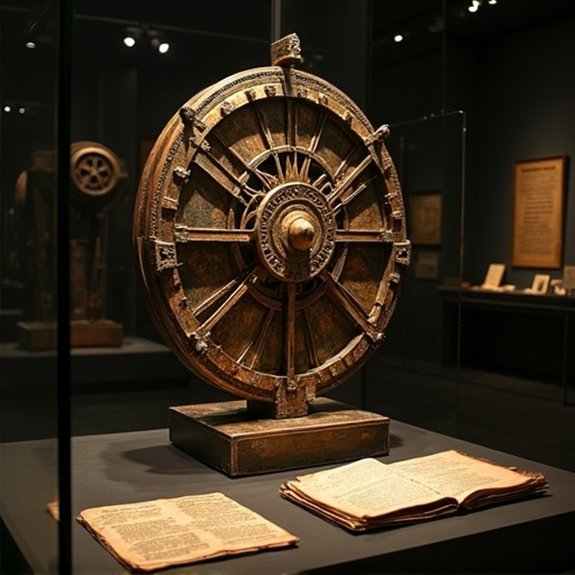
Although archaeologists initially cataloged the bronze fragments as unidentified artifacts, Valerios Stais, director of Athens’ National Archaeological Museum, spotted something extraordinary in 1902. He’d noticed gear wheels embedded in the corroded bronze, suggesting the object wasn’t merely decorative. His colleagues dismissed the finding, believing ancient Greeks couldn’t have created such complex machinery.
The mechanism remained largely forgotten until 1951 when British physicist Derek de Solla Price examined it closely. He’d recognized its astronomical significance and spent decades studying the device. In 1974, X-ray imaging revealed 27 gears inside the mechanism’s crushed remains. Later examinations by Michael Wright in the 1990s and the Antikythera Mechanism Research Project in 2005 uncovered additional gears and inscriptions. They’ve since identified 37 meshing bronze gears that calculated celestial movements with remarkable precision.
Common Theories or Explanations
Since researchers decoded the mechanism’s inscriptions and gear ratios, they’ve converged on its primary function as an astronomical calculator. The device tracked the 19-year Metonic cycle, predicted eclipses, and displayed planetary positions with remarkable accuracy. Its front dial showed the zodiac and Egyptian calendar, while rear dials calculated lunar and solar cycles.
Scientists believe Greek astronomers, possibly from Rhodes or Corinth, designed it around 100-50 BCE. The mechanism’s complexity suggests it wasn’t unique—other similar devices likely existed but didn’t survive. Some theorists propose Hipparchos influenced its design, given the mathematical sophistication required.
The gear system’s precision indicates advanced metalworking techniques and mathematical knowledge previously thought impossible for that era. It calculated astronomical phenomena decades in advance, serving navigational, agricultural, and religious purposes for ancient Greek society.
Frequently Asked Questions
How Much Would It Cost to Build a Replica Today?
Modern replicas of the Antikythera Mechanism cost between $50,000 and $500,000 depending on materials and precision. Hobbyists can build simplified versions for under $10,000, while museum-quality bronze replicas with full functionality cost considerably more.
Can Modern Smartphones Perform the Same Calculations?
Yes, smartphones can easily perform the Antikythera Mechanism’s astronomical calculations through apps. They’ll compute moon phases, eclipses, and planetary positions with far greater accuracy, using algorithms that replicate and surpass the ancient device’s capabilities.
Are There Any Museums Where I Can See It?
Yes, visitors can see the Antikythera Mechanism at the National Archaeological Museum in Athens, Greece. It’s displayed alongside reconstructions and explanatory materials that help viewers understand how this ancient device calculated astronomical positions and predicted eclipses.
What Materials and Tools Were Used to Create It?
Ancient craftsmen created it using bronze sheets and gears, working with hammers, chisels, files, and dividers. They’d have employed precise mathematical calculations and specialized metalworking techniques to cut the mechanism’s intricate teeth and inscriptions.
How Accurate Were Its Astronomical Predictions Compared to Modern Calculations?
The mechanism’s predictions were remarkably accurate for its time. It tracked lunar phases within two hours of modern calculations and predicted eclipses correctly. Its planetary position calculations showed small cumulative errors over decades but remained impressively precise.

What’s Lurking in the Pine Barrens of New Jersey?

The Lost City of El Dorado

The Hidden Pyramids of Antarctica
About The Author
