The Hidden Pyramid of Bosnia
In 2005, Semir Osmanagić made a startling claim that would divide the archaeological community. He’d discovered what he believed was Europe’s first pyramid hidden within Bosnia’s Visočica hill. The structure, if man-made, would predate Egypt’s pyramids by thousands of years. While mainstream scientists quickly dismissed the theory, thousands of visitors flock to the site annually. What they find there continues to fuel one of archaeology’s most heated debates.
Introduction
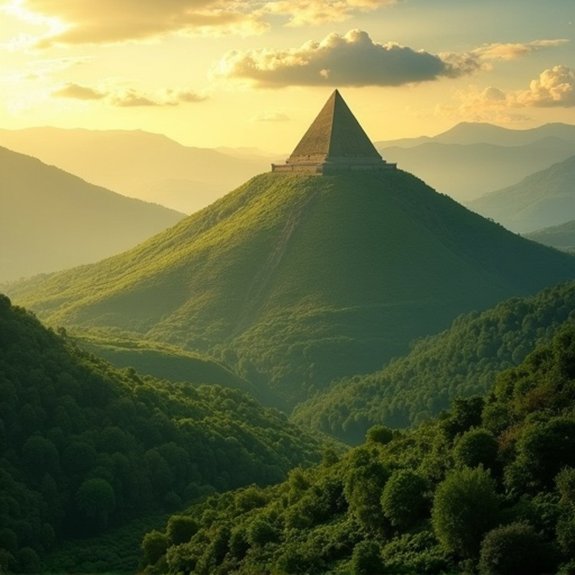
When archaeologist Semir Osmanagić announced in 2005 that he’d discovered ancient pyramids hidden beneath the hills of Bosnia, the archaeological world erupted in controversy. He claimed the Visočica hill near Visoko concealed Europe’s first pyramid, built over 12,000 years ago. Osmanagić named it the Bosnian Pyramid of the Sun and identified four additional pyramid structures nearby. His theory suggested an advanced prehistoric civilization constructed these monuments, predating Egypt’s pyramids by thousands of years.
The announcement sparked intense debate between supporters and skeptics. While Osmanagić’s team conducted excavations and reported finding tunnels, stone blocks, and ancient concrete, mainstream archaeologists dismissed the claims as pseudoscience. They’ve argued the hills are natural geological formations called flatirons. Despite scientific opposition, the site attracts thousands of tourists annually, transforming Visoko’s economy.
Discovery by Semir Osmanagić
While visiting Bosnia in April 2005, Houston-based businessman and amateur archaeologist Semir Osmanagić first noticed the unusual geometric shape of Visočica hill. The hill’s triangular faces and apparent orientation to cardinal points convinced him he’d found Europe’s first pyramid. Osmanagić claimed the 213-meter hill was actually a man-made structure built by an advanced prehistoric civilization over 12,000 years ago.
He quickly announced his discovery to international media, naming it the Bosnian Pyramid of the Sun. Osmanagić founded the Archaeological Park: Bosnian Pyramid of the Sun Foundation and began excavations in 2006. He identified four additional hills as pyramids, creating what he called the world’s largest pyramid complex. His claims attracted thousands of volunteers and tourists to Visoko, transforming the small town into a controversial archaeological destination.
Notable Cases or Sightings

Since Osmanagić’s initial announcement, several high-profile visitors and controversial findings have drawn attention to the Bosnian pyramids. Tennis champion Novak Djokovic visited the site in 2020, claiming he’d felt “special energy” inside the tunnels. Earlier, Mexico’s former president Vicente Fox toured the complex in 2017, expressing support for continued excavations.
Osmanagić’s team has reported discovering artificial concrete blocks weighing up to 40 tons and underground tunnel systems they’ve named Ravne. They’ve claimed the structures emit electromagnetic frequencies and ultrasound beams. In 2016, volunteers allegedly found a large stone sphere near Zavidovići, which supporters linked to the pyramid complex.
Despite mainstream archaeology’s rejection, thousands of tourists and volunteers visit annually. Some visitors report experiencing healing effects, while others document unexplained compass anomalies near the hills.
Common Theories or Explanations
The ongoing debate over these Bosnian hills has produced two sharply divided camps with competing explanations. Supporters of Semir Osmanagić’s pyramid hypothesis claim the structures show artificial construction, including precise angles, underground tunnels, and megalithic blocks. They’ve pointed to alleged energy beams, electromagnetic phenomena, and carbon dating of organic materials suggesting human activity thousands of years ago.
Scientists and archaeologists counter that Visočica Hill’s triangular shape results from natural geological processes. They’ve identified the “pyramid blocks” as fractured sedimentary layers called flatirons, common in the region’s geology. The tunnels aren’t ancient passages but old mining shafts or natural caves. Geologists explain the hill’s composition matches surrounding formations, created through tectonic activity and erosion over millions of years, not human engineering.
Frequently Asked Questions
Can Tourists Visit the Bosnian Pyramid Sites Today?
Yes, tourists can visit the Bosnian pyramid sites today. They’ll find guided tours, archaeological parks, and tunnels open to the public near Visoko. The sites attract thousands of visitors annually despite ongoing scientific debate about their authenticity.
How Much Does It Cost to Enter the Excavation Areas?
Visitors typically pay around 10-20 euros to enter the main excavation areas and tunnels. The Ravne tunnel complex charges separate admission fees, while some outdoor sites remain free. Prices vary by season and tour packages included.
What Safety Equipment Is Required for Tunnel Tours?
Visitors don’t need special safety equipment for standard tunnel tours. The site provides hard hats when required. They’ll need comfortable walking shoes with good grip, and it’s recommended they bring a light jacket for cooler tunnel temperatures.
Are There Hotels or Accommodations Near the Pyramid Hills?
Yes, visitors’ll find several hotels and guesthouses in nearby Visoko town, just minutes from the pyramid hills. The area’s developed tourist infrastructure includes budget hostels, mid-range hotels, and private apartments that cater to pyramid explorers.
Which Airports Are Closest to Visoko, Bosnia?
Sarajevo International Airport’s the closest major airport to Visoko, located just 30 kilometers away. Travelers can also fly into Zagreb Airport in Croatia or Belgrade Airport in Serbia, though they’re considerably farther from Visoko.

Are the Crystal Skulls of Mesoamerica Real or Forged?
The Prehistoric City Beneath the Amazon

The Atlantis of the Sands: Ubar
About The Author
