The Role of Totems in Tribal Mythology
Totems aren’t just carved poles or painted symbols—they’re living bridges between worlds that most people don’t understand. Anthropologists have documented thousands of tribal societies where these sacred emblems shape entire belief systems, govern social structures, and transmit knowledge across generations. Yet modern science can’t fully explain why identical totem animals appear in disconnected cultures separated by vast oceans. The answers lie deeper than anyone’s prepared to accept.
Introduction

Symbols of profound spiritual significance, totems have shaped the worldview of indigenous peoples across continents for millennia. These sacred emblems represent the intricate relationships between humans, nature, and the spiritual domain. They’re not merely artistic expressions but living connections to ancestral wisdom and cosmic order.
Totems manifest through various forms—carved poles, animal spirits, natural phenomena, or celestial bodies. Each tribe’s interpretation reflects its unique cultural heritage and environmental context. Native American nations of the Pacific Northwest erect towering cedar monuments, while Australian Aboriginal groups identify with Dreamtime beings. African communities honor animal guardians that guide their clans.
Understanding totems requires examining their multifaceted roles: they establish identity, maintain social structure, transmit knowledge, and bridge the physical and metaphysical worlds. This exploration reveals humanity’s universal quest for meaning and belonging.
Ancient Cave Painting Discoveries
Three groundbreaking archaeological sites have revolutionized scholars’ understanding of totemic imagery in prehistoric art. France’s Lascaux Cave discloses 17,000-year-old paintings where ancient peoples depicted animals as spiritual guardians rather than mere prey. The bull figures dominate ceremonial chambers, suggesting they held sacred significance for Paleolithic communities.
Australia’s Kakadu rock shelters contain 20,000-year-old aboriginal totems that directly link clans to specific animals. Researchers have identified continuous artistic traditions showing rainbow serpents and crocodiles as ancestral beings.
Indonesia’s Sulawesi caves revealed the oldest known totemic art at 45,000 years old. These paintings depict human-animal hybrids engaged in hunting scenes, proving early humans already conceived spiritual connections between people and animals. Carbon dating confirms these sites predate European cave art, shifting archaeology’s timeline for symbolic thinking’s emergence in human culture.
Notable Cases or Sightings
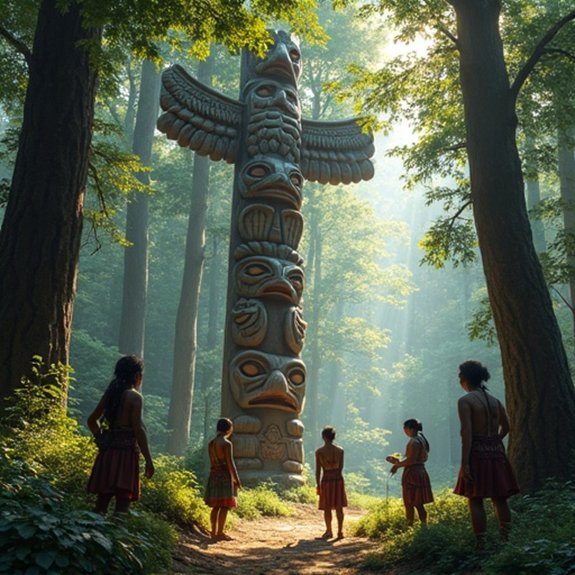
While ancient cave paintings reveal humanity’s earliest totemic connections, modern indigenous communities demonstrate these spiritual relationships through documented encounters and ceremonial practices. The Tlingit people’s killer whale ceremonies showcase transformative experiences where participants report sensing their orca totems’ presence during rituals. Australia’s Aboriginal communities’ve documented hundreds of Rainbow Serpent sightings at sacred sites, particularly during seasonal changes.
The Lakota’s White Buffalo Calf Woman appearance in 1994 drew international attention when a white buffalo’s birth fulfilled ancient prophecies. Maori elders’ve recorded warrior ancestors manifesting as birds before significant tribal decisions. Peru’s Q’ero shamans maintain detailed accounts of condor spirits appearing during mountain pilgrimages. These encounters aren’t mere folklore—they’re living testimonies that shape tribal governance, healing practices, and environmental stewardship across cultures worldwide.
Common Theories or Explanations
Because totemic beliefs span thousands of years across diverse cultures, anthropologists’ve developed several frameworks to explain their universal emergence. Claude Lévi-Strauss proposed that totems serve as cognitive tools, helping societies classify and organize their natural world through symbolic associations. His structuralist approach suggests humans naturally think in binary oppositions, using totems to navigate complex social relationships.
Émile Durkheim’s functionalist theory argues totems represent collective consciousness—they’re sacred symbols that unite clan members through shared identity. Meanwhile, Sigmund Freud’s psychoanalytic interpretation links totemic practices to unconscious desires and taboos, particularly regarding exogamy rules.
Modern anthropologists favor ecological explanations. They’ve found that totemic animals often reflect practical environmental knowledge, teaching resource management through spiritual obligations. These theories aren’t mutually exclusive; most scholars recognize totems fulfill multiple psychological, social, and ecological functions simultaneously.
Frequently Asked Questions
How Do Modern Indigenous Communities Maintain Their Totemic Traditions Today?
Modern indigenous communities maintain totemic traditions through storytelling, ceremonies, and art. They’ve adapted practices to contemporary life while preserving core meanings. Elders teach youth through oral histories, ensuring totem symbols remain central to identity.
What Materials and Techniques Are Used to Create Physical Totem Representations?
Indigenous artisans carve totems from cedar, pine, or redwood using traditional adzes and modern chainsaws. They’ll paint designs with natural pigments, incorporate shells, feathers, and copper, then preserve wood through oiling or specialized treatments.
Are There Specific Ceremonies or Rituals Associated With Totem Selection?
Yes, tribes conduct vision quests where young adults fast and seek spiritual dreams to reveal their totems. Elders interpret these visions during naming ceremonies, while shamans perform cleansing rituals that formally establish the person’s spiritual connection.
Can Individuals Have Multiple Totems Throughout Their Lifetime?
Yes, individuals can acquire multiple totems throughout their lifetime. They’ll often receive different totems during major life changes, spiritual journeys, or healing ceremonies. Each totem serves unique purposes, offering specific guidance for life’s various phases.
What Are the Cultural Protocols for Outsiders Learning About Totemic Practices?
Cultural protocols typically require outsiders to seek permission from tribal elders before learning totemic practices. They’ll need to demonstrate genuine respect, establish trust relationships, and understand that some knowledge remains sacred and isn’t shared publicly.

The Underworld Birds: Psychopomps

The Beast Within: Dual Nature Myths

The Underworld Rivers: Styx, Lethe, Etc
About The Author
