The Furies / Erinyes: Ancient Wrath Spirits
The ancient Greeks didn’t just fear their gods—they trembled before the Furies. These primordial spirits of vengeance stalked murderers and oath-breakers through both the mortal world and the underworld, their serpent-wrapped forms driving wrongdoers to madness. Born from divine blood spilled in cosmic violence, the Erinyes served as enforcers of moral law long before human courts existed. Their transformation from agents of wrath to benevolent protectors would reshape justice itself.
Introduction
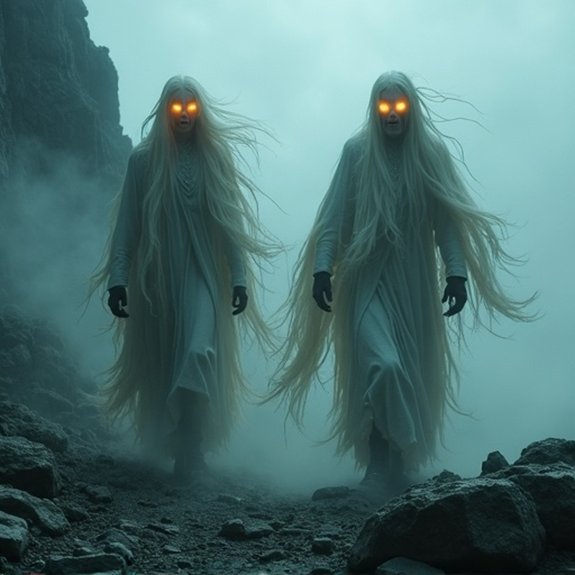
When ancient Greeks spoke of divine vengeance, they invoked the Furies—terrifying spirits who pursued those guilty of the most heinous crimes. These primordial beings, also called the Erinyes, served as the universe’s moral enforcers, hunting down murderers, oath-breakers, and those who’d wronged their own blood relatives. They emerged from the earliest chaos of creation, predating even the Olympian gods.
The Furies weren’t mere symbols or metaphors. Greeks believed they actively stalked the guilty through both the mortal world and the underworld, driving criminals to madness with their relentless pursuit. Their presence in mythology reflects humanity’s deep need for cosmic justice—the belief that no evil deed escapes punishment. These vengeful spirits embodied the ancient world’s understanding that certain crimes violated the natural order itself.
Birth From Titan Blood
The Furies’ origin story reveals their fundamental connection to divine violence and betrayal. When Cronus castrated his father Uranus with an adamantine sickle, the Titan’s blood fell upon Gaia, the Earth. From this violent act emerged the Erinyes—the Furies—alongside the Giants and Meliae nymphs.
This birth from spilled divine blood marked them as creatures of vengeance from their inception. They’re older than the Olympian gods, predating Zeus’s reign and existing outside his complete control. Their creation wasn’t planned or desired but arose spontaneously from primal violence between father and son.
The circumstances of their birth established their role as enforcers of blood justice, particularly crimes within families. They embody the inescapable consequences of kinship betrayal, born from the universe’s first act of filial violence.
Notable Cases or Sightings
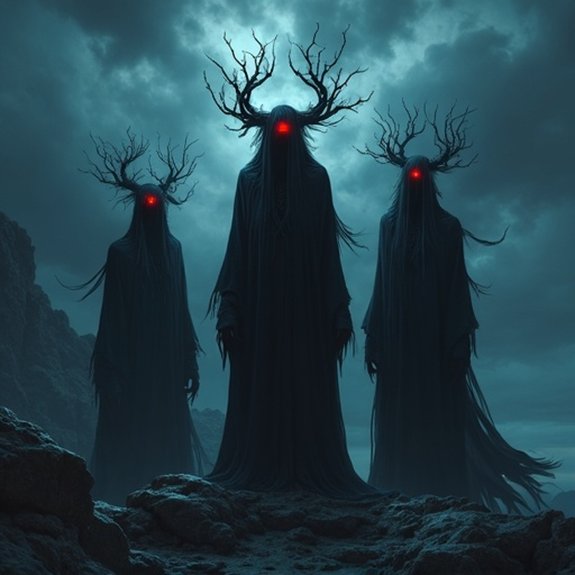
Throughout Greek mythology, the Furies pursued their most infamous quarry in the case of Orestes, who murdered his mother Clytemnestra to avenge his father Agamemnon. They relentlessly tormented him, driving him to madness as he fled across Greece. Only Athena’s intervention at Athens ended their pursuit, establishing the court of Areopagus for murder trials.
The Furies also appeared when Alcmaeon killed his mother Eriphyle for betraying his father. They hounded him until Apollo’s oracle directed him to uncursed land. In Aeschylus’s “Eumenides,” they’re depicted as ancient crones with snakes for hair, dripping blood from their eyes. Virgil’s “Aeneid” shows them tormenting souls in Tartarus. They punished Ixion for attempting to seduce Hera and pursued Pirithous after his failed abduction of Persephone.
Common Theories or Explanations
Beyond their mythological appearances, scholars have long debated what the Furies actually represented to ancient Greek society. Some theorists argue they’re personifications of guilty conscience, manifesting the psychological torment that follows wrongdoing. Others view them as embodiments of blood feuds and tribal justice systems that predated formal law.
Anthropologists suggest the Furies reflect humanity’s evolution from vengeance-based justice to organized legal systems. They’d represent the old ways resisting change. Psychological interpretations propose they symbolize repressed maternal rage or society’s fear of feminine wrath.
Modern scholars often interpret them as metaphors for consequences that can’t be escaped through wealth or status. Their transformation into the Eumenides might’ve represented Athens’ attempt to civilize primal justice urges while acknowledging their necessity.
Frequently Asked Questions
What Offerings or Rituals Were Used to Appease the Furies in Ancient Times?
Ancient Greeks appeased the Furies through libations of honey, milk, and water, offered bloodless sacrifices, and performed purification rituals. They’d rename them “Eumenides” (Kindly Ones) to avoid invoking their wrath through their true names.
How Do the Greek Erinyes Differ From the Roman Furies?
The Greek Erinyes and Roman Furies are fundamentally the same deities, but Romans softened their portrayal. They’re less grotesque in Roman art and literature, reflecting Rome’s tendency to civilize Greek mythology’s darker, more primal aspects.
What Symbols or Animals Are Traditionally Associated With the Furies?
The Furies carry whips, torches, and daggers while wearing black robes. They’re associated with snakes that writhe in their hair, dogs that accompany them, and bats’ wings. Blood often drips from their eyes.
Did the Furies Have Individual Names and Distinct Personalities?
Yes, they’re traditionally named Alecto (“unceasing anger”), Megaera (“jealous rage”), and Tisiphone (“vengeful destruction”). While ancient sources sometimes distinguish their roles, they’re usually depicted as a unified force of vengeance rather than distinct personalities.
How Were the Furies Depicted in Ancient Greek Art and Pottery?
Ancient Greek artists depicted the Furies as winged women with snakes in their hair, carrying torches and whips. They’re shown pursuing criminals on pottery, often wearing short tunics and boots, with fierce, grotesque expressions.



About The Author
