The Fairy Ring: Portal Myths
Across moonlit meadows and ancient forests, circular formations of mushrooms have sparked centuries of supernatural speculation. They’ve earned names like fairy rings, elf circles, and pixie paths, each culture adding its own mystical interpretation. Scientists now understand the fungal mechanics behind these patterns, yet the folklore persists. What drives humanity’s need to transform natural phenomena into gateways to other worlds? The answer lies somewhere between biological fact and imagination’s endless reach.
Introduction
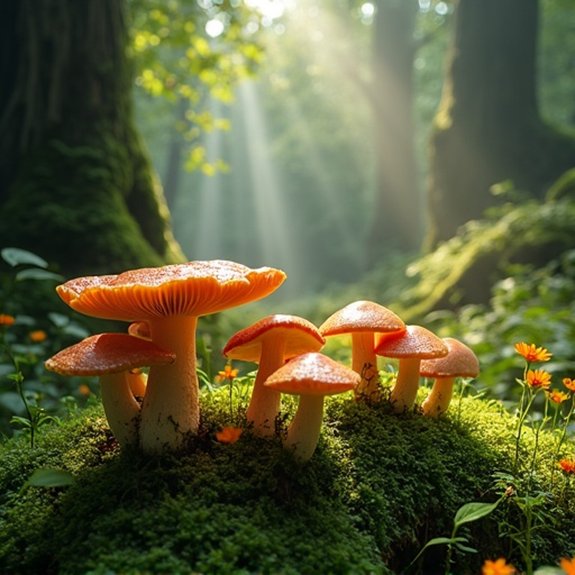
While mushrooms arranged in perfect circles might seem like ordinary fungi to modern observers, these “fairy rings” have captivated human imagination for centuries, spawning countless myths and supernatural explanations across cultures worldwide. These mysterious formations appear overnight in meadows, forests, and even suburban lawns, creating perfect or near-perfect circles that can range from a few feet to several hundred feet in diameter.
Before science explained their growth patterns through underground mycelium networks, people couldn’t comprehend how nature produced such geometric precision. They’ve attributed these rings to dancing fairies, witches’ gatherings, dragons’ resting spots, and portals to otherworldly domains. Each culture developed unique stories explaining their presence, often warning children and adults alike about the dangers of stepping inside or disturbing these sacred spaces.
Celtic Folklore’s Mushroom Circles
Celtic cultures developed some of the most elaborate and enduring fairy ring mythology, weaving these mysterious circles into the very fabric of their supernatural beliefs. In Ireland, they’re called “fáinne sí,” meaning fairy rings, where the aos sí—supernatural beings—gather to dance on moonlit nights. Scottish folklore warns that entering these circles traps mortals in the fairy domain, forcing them to dance until exhaustion or death. Welsh traditions link the rings to “tylwyth teg,” their fair folk, who’d punish anyone disturbing their dancing grounds with illness or misfortune.
These beliefs weren’t mere entertainment. Communities built practical taboos around the rings, forbidding children from playing near them and advising farmers to leave them untouched when plowing fields.
Notable Cases or Sightings

Though most fairy ring encounters remain confined to local folklore, several documented cases have captured wider attention throughout history. In 1884, botanist Charles McIntosh reported discovering a 600-year-old fairy ring in Scotland’s Belvoir Forest, measuring nearly 40 feet across. The formation’s age was determined through soil analysis and fungal growth patterns.
France’s Lorraine region recorded multiple sightings during the 1920s, where villagers claimed they’d witnessed glowing rings appearing overnight in meadows. These reports prompted scientific investigation, though researchers found only typical mushroom formations.
More recently, in 2014, photographers captured an enormous fairy ring system in Namibia’s grasslands. These rings, formed by Euphorbia plants rather than fungi, sparked renewed interest in the phenomenon’s ecological mechanisms and cultural significance worldwide.
Common Theories or Explanations
When early naturalists first attempted to explain fairy rings, they proposed everything from lightning strikes to ant colonies as potential causes. Medieval scholars believed they marked spots where meteors had fallen or where the devil had churned butter. Some theorized that moles running in circles created the patterns, while others blamed horses tethered to posts.
Modern science has solved the mystery. Fairy rings form when fungal mycelium spreads outward from a central point, depleting soil nutrients. As the fungus expands, it releases nitrogen that fertilizes grass at the ring’s edge, creating the characteristic dark green circle. The fungi’s fruiting bodies—mushrooms—appear along this perimeter during ideal conditions. Over fifty species create these formations, with some rings estimated at over 600 years old.
Frequently Asked Questions
Can Animals Sense or See Fairy Rings Before Humans Do?
Yes, folklore suggests animals can detect fairy rings before humans. They’ll often refuse to cross them, act nervously, or circle around them. Horses particularly won’t step inside, and cattle avoid grazing within the rings’ boundaries.
What Time of Year Are Fairy Rings Most Likely to Appear?
Fairy rings most commonly appear during autumn and late summer when moisture levels rise after dry spells. They’ll also emerge in spring following wet winters. The mushrooms that form these circles need specific temperature and humidity conditions.
How Can You Safely Break a Fairy Ring’s Enchantment?
Breaking a fairy ring’s enchantment requires specific actions. One can’t simply walk through it. They’ll need to wear their clothes inside out, carry iron objects, or sprinkle salt while walking counterclockwise around the ring.
Do Fairy Rings Appear in Urban Environments or Only Rural Areas?
Fairy rings don’t limit themselves to rural meadows and forests. They’ve been documented sprouting in city parks, abandoned lots, and even pushing through sidewalk cracks. Urban iron and concrete can’t stop determined fairy magic from manifesting.
Are There Any Protective Charms or Rituals Against Fairy Ring Curses?
Folk traditions recommend iron objects, salt circles, and wearing clothing inside-out as protection. People’ve also used rowan branches, church bells, and bread offerings. Running water’s believed to break curses if one crosses it backwards.

Spirits in the American Southwest

The Chaneque: Mischievous Forest Spirits of Mexico

The Role of Animals in Traditional Myths
About The Author
