The Ghost Wife: Widows in Myth
The widow’s veil doesn’t always conceal grief—sometimes it hides something far more dangerous. Across cultures, mythological widows transform into spectral beings who refuse to accept death’s boundaries. They’re not mere victims of loss but powerful entities who command both reverence and terror. These ghost wives haunt the spaces between worlds, challenging what societies believe about feminine power and mortality. Their stories reveal truths that ancient burial rites tried desperately to contain.
Introduction
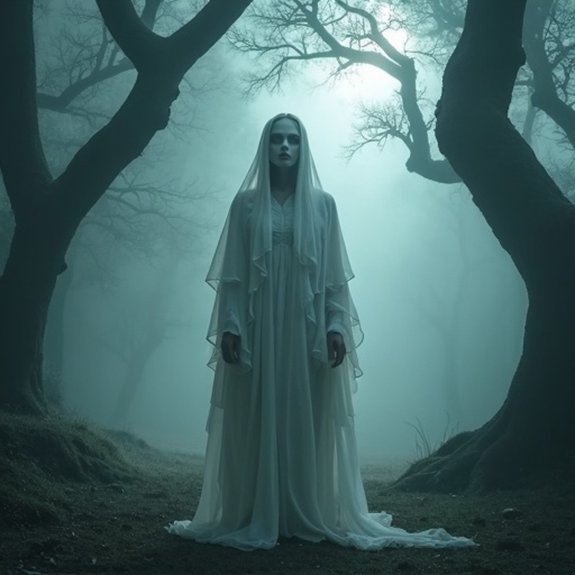
When ancient storytellers wove their tales around crackling fires, they often turned to the figure of the widow—a woman marked by loss yet transformed by it. She’s appeared across cultures as both victim and victor, haunting the margins of mythology with supernatural power. From Greek tragedy to Japanese folklore, widows embody society’s deepest anxieties about death, sexuality, and female autonomy.
These mythical widows aren’t passive mourners. They’re shape-shifters, prophets, and vengeful spirits who defy the living world’s expectations. Their stories reveal how different cultures have grappled with widowhood’s complex social position—neither maiden nor wife, they exist in liminal space. Through examining these archetypal figures, modern readers can trace humanity’s evolving relationship with grief, gender, and the boundaries between life and death.
Ancient Burial Rites Demanded Sacrifice
Although modern society views widowhood as a personal tragedy, ancient civilizations often transformed it into a communal ritual requiring the ultimate sacrifice. Many cultures expected widows to follow their husbands into death through sati, self-immolation, or ritual execution. The practice wasn’t merely about grief—it reflected beliefs about spiritual unity and afterlife companionship.
Archaeological evidence from Mesopotamia, Egypt, and pre-Columbian Americas reveals widows buried alongside deceased rulers. These women weren’t always volunteers. Social pressure, religious doctrine, and economic dependency forced compliance. Communities viewed widow sacrifice as ensuring cosmic balance and preventing vengeful spirits from returning. The widow’s death sealed her husband’s passage to the afterlife while demonstrating familial honor. This ritualized violence persisted across continents for millennia, shaping mythological narratives about death, marriage, and female duty.
Notable Cases or Sightings
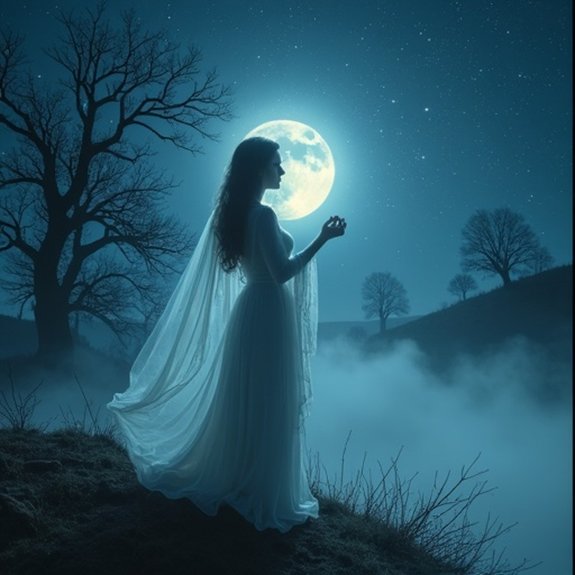
The transformation of widows from sacrificial victims to supernatural beings appears throughout recorded history, with specific accounts emerging from medieval chronicles to modern testimonials. England’s Brown Lady of Raynham Hall, photographed in 1936, remains the most documented widow-specter, believed to be Dorothy Walpole who died under mysterious circumstances in 1726.
India’s churel legends describe vengeful widow-ghosts with backward feet, particularly strong in Uttar Pradesh where locals report encounters near burial grounds. Japan’s onryō tradition includes Lady Rokujo from The Tale of Genji, whose jealous spirit killed rivals while she lived.
Modern sightings concentrate near historical execution sites. Salem’s Howard Street Cemetery reports frequent widow apparitions, while Indonesia’s pontianak manifestations correlate with regions practicing historical sati. Paranormal investigators‘ve documented over 200 widow-ghost cases globally since 1990.
Common Theories or Explanations
Psychological trauma theory dominates academic explanations for widow-ghost phenomena, with researchers linking unresolved grief to spectral manifestations. They’ve documented how intense emotional distress can trigger hallucinations, particularly in cultures where widow mythology’s deeply embedded. Neurologists point to temporal lobe activity during bereavement, which creates vivid sensory experiences mistaken for supernatural encounters.
Anthropologists offer cultural transmission theories, arguing these stories serve social functions. They help communities process death’s aftermath and establish behavioral codes for surviving spouses. Some scholars suggest widow-ghost tales reinforce property inheritance systems or discourage remarriage in patriarchal societies.
Environmental factors can’t be ignored. Old homes produce unexplained sounds through settling wood and temperature changes. Combined with isolation and sleep deprivation common among the bereaved, these conditions create perfect scenarios for misinterpreting natural phenomena as ghostly presence.
Frequently Asked Questions
How Do Different Cultures Today Support Widows Dealing With Supernatural Experiences?
Many cultures offer spiritual counseling through religious leaders, while others provide community support groups where widows share paranormal encounters. Some societies employ traditional healers who perform cleansing rituals, and modern therapists increasingly acknowledge grief-related supernatural experiences.
What Legal Protections Exist for Widows Accused of Witchcraft or Supernatural Connections?
Various countries have enacted anti-witchcraft accusation laws, including India’s Prevention of Witch-Hunting Act and Kenya’s Witchcraft Act. International human rights organizations advocate for widows’ protection through legal reforms, education campaigns, and local law enforcement training.
How Has Modern Media Representation Affected Public Perception of Widow Mythology?
Modern media’s transformed widow mythology from purely supernatural threats into complex characters. Films and TV shows’ve humanized these figures, shifting public perception from fear to empathy while maintaining the mystique that historically surrounded widowed women.
What Psychological Counseling Approaches Help Widows Experiencing Ghost Spouse Phenomena?
Grief counselors typically employ cognitive-behavioral therapy and bereavement-focused approaches when widows report sensing their deceased spouse’s presence. They’ll normalize these experiences as common grief responses while helping clients distinguish between healthy continuing bonds and problematic hallucinations.
Are There Any Scientific Studies Measuring Paranormal Activity Around Recently Widowed Individuals?
Scientists haven’t found credible evidence of increased paranormal activity around widows. However, researchers have documented heightened sensory experiences and hallucinations during grief, which widows often interpret as supernatural contact with deceased spouses through psychological mechanisms.

Ghosts in the Desert: Mirages or Spirits?

Near-Death Experiences and the Afterlife

Japanese Onryō: Vengeful Ghosts in Modern Japan
About The Author
