The Myth of the Twin Serpents
The twin serpents appear in humanity’s oldest stories, coiling through cultures separated by vast oceans and millennia. They’ve emerged from Mesopotamian clay tablets, Native American petroglyphs, and Asian temple walls—always in pairs, always opposing yet inseparable. Archaeologists can’t explain why isolated civilizations developed nearly identical myths. These serpentine guardians represent something deeper than simple folklore, something that’s compelled humans to document their presence across every inhabited continent.
Introduction
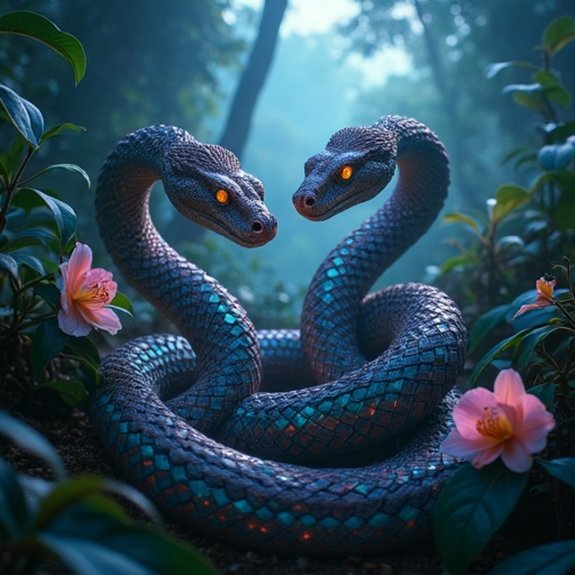
The ancient myth of the Twin Serpents has captivated storytellers and scholars across cultures for millennia, appearing in various forms from Mesopotamian tablets to Mesoamerican codices. These intertwined serpents represent fundamental dualities: creation and destruction, order and chaos, light and darkness. They’ve emerged independently in civilizations that never contacted each other, suggesting humanity’s shared psychological need to explain opposing forces through serpentine imagery.
The myth’s core narrative typically features two serpents locked in eternal conflict or harmony, their struggle maintaining cosmic balance. Ancient priests interpreted their movements as divine messages, while philosophers saw them as metaphors for human nature’s contradictions. Modern anthropologists recognize the Twin Serpents as one of mythology’s most persistent archetypes, comparable to the flood narrative or the hero’s journey in its universal appeal.
Ancient Mesopotamian Tablet Inscriptions
Among the earliest documented references to the Twin Serpents appears on cuneiform tablets from ancient Mesopotamia, where scribes etched detailed accounts of these mythical beings as early as 3000 BCE. The tablets describe two serpents—one silver, one obsidian—who’d guard the gates between mortal and divine domains. Sumerian texts call them “Ningishzida’s messengers,” linking them to the underworld deity’s power over transformation and rebirth.
Archaeologists’ve uncovered over forty tablets featuring these creatures across Ur, Babylon, and Nineveh. Each inscription reveals consistent characteristics: the serpents’ intertwined forms, their opposing natures representing chaos and order, and their role as judges of souls. The Akkadian version adds they’d whisper prophecies to kings during coronation rituals, establishing divine authority through serpentine wisdom.
Notable Cases or Sightings
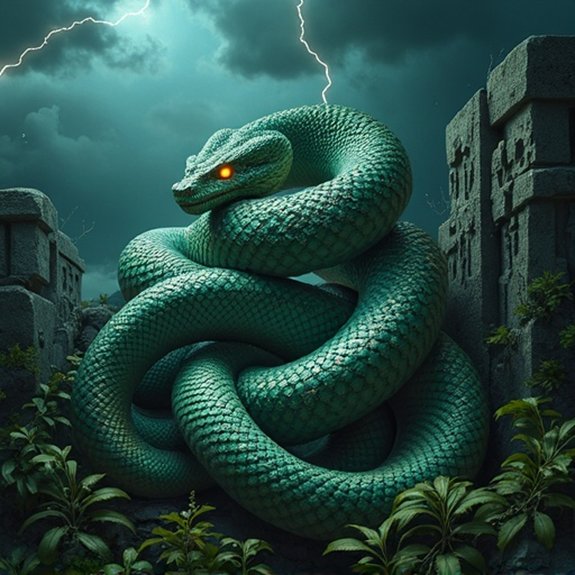
Peru’s colonial archives contain Father Miguel Santana’s 1743 testimony about twin snake-like creatures appearing during an earthquake near Cusco. Local Quechua guides insisted they’d witnessed the same beings generations earlier.
Modern reports include the 1962 Hokkaido incident, where Japanese fishermen photographed what they claimed were enormous paired serpents beneath ice flows. Though dismissed by authorities, similar accounts surfaced from Alaska’s Inuit communities that same winter, describing identical creatures moving through Arctic waters.
Common Theories or Explanations
While skeptics often dismiss twin serpent sightings as misidentified natural phenomena, researchers have proposed several competing explanations for these persistent reports. The parallel evolution theory suggests that two distinct serpentine species developed similar characteristics independently, creating the illusion of connected entities. Marine biologists argue that bioluminescent deep-sea creatures might produce optical effects resembling intertwined serpents when viewed from specific angles.
Anthropologists favor the collective archetype hypothesis, claiming that twin serpent imagery represents humanity’s universal psychological patterns. They’ve documented similar myths across unconnected cultures, suggesting an innate tendency to perceive dual serpentine forms. Meanwhile, cryptozoologists propose that witnesses are encountering an undiscovered species with unique anatomical features that create the appearance of two separate beings. Each theory attempts to reconcile ancient accounts with modern observations.
Frequently Asked Questions
How Do Modern Indigenous Communities Interpret the Twin Serpents Myth Today?
Modern indigenous communities interpret the twin serpents myth as symbols of balance, duality, and cosmic harmony. They’ve adapted traditional meanings to address contemporary issues like environmental protection, cultural preservation, and spiritual healing in their communities. These interpretations echo the mythical snake legends from around the world, which similarly portray serpents as guardians of wisdom and protectors of the earth. By intertwining these ancient narratives with modern practices, communities are fostering a deep connection to their roots while confronting current challenges. This synergy not only enriches cultural identity but also promotes a holistic approach to sustainability and harmony.
What Psychological Archetypes Do the Twin Serpents Represent in Jungian Analysis?
Jungian analysts interpret the twin serpents as representing opposing psychic forces within the collective unconscious. They’re seen as shadow and persona, conscious and unconscious minds, or the tension between chaos and order seeking integration.
Are There Any Known Artistic Depictions in Medieval European Manuscripts?
Medieval European manuscripts don’t typically depict twin serpents as a specific mythological pair, but they’ve illustrated dual serpents in medical texts showing the caduceus, alchemical manuscripts featuring ouroboros variations, and Biblical scenes with paired dragons.
Which Contemporary Fiction Works Have Incorporated the Twin Serpents Mythology?
Several contemporary authors haven’t incorporated twin serpent mythology into major fiction works, as it’s not an established mythological tradition. Writers typically draw from Norse Jörmungandr, Greek Ouroboros, or Mesoamerican Quetzalcoatl instead of twin serpent motifs.
What Astronomical Phenomena Might Have Inspired the Original Twin Serpents Legend?
Ancient astronomers likely observed the helical rising of binary stars or the intertwining paths of planetary conjunctions. They’d have seen meteor showers creating serpentine trails across night skies, inspiring tales of celestial twin serpents battling overhead.



About The Author
