The Sunken City Legends: Ys, Lemuria
Beneath ocean waves lie tales of magnificent cities that’ve captivated scholars for centuries. The Breton legend of Ys speaks of King Gradlon’s doomed kingdom, while Lemuria’s mysterious civilization supposedly held ancient wisdom now lost forever. Celtic manuscripts offer tantalizing clues about these sunken domains, yet archaeologists can’t agree whether they’re pure myth or distorted memories of real catastrophes. The truth remains frustratingly elusive.
Introduction
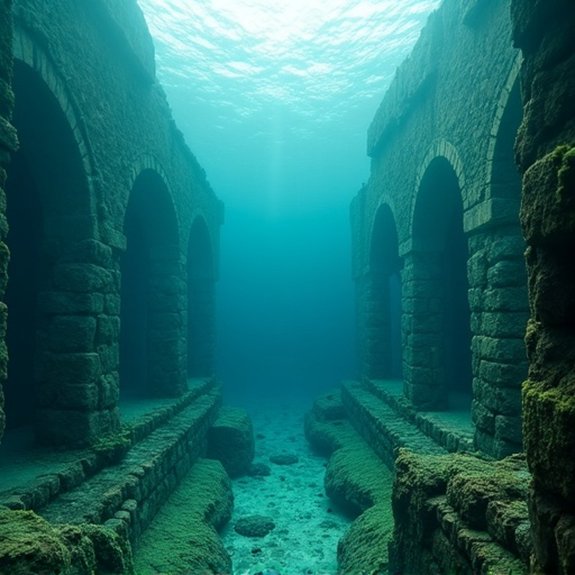
Throughout history, tales of magnificent cities swallowed by the sea have captivated humanity’s imagination, blending myth with reality in ways that continue to intrigue archaeologists and storytellers alike. These legends persist across cultures, from Brittany’s coast to Pacific islands, each narrative carrying warnings about hubris, divine wrath, or natural disasters. The city of Ys, supposedly built below sea level off France’s shore, tells of a princess’s betrayal that opened floodgates to destruction. Lemuria, a hypothetical continent in the Indian or Pacific Ocean, emerged from 19th-century scientific speculation before transforming into mystical lore. While Atlantis dominates popular consciousness, these lesser-known sunken domains offer equally compelling stories. They’ve inspired literature, shaped regional identities, and sparked genuine archaeological investigations into whether kernels of truth lie beneath the waves.
Celtic Manuscripts Describe Ys
Medieval Celtic scribes preserved the legend of Ys in several manuscripts, with the most detailed accounts appearing in Breton texts from the 15th and 16th centuries. These documents describe Ys as a magnificent city built below sea level off Brittany’s coast, protected by a massive dike with gates that opened during low tide for commerce.
The manuscripts name King Gradlon as the city’s ruler and his daughter Dahut as the cause of its destruction. They tell how Dahut stole the gate keys from her father and opened them during a storm, flooding the entire city. Only Gradlon escaped on his magical horse Morvarc’h. The texts place Ys in Douarnenez Bay, where fishermen claimed they’d heard church bells ringing beneath the waves during calm weather.
Notable Cases or Sightings
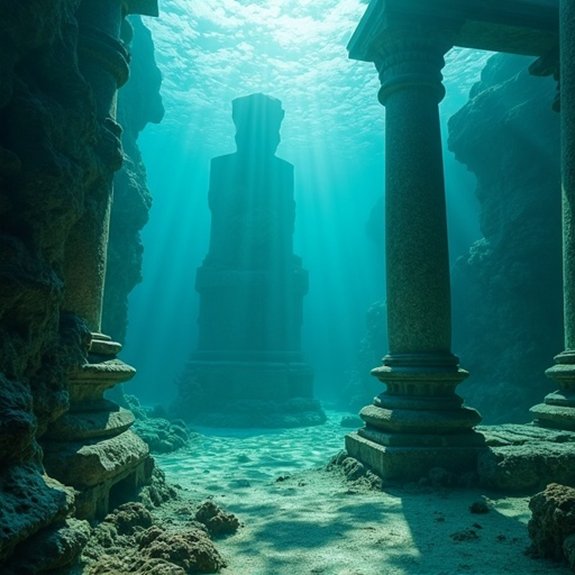
While legends of sunken cities have persisted for millennia, specific sightings and archaeological discoveries have transformed some myths into tangible mysteries. In 1930, Colonel Percy Fawcett‘s expedition searching for “Z,” a lost Amazonian city, vanished without explanation. Japanese divers reported seeing carved structures off Yonaguni Island in 1987, sparking debates about whether they’re natural formations or remnants of an ancient civilization.
Satellite imagery has revealed submerged formations near Cuba’s coast that resemble pyramids and urban grids. Similarly, India’s Gulf of Cambay yielded 9,500-year-old artifacts from underwater excavations in 2001. Fishermen off Britain’s coast have reported hearing church bells beneath the waves where Ys allegedly stood. These discoveries don’t prove the existence of legendary cities, but they’ve fueled scientific interest in underwater archaeology and ancient coastal settlements.
Common Theories or Explanations
Scientists and historians have developed several frameworks to explain why sunken city legends appear across cultures worldwide. They’ve identified that rising sea levels after the last Ice Age submerged coastal settlements, creating factual foundations for mythical stories. Archaeological evidence shows numerous ancient ports and villages now lie underwater in the Mediterranean, North Sea, and Indian Ocean.
Collective memory theory suggests these myths preserve actual flooding disasters passed through oral traditions. Tsunamis, earthquakes, and volcanic eruptions that destroyed coastal communities became embellished over generations. Carl Jung’s archetype theory proposes sunken cities represent universal human anxieties about civilization’s fragility.
Additionally, scholars note that maritime cultures naturally develop cautionary tales about the sea’s power. These stories served practical purposes—warning against hubris, explaining geological phenomena, and reinforcing social values.
Frequently Asked Questions
Are There Any Modern Expeditions Searching for Physical Evidence of These Cities?
Yes, researchers haven’t mounted serious scientific expeditions for these mythical cities. Archaeologists don’t consider them real locations. However, amateur enthusiasts occasionally explore coastal areas near Brittany for Ys and conduct informal Pacific searches for Lemuria.
How Do These Legends Compare to Other Sunken City Myths Worldwide?
These legends share common themes with Atlantis, Dwarka, and Mu – they’re all advanced civilizations destroyed by divine punishment or natural disasters. Most feature moral warnings about hubris, lost knowledge, and humanity’s relationship with nature.
What Geological Events Could Have Inspired These Sunken City Stories?
Scientists believe coastal flooding, tsunamis, and post-glacial sea level rises inspired these myths. They’ve found submerged settlements worldwide that disappeared when ice sheets melted 10,000 years ago, raising oceans by 400 feet.
Have Any Artifacts Been Falsely Attributed to Ys or Lemuria?
Yes, various artifacts have been falsely attributed to these mythical cities. Collectors and hoaxers have claimed that pottery shards, stone carvings, and metal objects originated from Lemuria or Ys, though they’re typically common archaeological finds.
Which Popular Books or Films Feature These Sunken City Legends?
Disney’s “Atlantis: The Lost Empire” draws from Lemuria myths, while Debussy’s opera “Pelléas et Mélisande” references Ys. Jules Verne’s works popularized Lemuria, and Marvel Comics’ Namor storylines feature both sunken civilizations in their underwater kingdoms.

The Mystery of Göbekli Tepe’s Builders

Do the Appalachian Mountains Hide Ancient Secrets?

The Mythical City of Shangri-La
About The Author
