The Golden Apples in Myths
Golden apples have captivated civilizations for millennia, appearing in myths as symbols of divine power and forbidden knowledge. They’ve sparked wars, tested heroes, and tempted gods across Greek, Norse, and Celtic traditions. These mystical fruits promise immortality and wisdom, yet they’re always just beyond mortal reach. What makes these gleaming treasures so universally significant? The answer lies in humanity’s oldest desires and the price of pursuing them.
Introduction
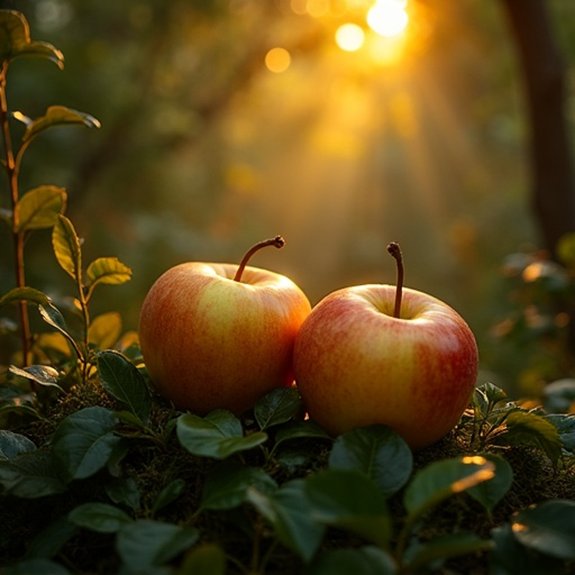
When ancient storytellers wanted to symbolize divine power, immortality, or forbidden knowledge, they often turned to golden apples as their metaphor of choice. These mystical fruits appear throughout world mythology, from Greek legends to Norse sagas, carrying profound meanings that’ve captivated audiences for millennia. They’re not merely decorative elements but powerful narrative devices that drive heroes on quests, spark wars between nations, and test the moral fiber of gods and mortals alike.
Golden apples represent humanity’s deepest desires—eternal youth, wisdom, and divine favor. They’ve shaped some of mythology’s most memorable tales, including the Trojan War’s origins and Hercules’ labors. Their recurring presence across diverse cultures suggests they tap into universal human concerns about mortality, temptation, and the price of obtaining what’s meant for the gods alone.
Ancient Greek Garden Mythology
The Greeks placed their most famous golden apples in the Garden of the Hesperides, a paradise at the western edge of the world where Atlas’s daughters guarded Hera’s wedding gift from Gaia. These immortality-granting fruits grew on a tree protected by Ladon, a hundred-headed dragon that never slept. The Hesperides—typically three to seven nymphs—sang beside the tree while tending the sacred orchard.
This mythical garden represented the Greeks’ vision of divine abundance and forbidden knowledge. Heracles’ eleventh labor required him to steal these apples, which he accomplished through cunning rather than force. He convinced Atlas to retrieve them while he temporarily held up the sky. The golden apples also sparked the Trojan War when Eris threw one marked “for the fairest” among the goddesses, triggering Paris’s fateful judgment.
Notable Cases or Sightings

Although golden apples appear throughout mythology as divine objects, several specific instances have shaped cultural narratives across different civilizations. Norse mythology‘s most famous case involves Idunn’s apples, which granted the gods eternal youth. When Loki helped the giant Thjazi kidnap Idunn, the gods rapidly aged until they forced Loki to rescue her.
The judgment of Paris represents another pivotal sighting. Eris threw a golden apple marked “for the fairest” among the goddesses, sparking the competition between Hera, Athena, and Aphrodite that ultimately caused the Trojan War.
Celtic tradition describes Avalon, the “Isle of Apples,” where golden apples grew year-round. These fruits allegedly possessed healing properties and bestowed immortality upon those who consumed them.
Common Theories or Explanations
Because golden apples appear across diverse mythological traditions, scholars have proposed several theories to explain their recurring significance. Many researchers link them to the sun’s golden appearance and its life-giving properties, suggesting ancient cultures viewed these fruits as earthly manifestations of solar power. Others argue they’re symbols of immortality, noting how they’re consistently associated with eternal youth in Greek, Norse, and Celtic myths.
Some anthropologists believe golden apples represent forbidden knowledge or divine wisdom that’s meant only for gods. The fruit’s rarity in nature—since truly golden apples don’t exist—may’ve enhanced their mystical appeal. Additionally, linguistic scholars point out that many ancient languages used “golden” to mean “precious” rather than literally gold-colored, which could explain why various cultures independently developed similar mythological motifs around these extraordinary fruits.
Frequently Asked Questions
How Are Golden Apples Depicted in Modern Movies and Video Games?
Modern movies and video games depict golden apples as magical MacGuffins granting immortality, divine power, or triggering epic quests. They’re often glowing treasures in fantasy RPGs or plot devices in films like Disney’s Hercules adaptations.
What Nutritional or Medicinal Properties Were Golden Apples Believed to Possess?
Ancient cultures believed golden apples granted immortality, eternal youth, and divine wisdom. They’d cure diseases, restore energy, and provide supernatural strength. Norse myths claimed they maintained the gods’ immortality, while Greek tales attributed healing powers to them.
Which Museums Currently Display Artifacts Featuring Golden Apple Imagery?
Several museums display golden apple artifacts, including the Louvre’s Greek pottery, the British Museum’s classical vases, and the Metropolitan Museum’s ancient coins. Vienna’s Kunsthistorisches Museum showcases Renaissance paintings depicting Hesperides’ garden and Paris’s judgment scenes.
How Do Golden Apples Compare to Other Magical Fruits in Mythology?
Golden apples grant immortality like ambrosia, but they’re rarer than pomegranates or peaches of immortality. They’ve sparked more conflicts than other mythical fruits, causing the Trojan War and tempting heroes in impossible quests.
What Rituals or Ceremonies Historically Involved Golden Apple Symbolism?
Ancient Greeks used golden apples in wedding ceremonies, particularly throwing them to determine brides. Norse practitioners incorporated apple symbolism in harvest festivals honoring Idunn. Medieval alchemists employed golden apple imagery in transformation rituals seeking immortality.

The Underworld Journeys in World Mythology

The Legend of the Phoenix Across Cultures

The Raven in Mythology Around the World
About The Author
