Ghosts in Railroad Tunnels: Echoes of Lost Lives
Railroad tunnels hold dark secrets beneath their stone archways. Workers who died building these passages supposedly haven’t left, their spirits trapped where they last drew breath. Witnesses report phantom footsteps, disembodied voices, and shadowy figures in tunnels across the country. These aren’t just campfire stories—they’re documented accounts from engineers, maintenance crews, and passengers. The question isn’t whether people see things in these tunnels. It’s why they all see the same things.
Introduction
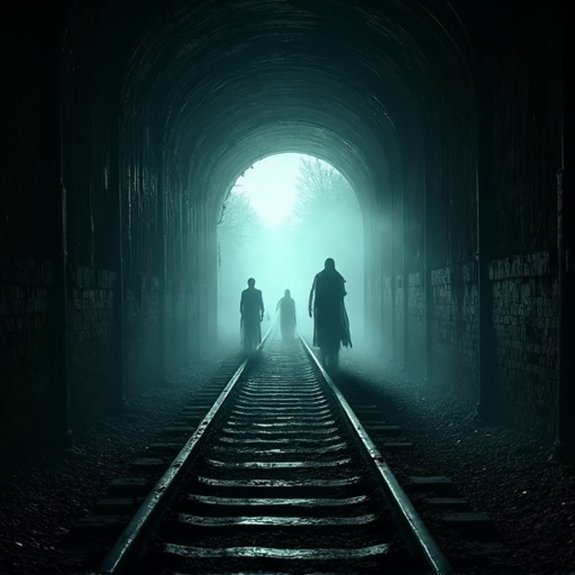
Why do railroad tunnels seem to attract more ghost stories than almost any other type of infrastructure? These dark passages through mountains and hillsides have witnessed countless tragedies since the industrial revolution began. Workers died building them, crushed by cave-ins or killed by explosions. Trains have collided head-on in their depths, and passengers have met violent ends within their confines.
The tunnels’ physical characteristics amplify their haunting reputation. They’re enclosed spaces where sounds echo unnaturally, temperatures drop suddenly, and darkness swallows light. When a person enters these narrow corridors, they can’t easily escape. Every railroad tunnel carries history’s weight—the sweat, blood, and lives sacrificed to connect distant places. It’s no wonder they’ve become magnets for supernatural tales.
Deadly Tunnel Construction Accidents
The construction of railroad tunnels in the 19th and early 20th centuries claimed thousands of lives, creating the foundation for many paranormal legends that persist today. Workers faced constant threats from cave-ins, explosions, and toxic gases. The Hoosac Tunnel in Massachusetts earned the nickname “Bloody Pit” after 195 men died during its 24-year construction. Dynamite accidents killed dozens instantly, while others suffocated in poorly ventilated shafts.
Railroad companies often didn’t record immigrant workers’ deaths, leaving families without closure. Bodies weren’t always recovered from collapsed sections. These tragic circumstances fueled beliefs that victims’ spirits remained trapped where they’d perished. Survivors reported hearing phantom hammering, screams, and warnings before accidents. Modern tunnel workers still encounter unexplained sounds and apparitions in these historic passages.
Notable Cases or Sightings
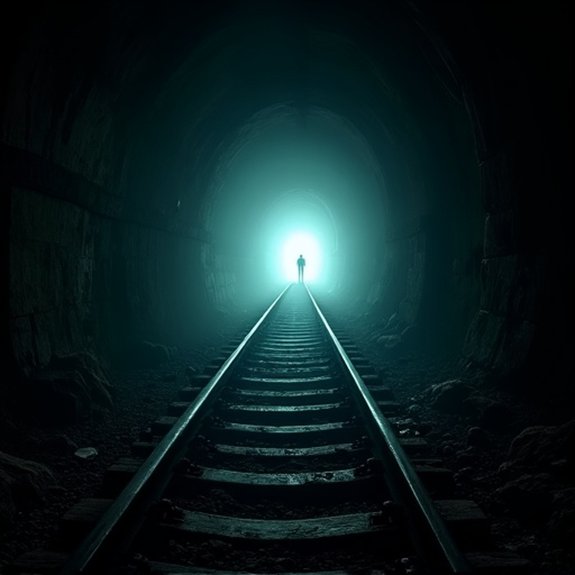
While thousands of tunnel hauntings have been reported worldwide, several cases stand out for their persistent documentation and multiple witnesses. Colorado’s Moffat Tunnel has generated reports since 1928 of phantom workers carrying lanterns through its six-mile stretch. Witnesses describe hearing pickaxes striking rock and voices calling warnings that echo from empty passages.
Britain’s Box Tunnel attracts investigators who’ve recorded unexplained temperature drops and captured anomalous figures in photographs. The site’s reputation stems from consistent accounts of a Victorian-era worker who appears near the eastern portal.
Canada’s Brockville Tunnel features regular sightings of a young brakeman who allegedly died in an 1854 collision. Visitors report seeing him swinging a lantern while walking the abandoned tracks, disappearing when approached.
Common Theories or Explanations
How do researchers explain these persistent tunnel hauntings that’ve captivated witnesses for generations? Scientists point to infrasound—vibrations below human hearing range—that tunnel acoustics naturally amplify. These frequencies trigger anxiety, hallucinations, and feelings of being watched. Railroad tunnels’ curved walls create perfect echo chambers where sounds distort into ghostly moans.
Psychologists cite expectation bias and pareidolia, where the brain interprets random stimuli as familiar patterns. Darkness, isolation, and knowledge of past tragedies prime visitors to perceive supernatural activity. Carbon monoxide from diesel engines can cause confusion and visual disturbances in poorly ventilated tunnels.
Electromagnetic fields from tracks and equipment may affect temporal lobes, producing sensations of presence. Cold spots result from temperature differentials between tunnel interiors and outside air, not spectral manifestations.
Frequently Asked Questions
Is It Safe to Explore Abandoned Railroad Tunnels Where Ghosts Are Reported?
It’s not safe for explorers to enter abandoned railroad tunnels. They’ll face real dangers like structural collapse, toxic gases, flooding, and getting lost in darkness. Ghost reports don’t pose threats, but physical hazards certainly do.
What Equipment Do Paranormal Investigators Use to Detect Spirits in Tunnels?
Paranormal investigators typically carry EMF detectors, digital voice recorders, infrared cameras, and temperature sensors into tunnels. They’ll also use motion detectors, K2 meters, and spirit boxes to capture potential evidence of supernatural activity in these locations.
Can I Join Organized Ghost Tours of Haunted Railroad Tunnels?
Yes, travelers can join organized ghost tours of haunted railroad tunnels across the country. Tour companies offer guided experiences at locations like Colorado’s Moffat Tunnel and California’s Niles Canyon, combining historical storytelling with paranormal investigation activities.
Are There Any Tunnels Where Photography or Recording Is Prohibited?
Yes, several haunted railroad tunnels prohibit photography and recording. Authorities restrict access at Hoosac Tunnel in Massachusetts and Moonville Tunnel in Ohio. Private property owners don’t allow cameras at Blue Ghost Tunnel in Ontario, Canada.
What Time of Year Are Ghost Sightings Most Commonly Reported?
Ghost sightings in railroad tunnels peak during October and November when Halloween’s influence heightens paranormal interest. Witnesses also report increased activity during winter months when fog and darkness create atmospheric conditions that enhance supernatural experiences.

Apparitional Animals: Ghost Dogs, Cats, Birds

Why Children Often Report Ghost Sightings

Can You Spend a Night in the Lizzie Borden House?
About The Author
