Ghosts of the Titanic: Survivor Testimonies
The Titanic’s survivors didn’t just escape with their lives—they carried stories that’d haunt maritime history forever. Multiple passengers reported seeing apparitions of the dead walking the decks before rescue ships arrived. Ruth Becker Blanchard and Charles Joughin’s accounts became the most documented, describing phantom figures and ghostly lifeboats that shouldn’t have existed. What they witnessed in those freezing waters remains unexplained.
Introduction
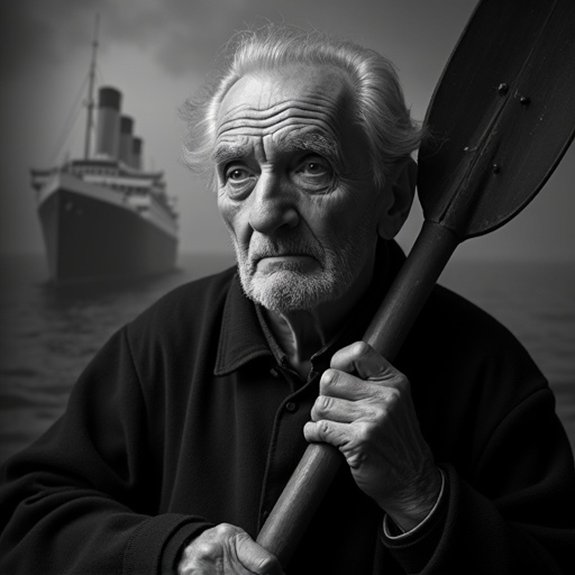
When the RMS Titanic sank into the North Atlantic on April 15, 1912, more than 1,500 people lost their lives in one of history’s deadliest maritime disasters. Yet 710 survivors lived to tell their harrowing tales. Their testimonies’ve provided invaluable insights into that fateful night when the “unsinkable” ship met its tragic end.
These firsthand accounts reveal the chaos, heroism, and heartbreak that unfolded as the luxury liner struck an iceberg and slipped beneath the freezing waters. Survivors described the initial disbelief, the scramble for lifeboats, and the agonizing sounds of those left behind. Their stories’ve shaped our understanding of the disaster, exposing both human courage and systematic failures. Through their voices, history preserves the final moments of a voyage that’d promised glory but delivered catastrophe.
Ship’s Tragic Maiden Voyage
Although the Titanic’s maiden voyage began with unprecedented fanfare on April 10, 1912, the journey from Southampton to New York would never reach its destination. The ship’s departure from Southampton attracted massive crowds who’d gathered to witness history. After stops in Cherbourg, France, and Queenstown, Ireland, the vessel carried 2,224 passengers and crew into the North Atlantic.
Four days into the crossing, at 11:40 PM on April 14, lookouts spotted an iceberg directly ahead. Despite the crew’s attempts to reverse engines and turn hard-a-starboard, the ship’s starboard side scraped along the ice. The collision breached five watertight compartments—a fatal blow to the supposedly unsinkable liner. Within three hours, the Titanic plunged beneath the freezing waters, claiming over 1,500 lives in maritime history’s deadliest peacetime disaster.
Notable Cases or Sightings
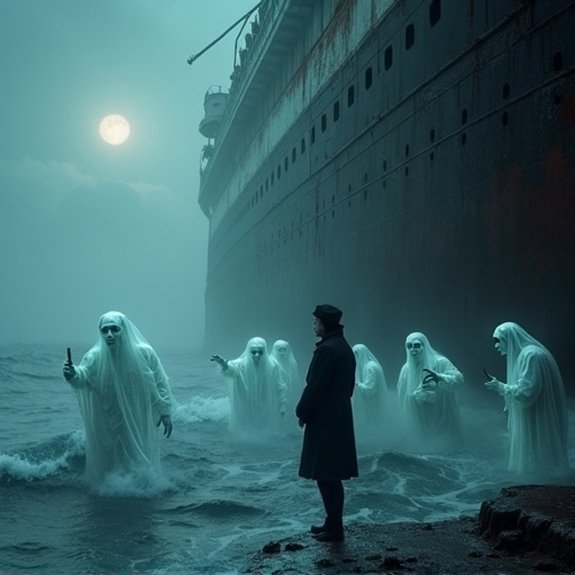
The tragedy left 710 survivors who’d carry their memories of that horrific night for the rest of their lives. Many reported supernatural encounters in subsequent years. Ruth Becker Blanchard claimed she’d seen apparitions of fellow passengers aboard other ships. Edith Russell insisted she’d witnessed ghostly figures walking through walls at the Waldorf-Astoria, where Titanic’s passengers had originally planned their victory dinner.
Charles Joughin, the ship’s baker who survived in freezing water for hours, reported seeing phantom lifeboats during later voyages. Eva Hart spoke of recurring visions of victims calling from the water. Multiple survivors described unexplained cold spots and hearing the ship’s band playing when near the ocean. These accounts, documented by researchers and journalists, became part of Titanic’s enduring mystique.
Common Theories or Explanations
Given the widespread nature of these supernatural reports, researchers have proposed several explanations for the paranormal experiences associated with Titanic. Psychologists attribute many sightings to survivor’s guilt and post-traumatic stress disorder, which can manifest as vivid hallucinations or dreams that survivors interpret as ghostly encounters. The collective trauma of 1,500 deaths in freezing waters created what experts call a “psychic imprint” on survivors’ memories.
Maritime historians suggest that extreme hypothermia can cause neurological effects, including visual and auditory hallucinations that persist as flashbacks. They’ve documented similar phenomena among other shipwreck survivors. Additionally, the phenomenon of “crisis apparitions”—where people report seeing loved ones at their moment of death—accounts for numerous testimonies from relatives who weren’t aboard but claimed to see victims appear to them on April 15, 1912.
Frequently Asked Questions
How Can I Visit Titanic Survivor Memorials or Gravesites Around the World?
One can visit Titanic survivor gravesites at Halifax’s Fairview Lawn Cemetery, Southampton’s cemeteries, and New York’s Woodlawn Cemetery. Memorial sites include Belfast’s Titanic Memorial Garden, Southampton’s Engineers’ Memorial, and Washington D.C.’s Women’s Titanic Memorial.
Are There Any Living Descendants of Survivors Who Share Ghost Stories?
Yes, several descendants actively share their families’ supernatural experiences. They’ve reported dreams of drowning relatives, unexplained cold spots near heirlooms, and sensing presences during memorial visits. Some participate in documentaries recounting these inherited ghostly encounters.
What Paranormal Investigation Equipment Works Best for Detecting Titanic-Related Spirits?
Paranormal investigators claim EMF detectors and spirit boxes work best for Titanic spirits, though there’s no scientific evidence supporting this. They’ve reportedly used these tools at maritime museums and memorials where artifacts are displayed.
Which Museums Display Artifacts With Reported Supernatural Activity?
Maritime museums in Halifax, Southampton, and Belfast reportedly experience paranormal activity near Titanic artifacts. Visitors’ve described cold spots around recovered items, while staff members claim they’ve witnessed display cases mysteriously fogging and personal effects moving overnight.
How Do I Verify if My Family Had Connections to Titanic Passengers?
One can verify family connections to Titanic passengers by searching Ellis Island records, Ancestry.com’s passenger lists, Encyclopedia Titanica’s database, and contacting maritime museums. They’ll need relatives’ names, birth dates, and immigration details for research.
The Poltergeist of Enfield: Latest Theories

Is the Stanley Hotel Really Haunted, or Just Hype?
The Vanishing Hotel Room Mystery
About The Author
