The Haunting of the White House: Folklore & Fact
The White House harbors more than political secrets. For over two centuries, presidents, staff, and dignitaries have reported encounters with unexplained phenomena within its historic walls. Abraham Lincoln’s ghost allegedly walks the corridors, while phantom footsteps echo through empty rooms. These accounts aren’t just folklore—they’re documented experiences from credible witnesses. What transforms America’s most powerful residence into a paranormal hotspot remains an unsettling mystery.
Introduction
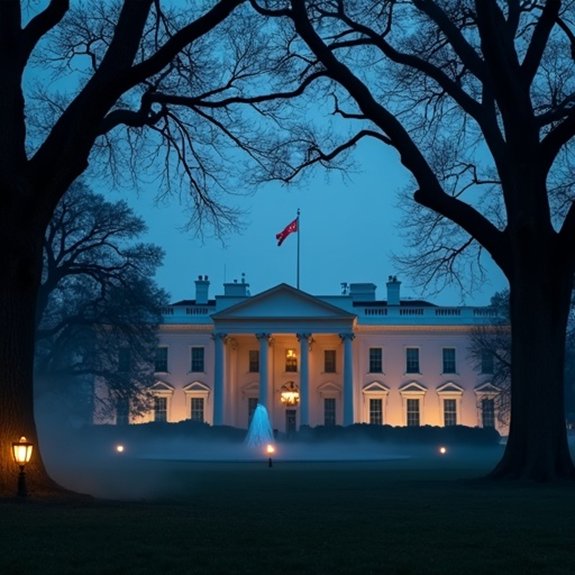
While millions of visitors tour the White House each year to glimpse America’s most famous residence, few realize they’re walking through corridors that countless witnesses claim are haunted by former presidents, first ladies, and other historical figures. For over two centuries, staff members, guests, and even presidents themselves have reported unexplained footsteps, mysterious knockings, and apparitions throughout the executive mansion. Abraham Lincoln’s ghost remains the most frequently sighted specter, but he’s far from alone. These accounts aren’t limited to superstitious individuals or attention-seekers; they’ve come from foreign dignitaries, seasoned politicians, and skeptical journalists. Whether one believes in the paranormal or not, the persistence and consistency of these stories have woven themselves into the White House’s rich tapestry of American history and folklore.
Presidential Deaths Sparked Legends
Although seven presidents have died while serving in office, it’s the dramatic circumstances surrounding their deaths that sparked the White House’s most enduring ghost stories. Abraham Lincoln’s assassination in 1865 created the mansion’s most famous specter. Staff and residents have reported seeing his tall figure near the Lincoln Bedroom and hearing footsteps in empty hallways. William Henry Harrison, who died just thirty-one days into his presidency, supposedly haunts the attic, where his ghostly coughing echoes his fatal pneumonia. Andrew Jackson’s spirit allegedly curses in the Rose Room, while John Tyler’s ghost waltzes through the Blue Room. These presidential deaths didn’t just change history—they transformed the White House into America’s most haunted address, where tragedy and legend intertwine.
Notable Cases or Sightings
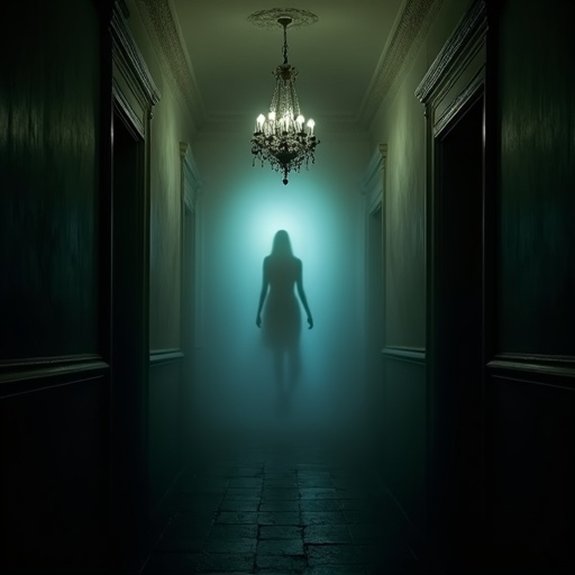
Since the White House opened its doors in 1800, prominent figures have documented spine-chilling encounters with its spectral residents. Winston Churchill refused to sleep in the Lincoln Bedroom after seeing America’s sixteenth president by the fireplace. Queen Wilhelmina of the Netherlands fainted when she answered a knock at her door to find Lincoln standing there. Eleanor Roosevelt’s secretary saw him sitting on his bed, pulling on his boots.
Harry Truman wrote to his wife about hearing footsteps and knocks throughout the residence. Reagan’s dog Rex would bark at the Lincoln Bedroom but wouldn’t enter. Hillary Clinton admitted feeling watched in the hallways. Staff members report seeing Abigail Adams hanging laundry in the East Room and encountering Andrew Jackson’s laughter echoing through the Rose Bedroom.
Common Theories or Explanations
Skeptics attribute these ghostly encounters to psychological factors rather than supernatural causes. They argue that the White House’s historical significance creates expectations that prime visitors for paranormal experiences. Sleep deprivation, common among staff working long hours, can trigger hallucinations and false perceptions. The building’s old infrastructure produces natural sounds—creaking floors, settling walls, and antiquated plumbing—that people misinterpret as ghostly activity.
Psychologists point to pareidolia, the brain’s tendency to find patterns where none exist, explaining why people see faces in shadows or figures in peripheral vision. Additionally, the power of suggestion plays a significant role. When someone hears ghost stories about specific rooms, they’re more likely to interpret ambiguous stimuli as supernatural. Environmental factors like electromagnetic fields from electrical wiring may also cause feelings of unease that people mistake for ghostly presences.
Frequently Asked Questions
Can the Public Take Ghost Tours of the White House?
No, the White House doesn’t offer public ghost tours. Visitors can’t explore its haunted history through official tours, though standard public tours are available by request through one’s congressional representative for self-guided daytime visits.
Have Any Sitting Presidents Refused to Live There Due to Hauntings?
No sitting president’s ever refused to live in the White House due to hauntings. While several presidents and first families have reported ghostly encounters, they’ve all remained in residence throughout their terms despite any supernatural experiences.
What Security Protocols Exist for Reported Paranormal Activities?
The Secret Service doesn’t maintain formal paranormal protocols, though staff can report unusual occurrences through standard security channels. They’ll investigate disturbances pragmatically, checking for intruders or mechanical issues rather than assuming supernatural causes first.
Do White House Staff Members Sign NDAS About Supernatural Experiences?
White House staff members don’t sign specific NDAs about supernatural experiences, but they’re bound by general confidentiality agreements covering all internal matters. Former employees have freely shared ghost stories without facing legal consequences.
Has the Government Officially Investigated Any White House Ghost Sightings?
The government hasn’t conducted official investigations into White House ghost sightings. While presidents and staff have shared supernatural stories, federal agencies don’t investigate paranormal claims at the executive mansion, treating them as folklore rather than fact.

Could the Thunderbird Be More Than a Legend?

Real Animals Once Believed to Be Mythical
The Leshy: Russian Forest Spirit or Cryptid?
About The Author
