Are There Ghosts at Nuclear Sites?
Nuclear facilities worldwide have documented hundreds of unexplained encounters since the 1950s. Security teams at decommissioned reactors report shadowy figures moving through restricted zones. Technicians describe equipment malfunctions coinciding with strange apparitions. Scientists can’t explain why these phenomena cluster around radioactive sites. The military’s classified files on these incidents have recently surfaced, revealing disturbing patterns that challenge conventional understanding of what happens when radiation meets the unknown.
Introduction
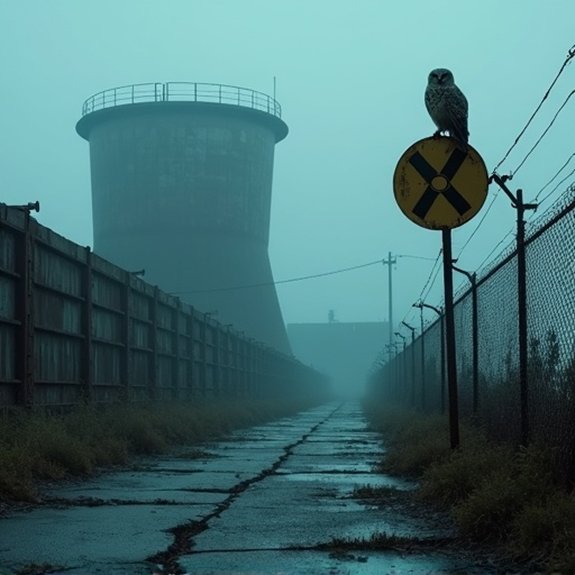
Something unsettling lurks within the concrete corridors and abandoned control rooms of nuclear facilities worldwide. Workers at active plants and visitors to decommissioned sites report unexplained phenomena that defy conventional explanation. They’ve witnessed shadowy figures, heard phantom alarms, and felt sudden temperature drops in areas where radiation once peaked.
These accounts aren’t limited to one location or culture. From Chernobyl’s exclusion zone to America’s oldest reactors, similar stories emerge. Security guards describe footsteps in restricted areas where no one’s authorized to walk. Engineers report equipment activating without human intervention.
While skeptics attribute these experiences to psychological factors or environmental conditions, the consistency of reports raises questions. The intersection of tragedy, technology, and human perception at nuclear sites creates unique conditions that challenge understanding.
Cold War Paranormal Reports
Everyone who worked at classified nuclear facilities during the Cold War knew better than to discuss what they’d witnessed behind security fences. Yet declassified documents from the 1950s and 1960s reveal numerous reports of unexplained phenomena at nuclear weapons laboratories and missile silos.
Security personnel at Los Alamos documented strange lights hovering near restricted areas where plutonium was stored. Guards at Nevada Test Site filed incident reports describing shadowy figures walking through solid walls near underground testing chambers. Air Force technicians stationed at Minuteman missile facilities across Montana and North Dakota reported equipment malfunctions coinciding with apparitions in launch control centers.
The military’s response remained consistent: investigators attributed these sightings to fatigue, stress, or radiation exposure affecting perception. They’d quickly transfer witnesses to different assignments.
Notable Cases or Sightings
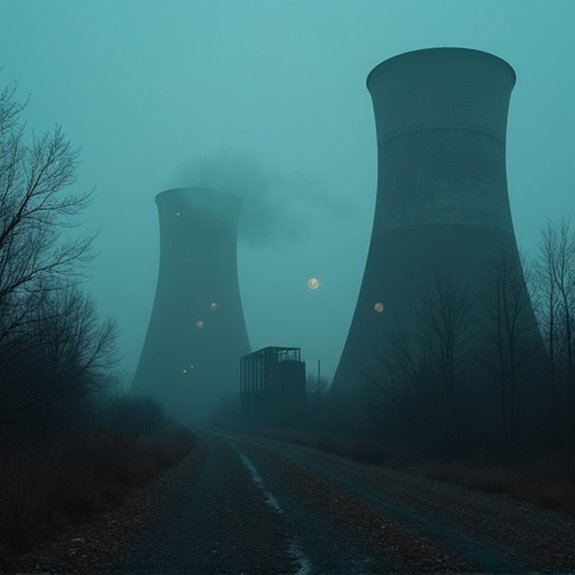
While the military buried most reports in classified files, several incidents proved too dramatic to completely suppress. At Hanford Site in 1987, six security guards independently reported a translucent figure walking through reactor containment walls. The entity didn’t trigger motion sensors but appeared on infrared cameras as a cold signature moving against thermal patterns.
Rocky Flats workers documented recurring sightings between 1969 and 1971. Multiple technicians described identical encounters with a woman in 1940s clothing who’d vanish near Building 771’s plutonium processing area. She’d appear during shift changes, sometimes speaking workers’ names before disappearing.
The UK’s Sellafield facility logged twenty-three unexplained visual phenomena from 1982 to 1984. Night shift operators photographed luminous shapes hovering near spent fuel pools. These manifestations coincided with electromagnetic anomalies that briefly disrupted monitoring equipment.
Common Theories or Explanations
Scientists who’ve studied these phenomena propose several competing explanations for the reported hauntings at nuclear facilities. Some researchers suggest electromagnetic fields from radioactive materials interfere with brain function, triggering hallucinations and feelings of unease. Others point to infrasound—vibrations below human hearing range—produced by heavy machinery and cooling systems that can cause anxiety and visual distortions.
Psychological factors also play a role. Workers’ awareness of radiation’s invisible danger creates heightened stress, making them more susceptible to misinterpreting ordinary events as paranormal. The isolation of many nuclear sites amplifies this effect.
Skeptics argue that confirmation bias drives these stories—once a location gains a haunted reputation, people expect and thus perceive ghostly activity. They note that similar reports don’t emerge from medical radiation facilities despite comparable exposure levels.
Frequently Asked Questions
Can Radiation Detectors or Geiger Counters Pick up Paranormal Activity?
No, radiation detectors and Geiger counters can’t detect paranormal activity. They’re designed to measure ionizing radiation from radioactive materials. Any unusual readings at nuclear sites have scientific explanations like equipment malfunction or actual radiation sources.
Are Nuclear Site Ghost Sightings More Common During Specific Shifts or Times?
Reports don’t show nuclear site ghost sightings occurring more frequently during specific shifts. Workers claim encounters happen randomly across all hours, though night shifts naturally create more atmospheric conditions that’d heighten psychological suggestibility.
Do Security Protocols at Nuclear Facilities Address Reported Paranormal Encounters?
Security protocols at nuclear facilities don’t officially address paranormal encounters, but they’ve developed informal procedures. Guards document unexplained incidents in logs, conduct paired patrols in reportedly active areas, and supervisors quietly reassign spooked personnel when needed.
Have Any Nuclear Workers Officially Filed Incident Reports About Ghost Sightings?
While nuclear facilities don’t publicly release such documents, former workers at sites like Hanford and Savannah River have described filing internal reports about unexplained phenomena, though management typically reclassifies these as equipment malfunctions or misidentifications.
Are Decommissioned Nuclear Sites More Likely to Have Paranormal Reports Than Active Ones?
Decommissioned nuclear sites don’t generate more paranormal reports than active ones. Security personnel at both types of facilities occasionally report unexplained phenomena, but there’s no documented pattern showing abandoned sites attract more ghost sightings.

Why Do Ghost Stories Often Involve Children?

Haunted Trees: Spirits in the Bark
Haunted Barns & Farmhouses
About The Author
