The Haunting of the Tower of London Redux
The Tower of London‘s ancient stones don’t just hold history—they’re said to trap something darker. Since William the Conqueror ordered its construction in 1078, this fortress has witnessed nearly a millennium of imprisonment, torture, and execution. Now visitors report encounters with headless queens, vanishing princes, and unexplained cold spots throughout its chambers. What’s causing these phenomena in one of England’s most visited landmarks? The evidence suggests the Tower’s haunting isn’t ending anytime soon.
Introduction
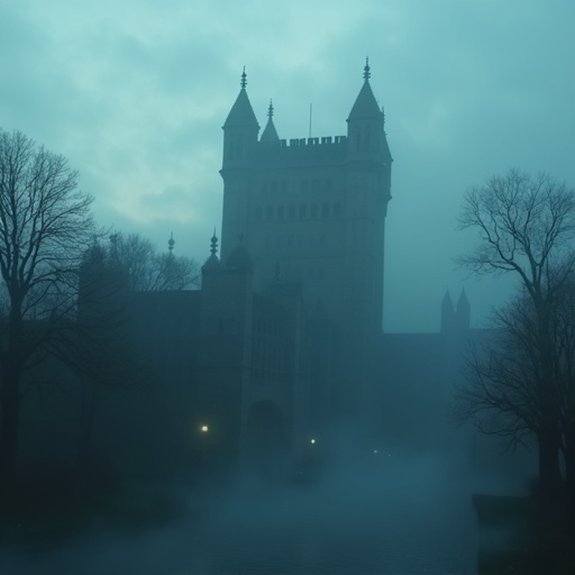
When William the Conqueror built the Tower of London in 1066, he couldn’t have imagined that his fortress would become one of Britain’s most haunted locations. Over nearly a millennium, the Tower’s served as a royal palace, prison, execution site, and treasury. Its stone walls have witnessed countless tragedies, from royal beheadings to mysterious disappearances.
Today, visitors and guards report chilling encounters with spectral figures who’ve met violent ends within the Tower’s grounds. These ghostly residents include executed queens, murdered princes, and tortured prisoners. Their restless spirits allegedly wander the corridors, appear on the battlements, and manifest in the chapel. The Tower’s dark history has transformed it from a symbol of Norman power into England’s most notorious paranormal hotspot.
Tower’s 1078 Construction Date
The Tower of London‘s actual construction began in 1078, not 1066 as commonly believed. William the Conqueror ordered its creation as part of the Norman conquest’s consolidation phase. He’d already secured England militarily but needed permanent fortifications to maintain control over London’s Saxon population.
The White Tower, the fortress’s central keep, took approximately twenty years to complete. Gundulf, Bishop of Rochester, supervised the massive undertaking. Workers used Kentish ragstone shipped via the Thames and Caen limestone imported from Normandy. The structure’s walls measured up to fifteen feet thick at the base.
This late 11th-century construction date matters for understanding the Tower’s haunted reputation. Many reported ghostly encounters involve figures from periods well after 1078, when the fortress had already established itself as England’s most feared prison and execution site.
Notable Cases or Sightings
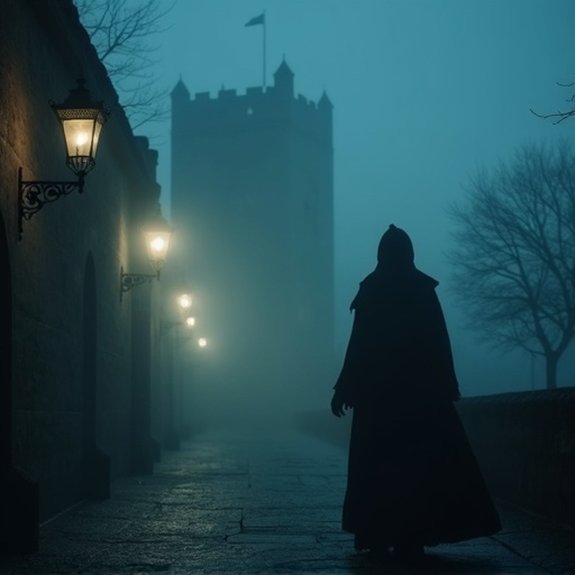
Guards and visitors have documented hundreds of ghostly encounters at the Tower since Victorian times, with some accounts dating back to the 16th century. Anne Boleyn‘s headless specter reportedly walks the Chapel Royal, where witnesses have seen her carrying her severed head. In 1864, a guard bayoneted a white figure near the Jewel House, only to watch his weapon pass through empty air before he fainted.
The Bloody Tower‘s produced multiple sightings of the young Princes, Edward V and Richard. Yeoman Warders’ve reported hearing children’s laughter and footsteps on the battlements. Lady Jane Grey‘s ghost appears annually on February 12th, the execution anniversary. Thomas Becket’s apparition supposedly halted construction of the Inner Curtain Wall three times during Henry III’s reign, forcing architects to build a chapel dedicated to him.
Common Theories or Explanations
While skeptics attribute Tower hauntings to psychological factors and environmental conditions, paranormal researchers propose various explanations for the persistent phenomena. They’ve suggested the limestone walls act as recording devices, capturing traumatic events and replaying them under specific atmospheric conditions. This “stone tape theory” attempts to explain why witnesses report similar apparitions across centuries.
Others point to the Tower’s violent history creating residual energy that manifests as ghostly encounters. The site’s emotional intensity—where hundreds faced torture and execution—supposedly left psychic imprints that sensitive individuals can perceive.
Environmental factors can’t be dismissed. The Thames’s proximity creates temperature fluctuations and drafts throughout the ancient corridors. Infrasound from nearby traffic vibrations may trigger feelings of unease. These natural explanations compete with supernatural theories, leaving the Tower’s hauntings unresolved.
Frequently Asked Questions
Can Visitors Book Overnight Ghost Hunting Experiences at the Tower?
No, visitors can’t book overnight ghost hunting experiences at the Tower of London. The historic site doesn’t offer paranormal investigations or after-dark tours for the public. It closes to visitors in the early evening daily.
What Safety Protocols Exist for Paranormal Investigators Accessing Restricted Areas?
Paranormal investigators can’t access restricted areas at the Tower of London. The site doesn’t permit ghost hunting investigations. Standard visitors must stay in designated public areas during regular hours, following the Tower’s strict safety guidelines.
Are Photography and Recording Devices Permitted During After-Hours Ghost Tours?
Most after-hours ghost tours at the Tower of London permit photography and recording devices, though flash photography’s often restricted. Tour operators typically encourage guests to capture paranormal evidence, but they’ll enforce strict rules in sensitive areas.
How Much Do Specialized Paranormal Investigation Tours Cost?
Specialized paranormal investigation tours at the Tower of London aren’t officially offered. Standard after-hours tours cost around £35-45 per person. Private ghost hunting companies occasionally arrange exclusive access events that can range from £75-150 per participant.
Which Specific Tower Locations Are Off-Limits for Ghost Hunting Activities?
The Crown Jewels exhibition, the Queen’s House, and several royal apartments aren’t accessible for ghost hunting. Security also restricts the torture chambers and certain medieval towers where structural preservation’s required for safety reasons.
Haunted Libraries: Spirits of Readers Past

Residual Hauntings Vs Intelligent Hauntings

Do the Ghosts of Gettysburg Still March at Night?
About The Author
