Haunted Churches & Abbeys
Throughout history, sacred spaces haven’t always remained peaceful sanctuaries. Churches and abbeys across Europe harbor dark secrets within their ancient walls, where visitors report unexplained phenomena that defy logical explanation. From phantom monks gliding through ruined cloisters to disembodied chants echoing in empty naves, these sites challenge what’s known about the boundary between past and present. The truth behind these occurrences might prove more disturbing than the hauntings themselves.
Introduction
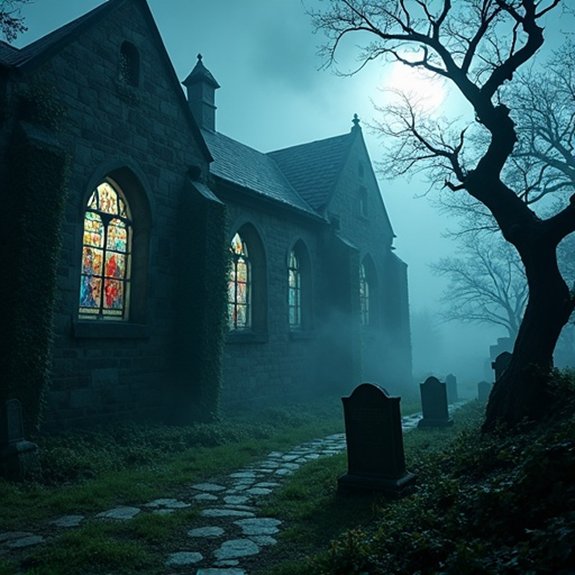
While many seek solace and spiritual peace within the hallowed walls of churches and abbeys, these sacred spaces often harbor darker histories that refuse to rest. Throughout centuries, religious buildings have witnessed countless deaths, tragedies, and turbulent events that’ve left indelible marks on their atmosphere. From medieval monasteries where monks met violent ends to parish churches built atop ancient burial grounds, these structures attract paranormal activity that defies explanation. Visitors report ghostly apparitions, unexplained footsteps echoing through empty naves, and mysterious lights flickering in abandoned bell towers. Whether one believes in the supernatural or not, the documented accounts of strange occurrences in these holy places can’t be easily dismissed. These haunted sanctuaries challenge the boundary between faith and fear.
Medieval Monastery Dissolution’s Spiritual Aftermath
When Henry VIII dissolved England’s monasteries between 1536 and 1541, he didn’t just destroy buildings—he shattered centuries of spiritual continuity that many believe still echoes through the ruins today. The violent dispersal of religious communities left behind what paranormal investigators call “psychic imprints”—residual energy from monks who’d devoted their lives to prayer and contemplation.
Many former abbeys report unexplained phenomena: phantom chanting at Glastonbury, processional footsteps at Fountains Abbey, and shadowy figures in Whitby’s ruins. Historians note that monks who’d taken vows of stability—promising to remain at their monastery until death—were forcibly expelled. This traumatic severing of sacred bonds may’ve created the spiritual unrest visitors sense today. The dissolution’s speed and brutality transformed holy sanctuaries into haunted shells overnight.
Notable Cases or Sightings
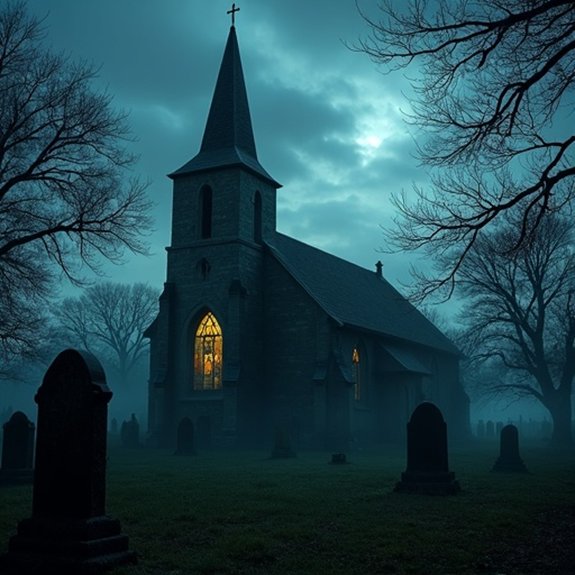
The spiritual disturbances left by the dissolution have manifested in specific, well-documented encounters that’ve captivated investigators for generations. At Whitby Abbey, visitors report seeing a ghostly procession of monks ascending the 199 steps at dawn, their chants echoing despite the ruins’ open sky. Bolton Abbey’s spectral figure appears near the altar ruins during full moons, while witnesses at Glastonbury describe hearing Latin prayers emanating from empty chambers.
Tintern Abbey’s most famous sighting involves a hooded monk who vanishes when approached near the nave. Multiple accounts from Fountains Abbey detail unexplained cold spots and the smell of incense where the chapel once stood. These phenomena share common elements: they occur at sites of violent dissolution, involve sensory experiences beyond mere visual apparitions, and often coincide with significant dates in the monastic calendar.
Common Theories or Explanations
Though skeptics attribute these phenomena to environmental factors and psychological suggestion, paranormal researchers propose that traumatic historical events can imprint themselves on locations. They’ve developed the “stone tape theory,” suggesting limestone and quartz in church foundations can record and replay emotional energy from past events.
Environmental explanations focus on infrasound—vibrations below human hearing that old buildings produce through drafts, settling foundations, and organ pipes. These frequencies can trigger anxiety, hallucinations, and feelings of being watched. Carbon monoxide from deteriorating heating systems also causes disorientation and ghostly visions.
Psychological factors include expectation bias and the power of suggestion in sacred spaces. The brain’s pattern recognition often misinterprets shadows and sounds in dimly lit churches. Additionally, electromagnetic fields from outdated wiring can affect temporal lobes, producing religious or supernatural experiences.
Frequently Asked Questions
Can I Visit These Haunted Churches at Night for Ghost Hunting?
Most haunted churches don’t allow nighttime ghost hunting without permission. Visitors should contact the church’s administration first, as they’ll need special access. Some locations offer organized paranormal tours, but trespassing’s illegal and disrespectful.
Are There Any Safety Concerns When Exploring Abandoned Religious Sites?
Yes, explorers face significant safety concerns at abandoned religious sites. They’ll encounter structural hazards like collapsing floors, broken glass, and unstable walls. There’s also risk of trespassing charges, wildlife encounters, and potential criminal activity.
What Equipment Do Paranormal Investigators Typically Use in Churches?
Paranormal investigators typically bring EMF detectors, digital voice recorders, infrared cameras, and temperature sensors into churches. They’ll also use motion detectors, K2 meters, and spirit boxes to capture potential evidence of supernatural activity during investigations.
Do I Need Permission to Investigate Reportedly Haunted Religious Buildings?
Yes, investigators always need permission from property owners or religious authorities before conducting paranormal investigations in churches or abbeys. They’ll require written consent, and many religious buildings won’t allow investigations due to spiritual or practical concerns.
Are There Guided Ghost Tours Available at These Locations?
Many haunted churches and abbeys offer guided ghost tours, especially in tourist areas. Visitors can find evening tours at famous sites like Westminster Abbey, St. Louis Cathedral, and Edinburgh’s Greyfriars Kirk. They’re typically seasonal offerings.
The Witches’ House: Haunted Homes by Legend
The Spook Light: Strange Lights and Ghosts
Haunted Mines of Cornwall
About The Author
