The Ghosts of Pompeii & Herculaneum
The ancient streets of Pompeii and Herculaneum don’t just preserve Roman life—they’re said to harbor something more unsettling. Visitors report phantom footsteps echoing through empty villas and whispered Latin drifting from the Forum’s ruins. Some claim they’ve seen translucent figures wandering the stone pathways at dusk. Whether these encounters stem from tragedy’s psychological imprint or something genuinely supernatural, the buried cities guard their secrets beneath layers of volcanic ash and time.
Introduction
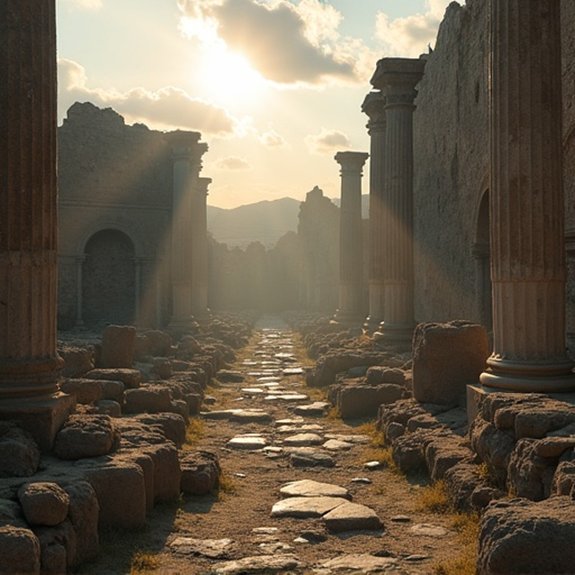
When Mount Vesuvius erupted in 79 AD, it didn’t just destroy two thriving Roman cities—it created an archaeological time capsule that would haunt humanity’s imagination for centuries. The volcanic ash and pumice that buried Pompeii and Herculaneum preserved extraordinary details of Roman life, from bread still in ovens to intricate frescoes on villa walls. These cities weren’t rediscovered until the 18th century, when excavators found something remarkable: hollow spaces in the hardened ash where bodies had decomposed. By filling these voids with plaster, archaeologists created haunting casts of Vesuvius’s victims—men, women, and children frozen in their final moments. Today, these “ghosts” offer visitors an intimate, disturbing connection to ancient Rome’s most catastrophic natural disaster.
Vesuvius Erupts, 79 AD
The morning of August 24th began like any other in the Bay of Naples—until a massive explosion shattered the calm and sent a towering column of ash and pumice shooting 20 miles into the sky. Mount Vesuvius had awakened after centuries of dormancy, catching the region’s inhabitants completely unprepared.
Within hours, Pompeii’s streets filled with falling pumice stones. Many residents fled immediately, but thousands stayed behind to gather valuables or seek shelter. They’d made a fatal miscalculation. By nightfall, pyroclastic flows—superheated clouds of gas and volcanic matter moving at hurricane speeds—raced down Vesuvius’s slopes. These flows instantly killed anyone in their path, reaching temperatures of 750°F.
Herculaneum’s end came swiftly when massive pyroclastic surges buried the town under 60 feet of volcanic material. Within 24 hours, both cities had vanished beneath Vesuvius’s wrath.
Notable Cases or Sightings
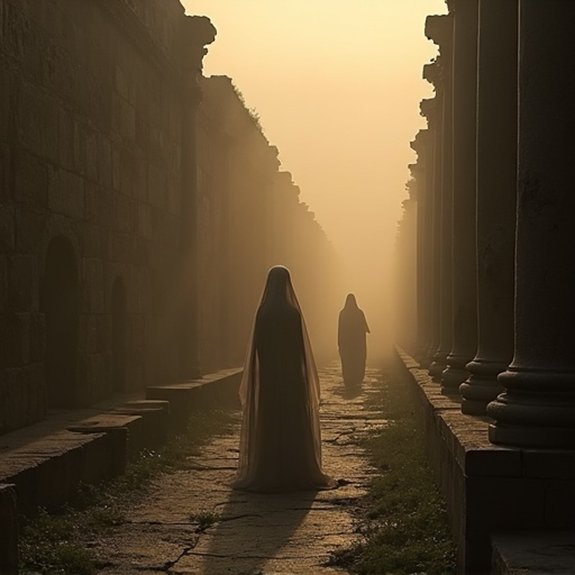
Though centuries have passed since Vesuvius buried these ancient cities, visitors and locals report encounters that defy explanation. Tour guides describe hearing Latin whispers near the Forum’s ruins after closing hours. In 2018, a British photographer captured a translucent figure standing beside plaster casts of victims—the image couldn’t be replicated despite multiple attempts.
Security guards at Herculaneum’s site frequently report footsteps echoing through empty corridors and doors closing without wind. Maria Rossi, who’s worked there since 2005, claims she’s seen a young girl in Roman dress vanish near the ancient bakery three times. Archaeological teams working late have documented unexplained cold spots and equipment malfunctions near excavation sites where human remains were discovered. These accounts persist despite skeptics attributing them to imagination and environmental factors.
Common Theories or Explanations
While skeptics dismiss these encounters as mere suggestion, researchers have proposed several explanations for Pompeii and Herculaneum’s paranormal reports. Some parapsychologists believe the volcanic ash‘s high silica content creates a “stone tape” effect, where traumatic events imprint onto the environment and replay under specific conditions. Others suggest the sites’ electromagnetic fields, altered by volcanic minerals, trigger hallucinations or temporal lobe disturbances in sensitive visitors.
Psychologists argue that visitors’ knowledge of the tragedy primes them for ghostly experiences through expectation and emotional projection. They’re fundamentally seeing what they expect to see. Environmental factors like infrasound from wind passing through ruins can cause unease and visual distortions. The preserved human forms particularly affect visitors, creating a psychological bridge between past and present that manifests as perceived supernatural activity.
Frequently Asked Questions
Can Tourists Visit Pompeii and Herculaneum at Night to Experience Paranormal Activity?
Tourists can’t typically visit Pompeii and Herculaneum at night for paranormal experiences. Both sites close at sunset, though occasional special evening events occur. They’d need to join rare authorized night tours or cultural events instead.
What Equipment Do Ghost Hunters Typically Use When Investigating These Ancient Sites?
Ghost hunters investigating Pompeii and Herculaneum typically use EMF meters, digital voice recorders for EVPs, infrared cameras, and temperature sensors. They’ll often bring K2 meters and spirit boxes to detect paranormal energy in ancient ruins.
Are There Any Guided Ghost Tours Available at Pompeii or Herculaneum?
Yes, several companies offer nighttime ghost tours at Pompeii, though they’re less common at Herculaneum. These tours typically feature paranormal stories, EVP sessions, and visits to reportedly haunted areas like the amphitheater and brothel.
Have Any Famous Mediums or Psychics Investigated the Supernatural Claims There?
Several paranormal investigators and psychics have visited Pompeii claiming to sense ancient spirits. While some mediums report experiencing visions of victims’ final moments, there aren’t documented cases of internationally famous psychics conducting formal investigations there.
Do Local Residents Report More Paranormal Experiences Than Tourists Visiting the Sites?
Local residents don’t typically report more paranormal experiences than tourists at these sites. Visitors often claim they’ve witnessed apparitions or heard ancient sounds, while locals tend to view the ruins with less supernatural interpretation.

Haunted Islands: Isolated Ghostly Places
The Curse of the Screaming Tunnel

The Haunted Cathedrals of Europe
About The Author
