The Ghost Photographs That Shocked the World
Throughout history, certain photographs have stopped viewers cold, challenging everything they thought they knew about death and the afterlife. These controversial images, from Victorian séances to abandoned mansions, haven’t just sparked debates—they’ve fundamentally altered how society views the paranormal. While skeptics rush to debunk them and believers embrace their authenticity, the photographs themselves remain frozen in time, holding secrets that modern technology still can’t fully explain.
Introduction
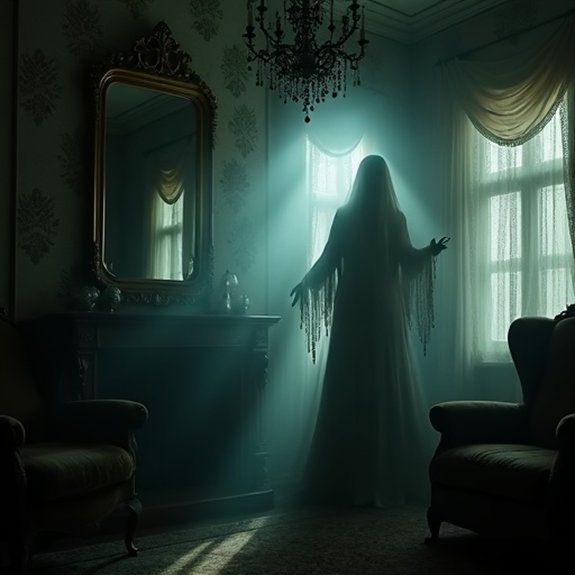
While skeptics dismiss them as hoaxes and believers herald them as proof of the afterlife, ghost photographs have captivated audiences since the camera’s invention in the 1800s. These mysterious images haven’t just entertained the masses—they’ve sparked scientific debates, exposed fraudulent mediums, and influenced popular culture for generations.
From William Mumler’s spirit photography in 1860s Boston to modern-day paranormal investigators armed with digital cameras, people haven’t stopped trying to capture evidence of the supernatural. Some photographs became international sensations, appearing in newspapers and drawing crowds to exhibitions. Others destroyed reputations when they’re proven fake.
The most famous ghost photographs share common traits: they’re ambiguous enough to invite interpretation, dramatic enough to stir emotion, and controversial enough to divide opinion. Each image tells a story beyond what the lens captured.
Victorian Era Spirit Photography
When William Mumler accidentally discovered double exposure in 1861, he didn’t just create a photographic technique—he launched an entire industry built on grief and hope. His “spirit photographs” showed translucent figures hovering behind living subjects, supposedly capturing deceased loved ones from beyond the grave. The American Civil War’s devastating death toll created thousands of grieving families desperate for proof their lost soldiers weren’t truly gone.
Mumler’s Boston studio attracted believers who’d pay twenty-five times the standard photograph rate. Mary Todd Lincoln famously posed for him, hoping to reconnect with her assassinated husband. Though skeptics exposed Mumler’s fraud in an 1869 trial, spirit photography spread across America and Europe. Photographers exploited double exposures, pre-prepared plates, and clever darkroom tricks to manufacture ghostly apparitions.
Notable Cases or Sightings
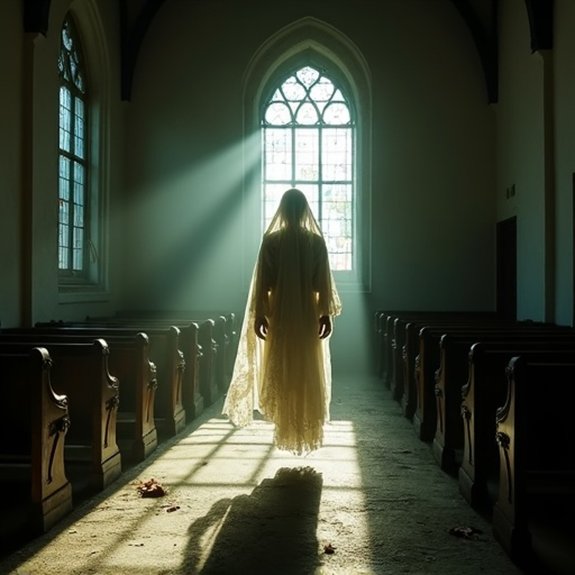
You’ve probably seen the Brown Lady of Raynham Hall—she’s perhaps the world’s most famous ghost photograph. Captured in 1936 by photographers from Country Life magazine, the image shows a translucent figure descending a staircase. The photographers claimed they’d witnessed the apparition firsthand before snapping the shot.
Another compelling case emerged at England’s Borley Rectory, dubbed “the most haunted house in England.” Harry Price’s investigation produced multiple photographs of alleged spirits, though critics later questioned their authenticity. The Amityville Horror house generated its own controversial images, including a photo that seemingly captured a young boy peering from a doorway—despite the house being empty. These cases sparked intense debate between believers and skeptics, with each photograph undergoing scrutiny from experts who’ve analyzed everything from exposure techniques to potential double exposures.
Common Theories or Explanations
Although ghost photographs captivate millions worldwide, scientific explanations often account for these mysterious images. Camera malfunctions create the most common “ghosts.” Double exposures blend two separate images, producing translucent figures that weren’t visible during shooting. Long exposure times capture moving objects as blurry, ethereal forms while stationary elements remain sharp.
Environmental factors also contribute to ghostly appearances. Dust particles, insects, or moisture droplets near the camera lens reflect flash photography, creating orbs that people mistake for spirits. Pareidolia, the brain’s tendency to recognize patterns in random data, makes viewers see faces in shadows, smoke, or architectural features. Light leaks in old cameras produce streaks resembling supernatural entities. Temperature variations cause lens fogging that appears otherworldly. These rational explanations don’t diminish photography’s mystery but demonstrate how ordinary phenomena transform into extraordinary interpretations.
Frequently Asked Questions
How Much Can I Sell an Authentic Vintage Ghost Photograph for Today?
A seller can’t typically get much for “authentic” vintage ghost photographs since they’re considered historical curiosities rather than genuine paranormal evidence. Collectors might pay $50-500 depending on the photo’s age, condition, and notoriety.
What Camera Settings Work Best for Capturing Paranormal Activity?
Most paranormal investigators recommend using manual settings with high ISO (3200-6400), slow shutter speeds (1-30 seconds), and wide apertures (f/2.8 or lower). They’ll often disable flash since it can create false anomalies in photos.
Are There Any Legal Issues With Publishing Ghost Photographs?
Publishers don’t face legal issues with ghost photographs themselves, but they’ll need permission to photograph on private property and releases from any living people visible in the images. Copyright and trespassing laws still apply.
Which Modern Photo Editing Apps Can Detect Fake Ghost Images?
Adobe’s Content Authenticity tools, FotoForensics, and Izitru can detect manipulated ghost images through pixel analysis. They’ll examine metadata, compression artifacts, and editing traces. Smartphone apps like Fake Image Detector also spot common fakery techniques quickly.
What Locations Have the Highest Success Rate for Ghost Photography?
Paranormal investigators report that abandoned hospitals, historic battlefields, and old cemeteries yield the most ghost photographs. They’ve found Eastern State Penitentiary, Gettysburg, and London’s Tower particularly active, though skeptics attribute this to environmental factors.
Is the Ghost Train of Lincoln County Still Running?
The Curse of the Screaming Tunnel

The Haunted Cathedrals of Europe
About The Author
