The Apparition of Drowned Sailors
The sea doesn’t always return what it takes. For centuries, sailors have reported encountering spectral figures of their drowned comrades—pale forms rising from fog-shrouded waters or voices calling through storm winds. These apparitions aren’t mere superstition. They’ve shaped maritime practices, influenced navigation decisions, and left witnesses forever changed. What drives these restless spirits to breach the boundary between the depths and the living world remains a disturbing mystery.
Introduction
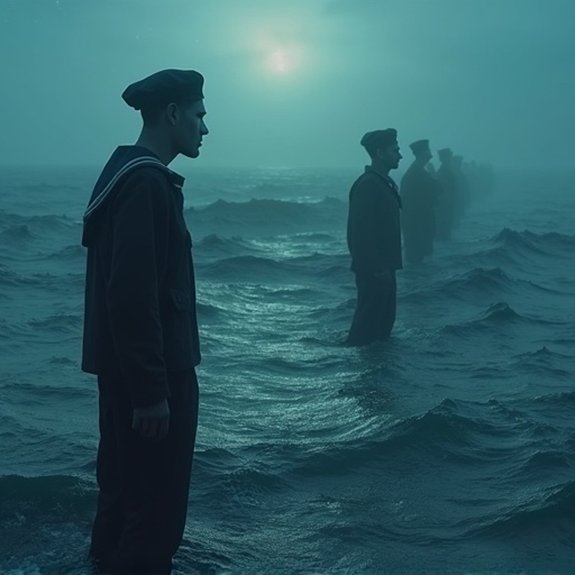
When sailors vanish beneath dark waters, their stories don’t always end with death. Maritime folklore brims with accounts of ghostly seafarers who’ve returned from watery graves to haunt ships, coastlines, and the loved ones they left behind. These spectral visitors appear in various forms—from translucent figures dripping seawater to disembodied voices calling through fog.
Cultures worldwide share remarkably similar tales of drowned sailors’ spirits. They’re said to manifest during storms, warn of impending disasters, or seek closure for unfinished business. Some apparitions guide lost vessels to safety, while others lure unsuspecting mariners to their doom. Whether born from grief, guilt, or the sea’s mysterious nature, these supernatural encounters’ve shaped maritime traditions for centuries, influencing everything from sailing superstitions to burial customs at sea.
Maritime Folklore’s Ancient Roots
Three thousand years before modern navies sailed the oceans, ancient civilizations already whispered of phantoms rising from the depths. Greek sailors feared the souls of those lost at sea, believing they’d become restless spirits unable to cross into Hades without proper burial rites. The Phoenicians carved protective symbols on their vessels’ prows to ward off drowned men’s vengeful ghosts.
These beliefs weren’t confined to the Mediterranean. Norse warriors spoke of draugr—the undead who’d emerge from watery graves to drag the living beneath the waves. Chinese mariners burned incense and offered rice to appease water ghosts called shuǐ guǐ. Each culture developed its own rituals to honor the sea’s dead, recognizing that those who perished in deep waters faced a uniquely cursed fate.
Notable Cases or Sightings
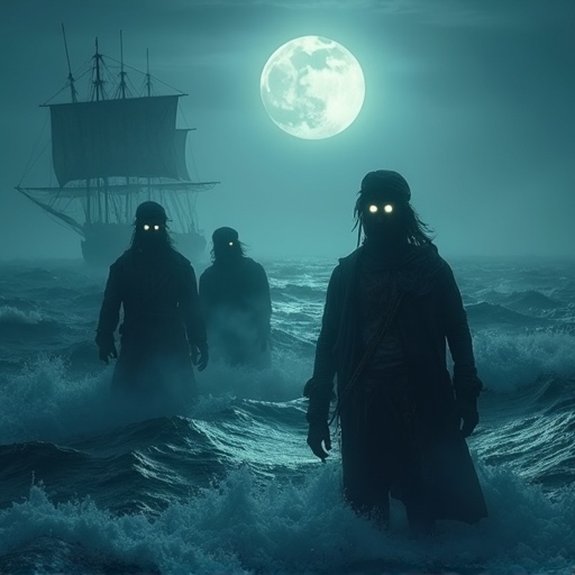
As fog rolled across the North Atlantic on April 15, 1912, multiple ships reported seeing ghostly figures in the water near the Titanic’s wreck site—apparitions that witnesses claimed appeared human but moved with an unnatural fluidity through the freezing waves. The SS Californian’s crew documented seventeen separate sightings that night, describing translucent forms rising from the depths.
Throughout history, similar accounts’ve emerged from disaster sites. The 1628 Vasa sinking in Stockholm harbor produced centuries of apparition reports. Locals still claim they see Swedish sailors walking across the water on foggy August nights. The USS Cyclops disappearance in 1918 sparked numerous ghost ship sightings in the Bermuda Triangle, with merchant vessels reporting spectral crewmen beckoning from nonexistent decks. These cases share common elements: maritime tragedies, multiple witnesses, and persistent regional legends.
Common Theories or Explanations
Scientists’ve proposed several explanations for these maritime apparitions, ranging from optical phenomena to psychological responses to trauma. Mirages created by temperature inversions over water can distort distant objects, making debris or waves appear humanlike. Bioluminescent organisms sometimes create ghostly glows that sailors interpret as spectral figures.
Psychologists suggest survivor’s guilt drives witnesses to project images of lost crew members onto ambiguous visual stimuli. Sleep deprivation, common during storms or extended voyages, heightens susceptibility to hallucinations. The brain’s pattern recognition system may construct familiar faces from random shapes in fog or spray.
Infrasound generated by ocean waves can trigger feelings of dread and visual disturbances. Some researchers believe electromagnetic fields near shipwrecks affect temporal lobe activity, producing vivid apparitions that feel completely real.
Frequently Asked Questions
What Should You Do if You Encounter a Drowned Sailor’s Apparition?
If someone encounters a drowned sailor’s apparition, they shouldn’t run or show fear. They’d best remain calm, acknowledge the spirit respectfully, and slowly back away while avoiding direct eye contact until the apparition fades.
Are There Specific Locations Where These Apparitions Appear More Frequently?
They’re most commonly seen near shipwreck sites, lighthouses, and rocky coastlines where vessels historically foundered. Harbors with tragic maritime histories also attract these spirits, particularly during foggy nights when visibility’s poor and danger’s heightened.
Can Drowned Sailors’ Spirits Communicate Messages to the Living?
Maritime folklore suggests drowned sailors’ spirits can’t speak directly but communicate through signs—unexplained knocking sounds on hulls, sudden temperature drops, or appearing in dreams to warn loved ones of impending storms or maritime dangers.
Do These Apparitions Appear Differently in Various Cultures Around the World?
Yes, they’ve manifested differently across cultures. Japanese folklore depicts yūrei emerging from water with long black hair, while European traditions show translucent sailors in soaked clothing. Pacific Islander cultures see them as guardian spirits warning of storms.
Are There Any Protective Rituals Sailors Use to Prevent Becoming Apparitions?
Sailors have traditionally carried protective talismans like carved figureheads, worn gold earrings, and tattooed religious symbols on their bodies. They’ve performed rituals including coin offerings to Neptune, christening ships with wine, and whistling prohibitions.



About The Author
