Haunted Prisons of Eastern Europe
Eastern Europe’s abandoned prisons don’t just hold cells and chains—they’re repositories of reported paranormal activity that’s attracted investigators for decades. From Romania’s Pitești to Poland’s Karosta, these facilities share disturbing patterns: shadow figures in corridors, voices echoing from empty wings, and temperature drops that defy explanation. While skeptics dismiss these accounts, the consistency of reports across different sites and witnesses suggests something more complex lurks within these walls.
Introduction
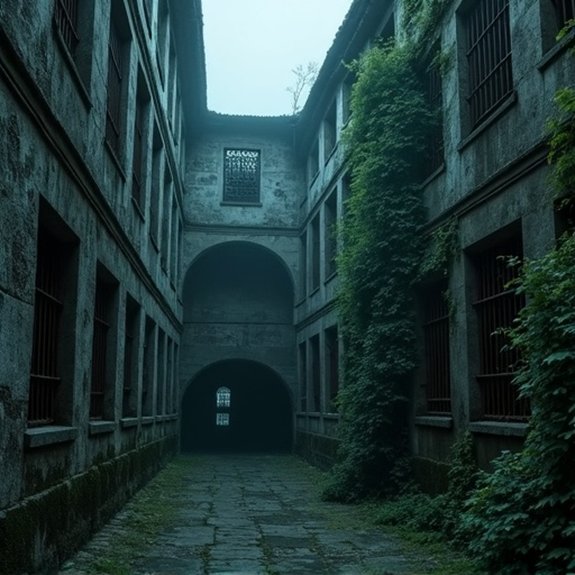
While Eastern Europe’s abandoned prisons stand as stark reminders of turbulent histories, they’ve gained notoriety for something far more unsettling than their political past. These decaying fortresses attract paranormal investigators, urban explorers, and thrill-seekers who report unexplained phenomena within their crumbling walls. From Romania’s Pitești Prison to Poland’s Karosta facility, witnesses describe shadow figures, disembodied voices, and sudden temperature drops that defy logical explanation.
The region’s communist-era detention centers particularly draw attention, as thousands died under brutal conditions behind their bars. Guards tortured political prisoners, executed dissidents, and conducted psychological experiments that pushed human endurance beyond breaking points. Today’s visitors claim these victims haven’t left, their spirits trapped where they suffered most. Whether one believes in ghosts or not, these sites undeniably carry an oppressive atmosphere that transcends mere historical significance.
Medieval Fortress Conversion Practices
Long before communist regimes built their infamous detention facilities, Eastern European rulers transformed medieval castles and fortresses into prisons that would serve for centuries. These conversions began in the 14th century when Hungary’s kings repurposed border fortifications into dungeons. Poland’s nobility followed suit, converting castle towers into holding cells for political prisoners.
The practice made economic sense. Thick stone walls already existed, guard towers dominated the landscape, and remote locations discouraged escape attempts. Architects added iron bars to arrow slits, sealed underground passages, and reinforced gates. They’d partition great halls into cell blocks while preserving torture chambers in the depths below.
Notable Cases or Sightings
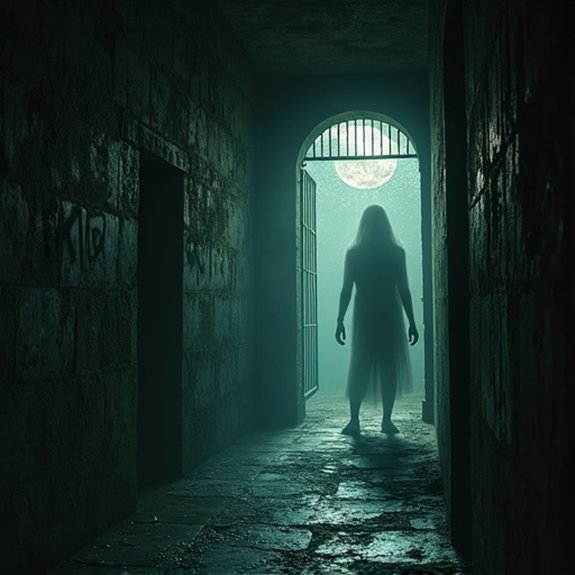
What drives thousands of visitors each year to stand outside Romania’s Aiud Prison, cameras ready, hoping to capture evidence of the supernatural? They’re drawn by reports of shadowy figures in cell windows and screams echoing from abandoned wings. In 2018, paranormal investigators recorded temperature drops of 20 degrees near execution chambers. Slovakia’s Leopoldov Prison has generated similar attention after guards reported doors slamming in empty corridors and footsteps in sealed sections.
Poland’s Mokotów Prison witnesses describe a recurring apparition of a woman in 1940s clothing wandering the courtyard. Czech Republic’s Mírov Castle prison staff won’t enter the torture chamber alone after multiple employees claimed they’d been pushed by invisible hands. These accounts haven’t been scientifically verified, but they’ve transformed these sites into dark tourism destinations.
Common Theories or Explanations
Although skeptics attribute prison hauntings to psychological factors, researchers have identified several patterns that might explain these phenomena. The stone walls and metal bars in Eastern European prisons create acoustic anomalies that amplify sounds, producing unexplained noises and whispers. Underground chambers trap electromagnetic fields, which some believe affect human perception and trigger hallucinations.
Parapsychologists suggest traumatic events leave “psychic imprints” on locations where intense suffering occurred. They theorize that emotional energy from executions and torture sessions somehow embeds itself in the physical environment. Environmental factors also contribute—high humidity, temperature fluctuations, and poor ventilation in centuries-old structures create conditions that witnesses misinterpret as supernatural activity. Carbon monoxide leaks from deteriorating heating systems can cause disorientation and ghostly visions that prisoners and guards mistake for paranormal encounters.
Frequently Asked Questions
Can Tourists Visit These Haunted Prisons During Regular Hours?
Yes, tourists can visit several haunted Eastern European prisons during regular hours. They’ll find guided tours at Romania’s Piteşti Prison, Poland’s Karosta Prison, and Estonia’s Patarei Prison, though some locations restrict access to certain areas.
What Safety Equipment Should Paranormal Investigators Bring When Exploring These Sites?
Paranormal investigators should bring EMF detectors, thermal cameras, digital recorders, and flashlights with extra batteries. They’ll need first aid kits, protective clothing, and two-way radios. Some investigators also carry motion sensors and infrared cameras for documentation.
Are There Any Guided Ghost Tours Available in English?
Yes, several Eastern European cities offer English-language ghost tours of former prisons. Prague’s Daliborka Tower, Budapest’s Hospital in the Rock, and Warsaw’s Pawiak Prison Museum provide guided experiences. Tourists’ll find most tours running April through October.
Which Months Have the Most Reported Paranormal Activity?
October and November see the most reported paranormal activity in Eastern Europe’s haunted prisons. Guards and visitors claim they’ve witnessed increased ghostly encounters during these autumn months, when darkness falls earlier and temperatures drop considerably.
Do Local Authorities Require Special Permits for Overnight Investigations?
Yes, they’ll need permits from local authorities. Eastern European prison sites typically require written authorization, liability insurance, and safety waivers. Some locations won’t allow civilian access at all, while others charge substantial fees for overnight entry.

Phantom Trains Across the World

Spirits of the Titanic: Underwater Hauntings

The Apparition in the Mirror: Ghostly Reflections
About The Author
