Haunted Wine Cellars & Underground Vaults
Deep beneath Europe’s oldest wineries, stone corridors echo with more than just footsteps. Wine collectors’ve reported bottles moving between racks, unexplained temperature drops, and whispers in empty cellars. These underground vaults, some dating back centuries, harbor stories that defy explanation. Whether it’s the ancient limestone walls or something else entirely, these spaces hold secrets that modern science hasn’t fully unraveled.
Introduction
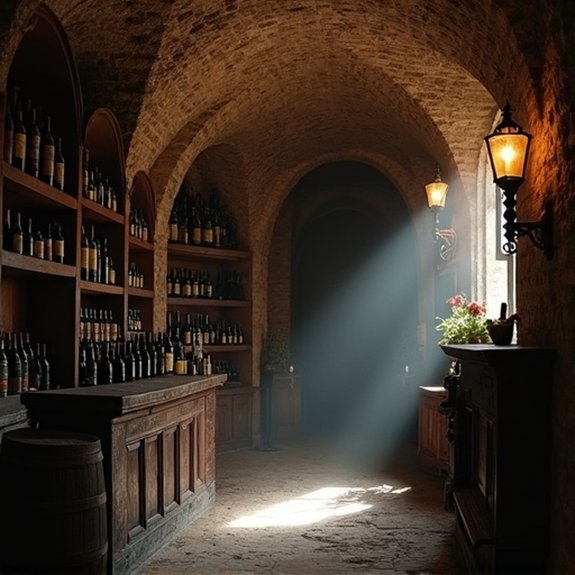
Why do some of the world’s oldest wine cellars echo with more than just the footsteps of sommeliers? Beneath centuries-old estates and castles, underground vaults harbor stories that chill visitors more than their temperature-controlled environments. These subterranean chambers don’t just age wine—they’ve witnessed murders, secret meetings, and unexplained phenomena that’ve left permanent impressions on their stone walls.
From France’s Loire Valley to California’s Napa region, wine cellars attract paranormal investigators as passionately as they draw oenophiles. Staff members report phantom footsteps, moving barrels, and apparitions of long-dead vintners still tending their precious collections. Whether it’s the isolation, the darkness, or the accumulated energy of centuries, these spaces seem to trap more than just the perfect vintage. They’ve become repositories of history’s darkest moments.
Ancient Roman Catacomb Conversions
Rome’s ancient catacombs transformed into wine cellars carry a dual legacy—they’ve sheltered both the dead and the vine for nearly two millennia. These underground burial networks, carved from volcanic tuff rock, offered medieval vintners ideal conditions: constant temperatures around 55°F and humidity levels perfect for aging wine.
By the 8th century, Roman families had repurposed abandoned Christian catacombs beneath their estates. They’d remove skeletal remains, seal chambers, and install wooden casks where stone sarcophagi once stood. The Borghese and Torlonia families pioneered this practice, converting miles of tunnels into profitable storage facilities.
Today’s visitors report unexplained phenomena in these spaces—bottles moving between racks, whispered Latin prayers echoing through corridors, and cold spots that defy the cellars’ stable temperatures. Wine merchants document these occurrences but rarely discuss them publicly.
Notable Cases or Sightings
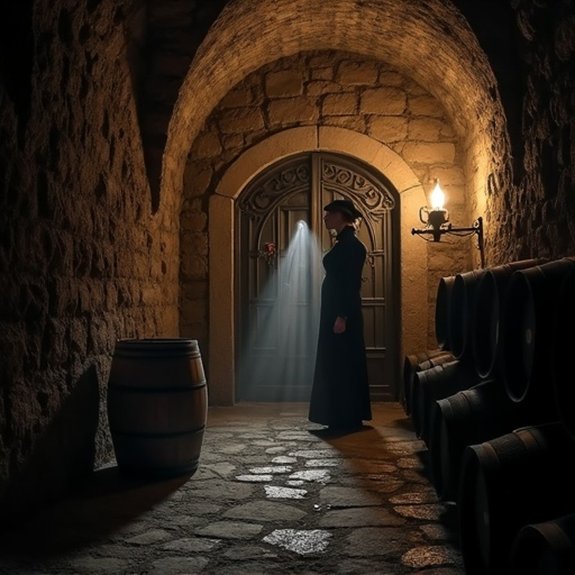
Several documented encounters have shaped the reputation of Europe’s most haunted wine cellars. At Germany’s Kloster Eberbach monastery, visitors’ve reported seeing a hooded monk who vanishes near the 12th-century wine vaults. The figure allegedly appears during harvest season, walking through solid oak barrels.
France’s Château de Brissac features a cellar where guests hear Catherine de Médicis’s distinct footsteps echoing against limestone walls. In 2019, paranormal investigators recorded unexplained temperature drops of 15 degrees near specific wine racks.
Hungary’s Sebestyén cellar gained notoriety when three sommeliers independently witnessed bottles moving without explanation in 2017. Security footage captured wine glasses shattering in sequence along the tasting room shelf. These incidents’ve transformed certain cellars into destinations for both wine enthusiasts and ghost hunters.
Common Theories or Explanations
While skeptics attribute these phenomena to natural causes, researchers’ve proposed multiple explanations for haunted cellar activity. Underground spaces create unique environmental conditions that affect human perception. Low-frequency sound waves, or infrasound, generated by air movement through tunnels can trigger feelings of unease and hallucinations. These vibrations, below human hearing range, stimulate the eye’s periphery, causing shadow-like visions.
High electromagnetic fields from old wiring or geological formations interfere with temporal lobe function, producing sensations of being watched. Carbon monoxide from poor ventilation causes confusion and paranormal experiences. Temperature fluctuations create drafts mistaken for ghostly touches.
Psychologists suggest expectation bias plays a role—visitors anticipating supernatural encounters interpret ambiguous stimuli as paranormal. The isolation and darkness of cellars naturally heighten anxiety, making people hypervigilant to perceived threats.
Frequently Asked Questions
Can I Book Overnight Ghost Hunting Experiences in Haunted Wine Cellars?
Yes, they can book overnight ghost hunting experiences in several haunted wine cellars worldwide. These venues offer paranormal investigations with equipment, guided tours, and sometimes wine tastings. They’ll find options through specialized tour companies and historic wineries.
What Safety Equipment Should I Bring When Exploring Underground Vaults?
They’ll need a reliable flashlight with backup batteries, sturdy boots, a hard hat, work gloves, and a first aid kit. They should also bring a phone for emergencies and inform someone about their exploration plans.
Are There Any Haunted Wine Cellars Open for Public Tours?
Several haunted wine cellars offer public tours worldwide. California’s Buena Vista Winery claims paranormal activity, while Paris’s catacombs feature wine-related sections. Edinburgh’s vaults beneath South Bridge also host ghost tours that explore historic cellars.
How Much Does It Cost to Investigate a Reportedly Haunted Cellar?
Paranormal investigation tours of haunted cellars typically cost $30-75 per person for group experiences. Private investigations run $200-500 for small groups. Some historic wineries offer overnight ghost hunts that’ll set visitors back $100-300 per person.
Do Temperature Changes in Cellars Affect Paranormal Activity Levels?
Temperature fluctuations in cellars don’t scientifically affect paranormal activity since there’s no proven link between environmental conditions and supernatural events. However, investigators often report increased experiences during cold spots, which they’ll attribute to ghostly presence.

Ghosts in the Rockies: Mountain Spirits
Are “Cold Spots” Proof of Spirits?

Spirits of the Bermuda Triangle Victims
About The Author
