Ghostly Voices on Radio & EVP
Static crackles through an old radio receiver, and beneath the white noise, a voice emerges—faint, distorted, but unmistakably human. For decades, researchers and paranormal enthusiasts have captured what they believe are messages from beyond, recorded on ordinary audio equipment. These electronic voice phenomena challenge conventional understanding of communication and death. What’s speaking through the static remains one of modern paranormal investigation‘s most compelling mysteries.
Introduction
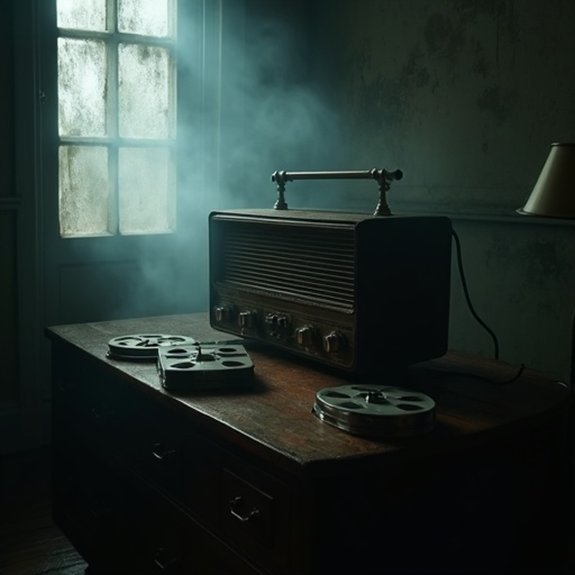
When static crackles through a radio receiver or a recording device captures unexplained whispers, listeners often wonder if they’ve encountered something beyond conventional explanation. Electronic Voice Phenomena (EVP) and radio-based spirit communication have captivated paranormal enthusiasts for decades. These mysterious audio anomalies supposedly contain messages from the deceased, captured through ordinary electronic equipment.
Researchers first documented EVP in the 1950s when they discovered strange voices appearing on tape recordings. Since then, investigators have used various devices—from simple tape recorders to sophisticated digital equipment—to detect these phantom communications. Radio receivers, particularly those modified to scan frequencies rapidly, have become popular tools for real-time spirit communication attempts. While skeptics attribute these sounds to pareidolia, radio interference, or equipment malfunction, believers maintain they’re genuine paranormal encounters.
Spiritualist Séances Meet Wireless Technology
The marriage of spiritualist practices with electronic technology began long before modern ghost hunters picked up their first EMF detectors. In the 1920s, spiritualists embraced radio technology as a revolutionary tool for contacting the dead. They believed radio waves could bridge the gap between physical and spiritual environments.
Séance participants experimented with early wireless sets, tuning between stations to capture otherworldly messages in the static. Some mediums claimed spirits manipulated electromagnetic fields to communicate through radio receivers. Thomas Edison himself explored building a “spirit phone” to reach the deceased.
These early attempts established a pattern that’d persist for decades: believers interpreting electronic interference, static bursts, and signal anomalies as proof of supernatural contact. Radio’s mysterious invisible waves seemed perfectly suited for channeling voices from beyond.
Notable Cases or Sightings
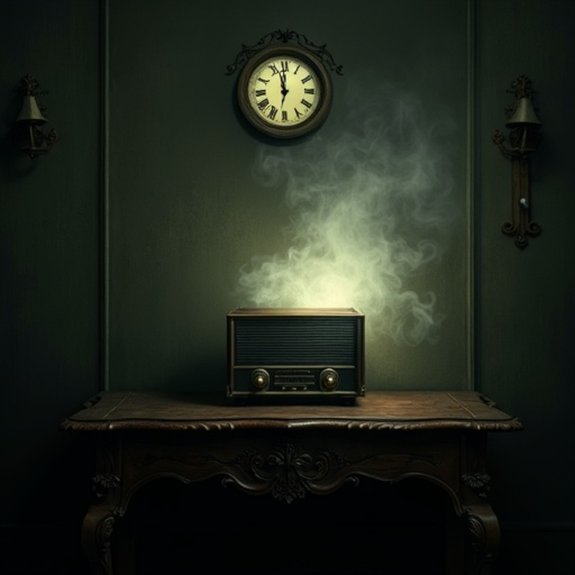
While thousands of EVP recordings have emerged over the decades, several cases stand out for their clarity, documentation, and lasting impact on paranormal research. The 1959 recordings by Friedrich Jürgenson captured what he believed were his deceased parents’ voices while taping bird songs in Sweden. This discovery sparked widespread interest in EVP phenomena.
Konstantin Raudive’s extensive work in the 1960s produced over 100,000 recordings, with his most famous capture being a voice saying “Friedrich, you’re being watched” in German. The 1977 “Southern Television broadcast intrusion” saw UK viewers witness an interruption claiming to be from an alien named Vrillon. Sarah Estep’s American Association of EVP documented countless recordings, including clear voices responding directly to investigators’ questions. These cases haven’t been definitively explained, maintaining their status as cornerstones of EVP research.
Common Theories or Explanations
Scientists and skeptics have proposed several explanations for EVP phenomena that don’t involve spirits or paranormal activity. Audio pareidolia tops the list—the brain’s tendency to find meaningful patterns in random noise, similar to seeing faces in clouds. People often interpret static, interference, or ambient sounds as voices when they’re expecting to hear them.
Radio frequency interference presents another explanation. Recording devices can inadvertently pick up CB radios, cell phones, or broadcast signals. These stray transmissions sometimes create voice-like sounds on recordings.
Equipment artifacts also contribute to false positives. Tape recorder motors, electronic circuits, and microphone handling noise can produce sounds resembling speech. Additionally, confirmation bias leads investigators to interpret ambiguous sounds as meaningful messages, especially when they’re actively searching for evidence of the paranormal.
Frequently Asked Questions
What Equipment Do I Need to Record EVP at Home?
One needs a digital voice recorder or smartphone with recording app, headphones for playback, and a quiet environment. They’ll want to ask questions aloud, leaving pauses for responses, then review recordings for unexplained voices.
Is It Dangerous to Attempt Communication With Spirits Through EVP?
Most paranormal researchers don’t report physical dangers from EVP recording, though some believe it’s unwise to invite unknown entities. People who’re concerned about spiritual risks often suggest setting protective boundaries or avoiding the practice altogether.
How Can I Tell Genuine EVP From Audio Pareidolia or Interference?
Investigators can’t definitively distinguish genuine EVP from pareidolia or interference. They’ll need multiple recordings of the same voice, clear contextual responses to questions, and equipment that filters known interference patterns while documenting environmental conditions.
What Locations Are Best for Capturing EVP Recordings?
Investigators typically capture EVP in historically significant locations like old hospitals, prisons, battlefields, and cemeteries. They’ll also record in private homes with reported activity, abandoned buildings, and sites of tragic events where emotional energy supposedly lingers.
Should I Use Specific Questions or Phrases When Conducting EVP Sessions?
Yes, investigators should ask clear, simple questions with pauses between them. They’ll get better results using open-ended queries like “What’s your name?” or “Why are you here?” while maintaining respectful tones throughout sessions.
Spectral Soldiers: Ghost Armies

Haunted Mansions of the Gilded Age
Can Poltergeists Follow People, Not Places?
About The Author
