The “Foo Fighters” of WWII
During World War II, Allied pilots encountered something they couldn’t explain. Glowing orbs and discs darted around their aircraft, executing impossible maneuvers that defied the laws of physics. These mysterious objects weren’t enemy weapons or weather balloons. Pilots called them “foo fighters,” and despite extensive military investigations, no one’s ever figured out what they were. The truth behind these wartime encounters remains one of aviation’s most puzzling mysteries.
Introduction
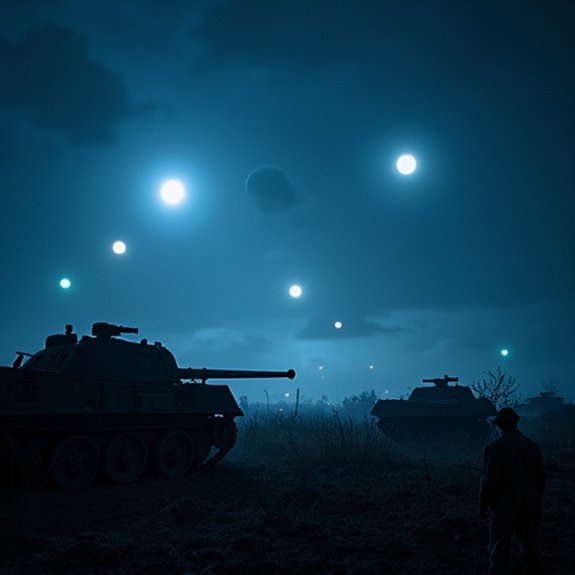
During World War II, Allied pilots reported encountering mysterious glowing objects that darted through the night skies over Europe and the Pacific. These unexplained aerial phenomena, nicknamed “foo fighters” by aircrews, appeared as glowing orbs, discs, or balls of light that performed impossible maneuvers. They’d follow aircraft, match their speeds, and execute sharp turns that defied known physics. Neither Allied nor Axis forces claimed ownership of these objects, leaving pilots bewildered and military officials scrambling for explanations.
The term “foo fighter” originated from a popular comic strip called “Smokey Stover,” where “foo” was nonsense slang. Between 1944 and 1945, hundreds of credible military personnel documented these encounters, creating one of aviation’s most enduring mysteries that continues to intrigue historians and researchers today.
Term Coined by Pilots
The squadron’s intelligence officer, Fritz Ringwald, initially dismissed the reports as combat fatigue. However, when multiple crews described identical phenomena—glowing orbs that matched their speed and performed impossible maneuvers—the term stuck. By December 1944, Allied pilots throughout the European Theater were using “foo fighter” to describe these mysterious aerial objects. The name perfectly captured the phenomenon’s absurd nature while maintaining military brevity in combat reports.
Notable Cases or Sightings
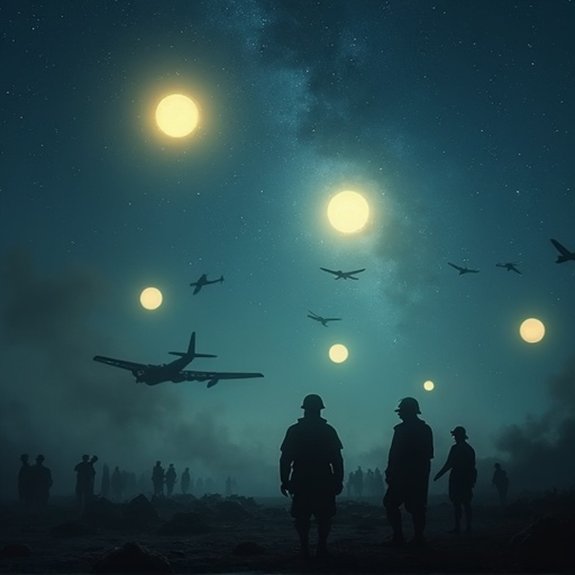
Pilots weren’t imagining things—the foo fighter encounters left detailed records that still perplex historians today. In November 1944, Lieutenant Edward Schlueter reported orange lights off his wing that matched his plane’s every maneuver over the Rhine Valley. His radar operator, Lieutenant Donald Meiers, confirmed the sighting, noting the objects’ intelligent behavior.
The 415th Night Fighter Squadron documented multiple encounters throughout late 1944. Pilot Charles Odom described red fireballs that followed his P-61 Black Widow, accelerating and decelerating impossibly fast. Another pilot witnessed silver discs near Hagenau that vanished when approached.
Even bomber crews reported sightings. B-17 gunners over Germany described glowing spheres that flew alongside formations without showing hostility. These objects didn’t appear on radar, couldn’t be shot down, and displayed flight characteristics beyond known technology.
Common Theories or Explanations
Military intelligence scrambled to explain these mysterious encounters, proposing everything from secret weapons to natural phenomena. Initially, Allied forces suspected Germany had developed advanced aircraft or electromagnetic weapons. The Germans, experiencing identical sightings, believed the Allies possessed the technology. This mutual suspicion ruled out enemy weaponry as the cause.
Scientists offered various natural explanations. St. Elmo’s fire, an electrical phenomenon creating glowing plasma around aircraft, matched some descriptions. Ball lightning became another popular theory, though its rarity couldn’t account for the frequency of reports. Reflections from ice crystals in the atmosphere or optical illusions caused by combat stress were also considered.
Some researchers suggested the lights were misidentified Venus or other celestial bodies viewed through atmospheric distortion. Despite extensive investigation, no single explanation satisfied all reported characteristics.
Frequently Asked Questions
Did Foo Fighters Ever Cause Any Aircraft Crashes or Casualties During WWII?
No documented evidence shows foo fighters caused any crashes or casualties during WWII. While pilots frequently reported these mysterious aerial phenomena, they didn’t exhibit hostile behavior or physically interact with aircraft, remaining unexplained observations.
Were Foo Fighters Reported by Both Allied and Axis Pilots?
Yes, both Allied and Axis pilots reported seeing foo fighters during WWII. American, British, German, and Japanese aircrews documented encounters with these mysterious glowing objects that followed their aircraft during combat missions over Europe and the Pacific.
Did Military Officials Issue Specific Protocols for Encountering Foo Fighters?
Military officials didn’t issue formal protocols for encountering foo fighters during WWII. They collected pilot reports and investigated the phenomena, but commanders generally treated these sightings as curiosities rather than threats requiring specific operational procedures.
Are There Any Surviving Photographs or Film Footage of Foo Fighters?
No authenticated photographs or film footage of foo fighters have survived from WWII. While pilots reported numerous sightings, they couldn’t capture these phenomena on camera due to technical limitations and the objects’ unexpected, brief appearances.
Did Foo Fighter Sightings Continue After WWII Ended?
Yes, foo fighter sightings didn’t stop after WWII. Pilots reported similar unexplained aerial phenomena throughout the late 1940s and 1950s, though they weren’t called “foo fighters” anymore. These later sightings merged into the broader UFO phenomenon.
Are Governments Using UFOs as PsyOps?

Did Something Crash in Roswell in 1947?

The Falcon Lake UFO Encounter Revisited
About The Author
