The “Ghost Rockets” of 1946
In the summer of 1946, something strange filled Sweden’s skies. Thousands of witnesses reported silent, cigar-shaped objects streaking overhead at impossible speeds. The Swedish military scrambled to document what they’d later call “ghost rockets”—mysterious projectiles that defied conventional explanation. These weren’t isolated incidents. Over 2,000 sightings poured in, creating Europe’s first major UFO wave. What the witnesses saw that year would challenge everything officials thought they knew about post-war technology.
Introduction
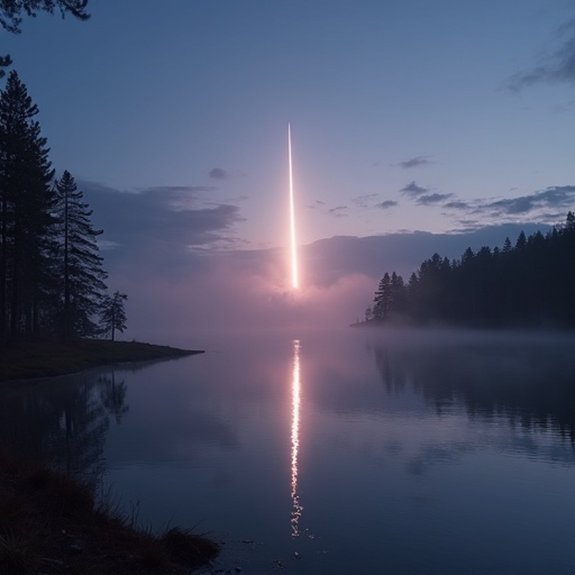
When hundreds of mysterious cigar-shaped objects streaked across Scandinavian skies in 1946, they sparked one of the Cold War’s earliest mysteries. These “ghost rockets” appeared just months after World War II’s end, primarily over Sweden and neighboring countries. Witnesses reported seeing metallic projectiles that moved silently at tremendous speeds, performed impossible maneuvers, and sometimes crashed into lakes without leaving debris. The Swedish military documented over 2,000 sightings between May and December 1946. Defense officials couldn’t explain the phenomena despite launching extensive investigations. The timing wasn’t coincidental—Europe remained tense as Soviet-Western relations deteriorated. Some observers suspected secret weapons testing, while others proposed more exotic explanations. The ghost rockets became history’s first major UFO wave, predating America’s flying saucer craze by a year.
Scandinavian Skies After WWII
As Allied forces carved Europe into occupation zones following Nazi Germany’s defeat, Scandinavia found itself in a precarious position between emerging superpowers. Sweden’s wartime neutrality had preserved its infrastructure, but tensions ran high along its borders. Norway and Denmark, recently liberated from Nazi occupation, struggled to rebuild while Soviet forces controlled nearby Baltic territories.
The region’s strategic importance grew as East-West relations deteriorated. Sweden’s advanced industrial base and proximity to Soviet installations made it valuable for intelligence gathering. Military officials monitored the skies constantly, aware that both Americans and Soviets were developing captured German V-2 technology. Northern Europe’s vast, sparsely populated territories offered ideal conditions for secret weapons testing. By early 1946, Scandinavian governments knew they’d become a potential flashpoint in the emerging Cold War.
Notable Cases or Sightings
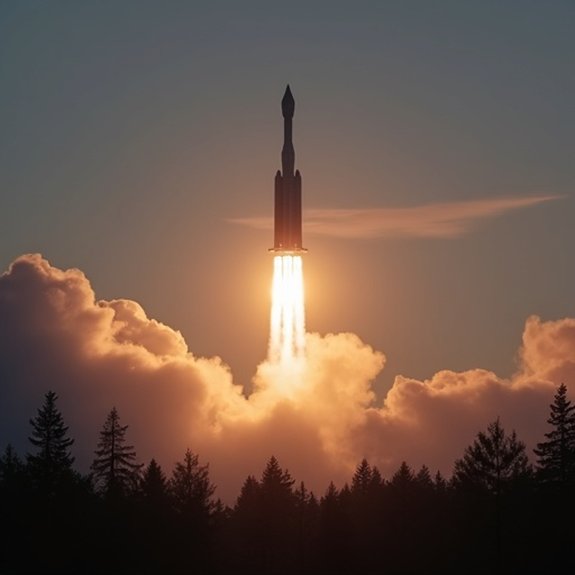
Though Swedish military officials initially dismissed early reports as misidentified aircraft, the sighting over Lake Kölmjärv on July 19, 1946, changed everything. Multiple witnesses observed a gray, rocket-shaped object crash into the lake’s waters. The military launched an extensive three-week search operation, but divers couldn’t locate any wreckage.
On August 11, photographer Erik Reuterswärd captured one of the phenomenon’s few photographs near Guldsmedshyttan. His image showed a cigar-shaped object streaking across the sky. That same month, over 200 sightings flooded Swedish authorities in a single day.
The most credible report came from Lieutenant Karl-Gösta Bartoll, who observed a torpedo-shaped craft traveling at approximately 400 mph near Stockholm. Norway’s General Ragnvald Tamm witnessed a similar object that left a green trail before disappearing over the horizon.
Common Theories or Explanations
While Swedish defense officials initially suspected Soviet missile tests, this theory couldn’t explain the objects’ erratic flight patterns and ability to change direction. Some researchers proposed meteors, but witnesses’ descriptions of controlled movements and horizontal trajectories didn’t match typical meteor behavior. Others suggested mass hysteria triggered by post-war anxiety, though this couldn’t account for radar detections and physical debris.
Military analysts considered captured German V-1 or V-2 rockets being tested by the Soviets from Peenemünde. However, these weapons lacked the range to reach Scandinavia’s northern regions where many sightings occurred. Natural phenomena like ball lightning or unusual atmospheric conditions became popular explanations among scientists. The U.S. intelligence community privately theorized the objects were advanced Soviet reconnaissance devices, while Swedish authorities eventually concluded most sightings were misidentified aircraft, celestial bodies, or natural phenomena.
Frequently Asked Questions
Did Any Government Officials Claim to Have Recovered Physical Debris From Ghost Rockets?
Swedish military officials claimed they’d recovered physical debris from ghost rocket crashes in lakes, but they never produced conclusive evidence. General James Doolittle’s investigation found no actual fragments despite Sweden’s reports of recovering mysterious materials.
How Did the Ghost Rocket Phenomenon Influence Modern UFO Research Methods?
The ghost rockets established systematic investigation protocols that modern UFO researchers still use. They’ve adopted the military’s documentation methods, witness interviewing techniques, and multi-national data sharing approaches that Swedish authorities pioneered during the 1946 wave.
Were There Any Reported Injuries or Property Damage From Ghost Rocket Incidents?
No confirmed injuries occurred, though witnesses reported several close calls. A few incidents involved alleged crashes into lakes, but investigators couldn’t verify physical damage. Swedish authorities documented burnt vegetation at some reported impact sites without finding debris.
What Classified Documents About Ghost Rockets Have Been Declassified Since 1946?
Sweden’s military declassified ghost rocket files in the 1980s, revealing over 1,000 reports. The U.S. released CIA documents in the 1990s showing American intelligence’s monitoring efforts. Britain’s RAF reports weren’t fully declassified until the 2000s.
Did Any Military Pilots Attempt to Intercept or Pursue Ghost Rockets?
Yes, Swedish military pilots attempted several interceptions during 1946. They couldn’t catch or identify the objects despite multiple pursuit attempts. Pilots reported the phenomena moved too fast or disappeared when they approached for closer observation.

Operation Blue Book: Declassified Cases

Alien Symbols in Global Mythologies

The Drake Equation and Probability of Life
About The Author
