The Roswell Slides: New Analysis
The controversial Roswell Slides have taken another dramatic turn. What promoters once claimed showed an alien body from the 1947 crash site has crumbled under scientific scrutiny. New imaging techniques have exposed an uncomfortable truth that’s shifted the entire narrative from extraterrestrial evidence to something far more earthbound—and ethically troubling. The revelation doesn’t just debunk the slides; it opens questions about how easily UFO mythology can overshadow genuine historical artifacts.
Introduction
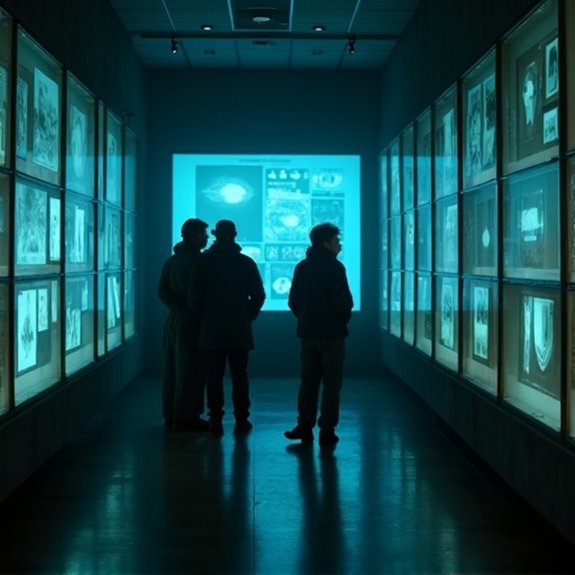
When two Kodachrome slides surfaced in 2015 claiming to show an extraterrestrial body from the 1947 Roswell incident, they ignited a firestorm of controversy within the UFO research community. The images, allegedly taken between 1947 and 1949, depicted what appeared to be a small humanoid figure lying in a glass case. Promoters claimed they’d discovered definitive proof of alien life recovered from the famous New Mexico crash site.
The slides’ owners charged admission to view them at a Mexico City event called “BeWitness,” drawing thousands of attendees and worldwide media attention. However, skeptics immediately questioned the images’ authenticity. Within days, researchers enhanced the slides’ barely visible placard text, revealing the body wasn’t extraterrestrial but a mummified two-year-old Native American boy from a museum exhibit.
Discovery in 1947 Debris Field
The original Roswell incident began on July 8, 1947, when the Roswell Army Air Field issued a press release stating they’d recovered a “flying disc” from a ranch near Roswell, New Mexico. Rancher Mac Brazel had discovered strange debris scattered across his land days earlier. He’d found metallic sticks, foil, rubber strips, and unusual materials that didn’t match any known aircraft.
Military intelligence officers quickly collected the materials. Major Jesse Marcel, the base intelligence officer, initially believed they’d found something extraordinary. The debris field stretched nearly three-quarters of a mile long and several hundred feet wide. Within hours, however, General Roger Ramey announced the wreckage came from a weather balloon. The military retracted their flying disc statement, photographs showed balloon materials, and the story seemingly ended there.
Notable Cases or Sightings
Beyond the original debris field discovery, several witnesses came forward decades later with accounts that challenged the official weather balloon explanation. Major Jesse Marcel, the intelligence officer who’d initially examined the wreckage, stated in 1978 that the materials weren’t from any weather device he’d ever seen. Glenn Dennis, a local mortician, claimed the military requested child-sized coffins and preservation techniques for bodies exposed to desert conditions.
In 1994, rancher Mac Brazel’s son reported his father found strange metallic sticks with hieroglyphic-like symbols. Nurse Roslyn Littell allegedly witnessed alien bodies at the base hospital before military officials threatened her into silence. These testimonies gained traction when the slides surfaced in 2015, purportedly showing an extraterrestrial body from the crash site.
Common Theories or Explanations
Multiple explanations have emerged to account for both the Roswell incident and the controversial slides that appeared nearly seven decades later. The military’s Project Mogul remains the most widely accepted theory—classified surveillance balloons crashed near Roswell, sparking UFO speculation. Officials maintain the recovered debris came from these high-altitude monitoring devices used to detect Soviet nuclear tests.
Regarding the slides themselves, skeptics’ve identified several red flags. Digital forensics experts suggest they’re modern fabrications using period-appropriate film stock. Others propose they show museum displays or medical specimens unrelated to extraterrestrials. Some researchers believe the images depict a mummified child from Native American burial sites, explaining the humanoid features.
Conspiracy theorists insist the government’s hiding evidence of alien contact, viewing both incidents as proof of an ongoing cover-up.
Frequently Asked Questions
Who Currently Owns the Original Roswell Slides Photographs?
The current ownership of the original Roswell Slides photographs isn’t publicly documented. Adam Dew initially controlled them after obtaining them from the estate sale discovery, but he hasn’t disclosed if he’s retained ownership or transferred them.
What Authentication Methods Were Used to Verify the Slides’ Age?
Experts used Kodachrome film stock analysis, chemical composition testing, and cardboard mount dating to verify the slides’ 1947-1950 timeframe. They’ve examined the emulsion layers and confirmed the film’s consistent with mid-century manufacturing processes.
How Much Did the Slides Sell for at Auction?
The slides weren’t sold at auction. Adam Dew, who possessed them, attempted to monetize them through documentary rights and a paid presentation in Mexico City in 2015, but they’ve never been auctioned publicly.
Which Research Institutions Have Requested Access to Examine the Slides?
No legitimate research institutions have requested access to examine the Roswell slides. The slides weren’t considered scientifically significant after experts determined they showed a mummified child’s body in a museum display, not an extraterrestrial being.
What Legal Disputes Have Emerged Regarding the Slides’ Ownership Rights?
No major legal disputes have emerged regarding the slides’ ownership rights. The original owners haven’t faced significant challenges, though some researchers’ve questioned whether the images should be made publicly available for scientific examination and verification.
The 1950s UFO Panics: Mass Hysteria or Real Sighting?

The Aurora, Texas UFO Town

Are USOs Proof of Alien Bases Under the Sea?
About The Author
