Are Governments Using UFOs as PsyOps?
The notion that governments might exploit UFO phenomena as psychological operations has gained traction in recent years. Increased military interest and transparency around sightings hint at deeper motives. With so many notable incidents capturing the public’s imagination, one begins to wonder: could these narratives serve as distractions from governmental failings? As the lines blur between genuine curiosity and manipulation, the implications of such tactics warrant further examination. What hidden agendas might lie beneath these enigmatic experiences? As discussions around NASA astronaut UFO sightings emerge, the blend of space exploration and unexplained phenomena continues to fascinate both the public and experts alike. Many are left questioning whether these encounters could provide insight into extraterrestrial life or merely serve as a tool for diverting attention from pressing societal issues. The intersection of such high-profile accounts and government secrecy invites a closer look at what truths may be concealed in the vastness of our universe.
Introduction
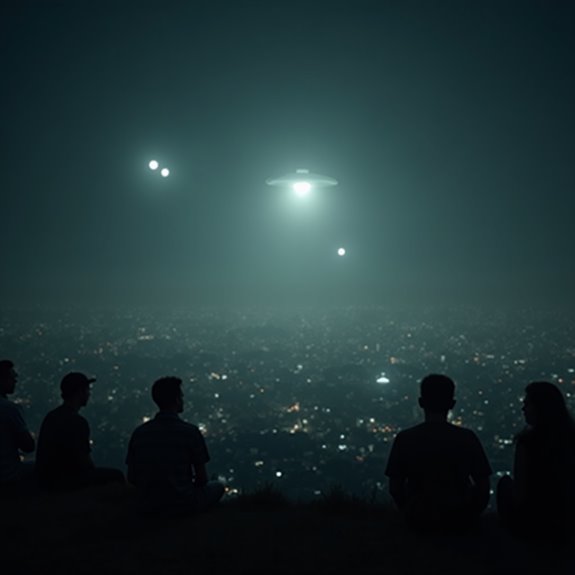
As governments face increasing scrutiny over their operations, some experts suggest they’re leveraging UFO phenomena as psychological operations (PsyOps) to manipulate public perception. In recent years, unusual sightings and reports have sparked public fascination, leading to speculation about hidden truths. While some view these occurrences as genuine encounters, others interpret them as tools for diverting attention from pressing issues. By promoting narratives surrounding UFOs, authorities might aim to foster a sense of wonder or encourage collective intrigue, thereby masking their own shortcomings. This tactic could engage citizens’ imaginations, allowing governments to shape discourse and control narratives. Ultimately, the intersection of UFO phenomena and government PsyOps highlights the complexities of perception in a world filled with uncertainty and intrigue.
Military Interest in Aerial Phenomena

Recent increases in military interest surrounding aerial phenomena signal a shift in how defense agencies approach unidentified flying objects. In recent years, the U.S. Department of Defense has declassified and publicly acknowledged several incidents involving unexplained aerial sightings. This newfound transparency indicates a serious commitment to studying the potential implications of these phenomena. Analysts believe that understanding aerial anomalies could enhance national security and inform technological advancements. Moreover, military officials are now collaborating with scientists and researchers to investigate the physics behind these sightings more rigorously. This collaborative approach reflects an evolving perspective, where aerial phenomena are no longer dismissed as mere curiosities but are regarded as potential threats or opportunities that warrant thorough investigation and understanding.
Notable Cases or Sightings
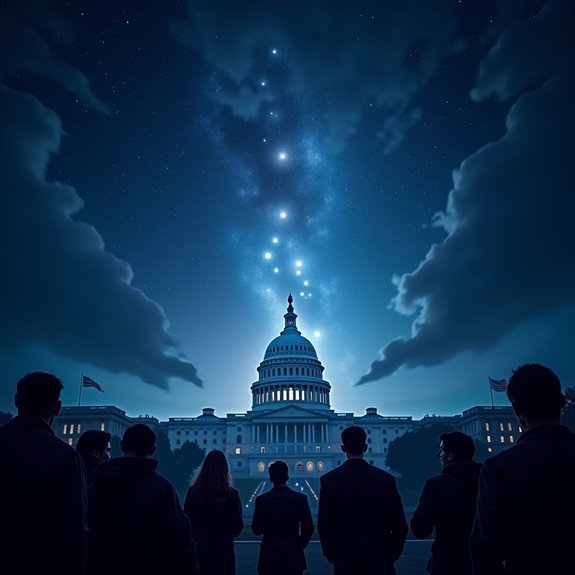
The world of unidentified flying objects (UFOs) is rich with intriguing cases that have captivated both the public and military attention. One notable incident occurred in 2004, when U.S. Navy pilots encountered a Tic Tac-shaped object off the coast of San Diego. These pilots reported extreme speeds and agile maneuvers, sparking widespread interest in military UFO encounters. Another compelling case took place in 1980 in Brazil, where multiple witnesses described a glowing object that allegedly descended and caused a temporary power outage in a nearby village. The Phoenix Lights incident in 1997 further fueled speculation, as thousands of people observed a series of mysterious lights over Arizona. Each case deepens the enigma surrounding UFOs and their potential implications for national security.
Common Theories or Explanations
While many people are fascinated by UFO sightings, common theories and explanations have emerged to rationalize these enigmatic encounters. Skeptics often attribute sightings to misidentified aircraft, weather phenomena, or satellite imagery. Some suggest that military operations could explain the phenomena, as stealth technology may lead to unexpected visual experiences. Others speculate that psychological factors, such as pareidolia—seeing patterns in random stimuli—can cause individuals to interpret mundane objects as UFOs. Additionally, there’s a theory that governments might utilize UFO sightings as a form of psychological operation (PsyOps), creating confusion and diverting attention from real issues. This mixture of explanations illustrates the complexities surrounding UFO sightings and the diverse interpretations people hold regarding these mysterious events.
Frequently Asked Questions
How Can We Distinguish Between Real UFOS and Government Experiments?
To distinguish real UFOs from government experiments, one must analyze sightings, consider credible witnesses, check for patterns in behavior, and examine evidence against known technology, remaining aware of potential misinformation or manipulation from authoritative sources.
What Role Do Media and Entertainment Play in UFO Perceptions?
Media and entertainment shape public perceptions of UFOs by blending fact with fiction. Through sensational stories and mesmerizing visuals, they often influence beliefs, leading many to accept dubious claims as reality, while fueling fascination and skepticism alike. One area that has gained traction in recent discussions is interdimensional theories in ufology. Proponents argue that these theories could explain the nature of extraterrestrial encounters by suggesting that beings from other dimensions are interacting with our reality. As interest in these concepts grows, so does the debate over their implications for understanding the universe and our place within it.
Are There Any Whistleblowers Revealing Government UFO Projects?
Yes, several whistleblowers have come forward, claiming to expose secret government UFO projects. Their testimonies often spark public interest, igniting debates about transparency, the implications of advanced technologies, and the reality behind unidentified aerial phenomena.
How Do Psychological Operations Impact Public Belief in UFOS?
Psychological operations shape public belief in UFOs by influencing perceptions and emotions. They create intrigue, provoke fear, and foster curiosity, leading people to accept or dismiss UFO narratives based on manipulated information and orchestrated events.
What Are the Ethical Implications of Using UFOS in Propaganda?
Using UFOs in propaganda raises significant ethical concerns. It manipulates public perception, undermines trust in governments, and exploits fear. Consequently, people’s beliefs may shift based on deception, leading to societal division and skepticism about authenticity.

Abduction Narratives: Cultural Variation

Did Ancient Sumerians Record Alien Encounters?

Was a UFO Spotted Over Mount Shasta?
About The Author
