The Battle of Los Angeles (1942) UFO Event
On February 25, 1942, Los Angeles erupted in chaos as anti-aircraft guns fired over 1,400 rounds at an unidentified object hovering above the city. Military searchlights swept the night sky while air raid sirens wailed, yet no enemy aircraft fell. The military couldn’t explain what they’d targeted. Witnesses reported everything from a massive craft to multiple smaller objects. What really happened that night remains disputed, with explanations ranging from mass hysteria to something more extraordinary.
Introduction
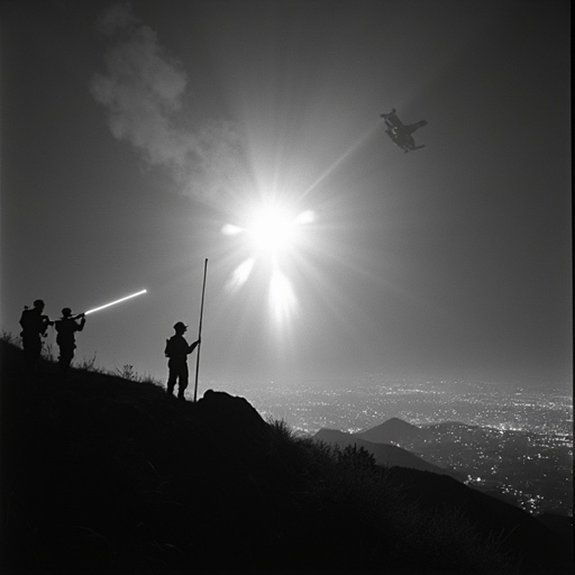
When air raid sirens pierced through the Los Angeles night on February 25, 1942, residents scrambled for shelter as searchlights swept the sky and anti-aircraft guns thundered for over an hour. The military fired approximately 1,400 rounds of anti-aircraft ammunition at unidentified objects hovering above the city. This incident, occurring just three months after Pearl Harbor, sparked immediate panic about a Japanese aerial assault on the West Coast.
The event’s become one of history’s most debated UFO cases. Military officials initially reported shooting at enemy aircraft, then retracted their statements, claiming it was a false alarm triggered by weather balloons and wartime nerves. Witnesses described seeing luminous objects that didn’t behave like conventional aircraft. Five civilians died during the chaos—three from traffic accidents and two from heart attacks.
Pearl Harbor’s Recent Psychological Impact
Although Pearl Harbor had occurred nearly three months earlier, the psychological wounds remained fresh for Los Angeles residents who feared they’d become Japan’s next target. The December 7, 1941 attack had shattered America’s sense of invulnerability, transforming the Pacific Coast into a frontier of anxiety and vigilance.
Citizens scanned the skies constantly, expecting Japanese bombers to emerge from the ocean horizon. Blackout drills became routine. Families stockpiled emergency supplies while authorities installed anti-aircraft batteries throughout the city. False submarine sightings triggered panicked evacuations. Radio broadcasts warned of imminent invasions.
This collective paranoia wasn’t unfounded. Japanese submarines had already attacked oil facilities near Santa Barbara on February 23, 1942. The proximity of danger transformed every unexplained sight or sound into a potential threat, priming the population for the extraordinary events about to unfold.
Notable Cases or Sightings
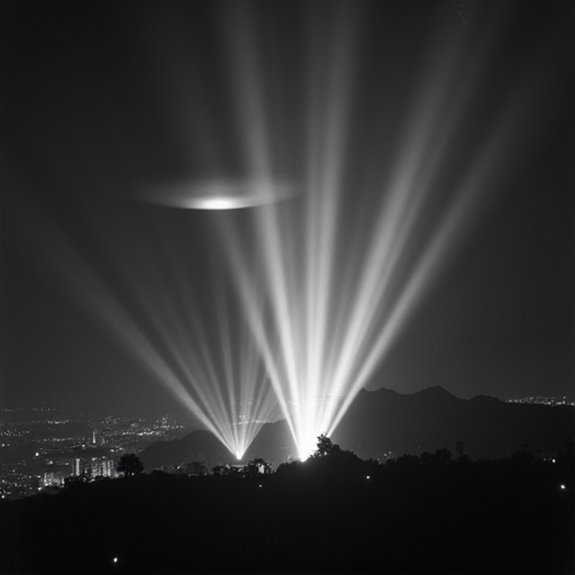
While most UFO encounters involve isolated witnesses, the Battle of Los Angeles stands out for its massive scale and official military response. On February 25, 1942, military radar detected an unidentified object approaching Los Angeles from the ocean. Air raid sirens wailed at 2:25 AM, and searchlights swept the sky, illuminating a large object that witnesses described as oval-shaped and glowing.
The military fired over 1,400 anti-aircraft shells at the target for nearly an hour. Despite the barrage, the object didn’t fall. Thousands of residents watched from rooftops and streets as shells exploded around the mysterious craft. Some witnesses reported seeing smaller objects emerging from the main one. The incident resulted in five civilian deaths from falling debris and heart attacks, making it one of history’s most documented UFO events.
Common Theories or Explanations
As the smoke cleared and dawn broke over Los Angeles, military officials scrambled to explain what had triggered America’s first mainland air defense response since Pearl Harbor. Secretary of the Navy Frank Knox initially blamed a “false alarm” and “jittery nerves,” but the Army’s Western Defense Command insisted unidentified aircraft had been present.
Weather balloon theory emerged as the leading explanation—meteorologists noted several balloons had been released that evening. Some researchers propose temperature inversions created false radar returns. Others suggest anti-aircraft shells exploding in sequence created optical illusions that gunners mistakenly tracked.
Modern analysts point to wartime anxiety following Japan’s submarine attack on a Santa Barbara oil refinery days earlier. The combination of heightened alertness, searchlight reflections off clouds, and smoke from artillery fire likely created phantom targets that perpetuated the barrage.
Frequently Asked Questions
How Many Rounds of Anti-Aircraft Ammunition Were Fired During the Incident?
Military forces fired approximately 1,400 rounds of anti-aircraft ammunition into the night sky over Los Angeles. They’d spotted unidentified objects on radar, triggering a massive barrage that lasted several hours despite finding no enemy aircraft.
Were There Any Civilian Casualties or Property Damage From Falling Shell Fragments?
Yes, falling shell fragments killed five civilians and caused significant property damage throughout Los Angeles. Three people died from traffic accidents during the blackout, while two others suffered fatal heart attacks attributed to the stress.
What Was the Estimated Financial Cost of the Military Response That Night?
Military officials didn’t release specific financial figures for that night’s response. Historians estimate the Army fired approximately 1,400 anti-aircraft shells costing several thousand dollars total, though exact ammunition costs and operational expenses weren’t publicly documented.
Did Any Military Personnel Face Disciplinary Action for the False Alarm?
No military personnel faced disciplinary action for the false alarm. Military officials didn’t punish anyone since they considered the response appropriate given wartime tensions and the genuine belief that an attack might’ve been occurring.
How Did Newspaper Coverage Differ Between East and West Coast Publications?
West Coast newspapers initially reported enemy aircraft attacks with dramatic headlines, while East Coast publications approached the story more skeptically. Eastern papers quickly emphasized the “false alarm” angle, whereas local LA papers defended the military’s response.

Alien Abductions That Changed Lives

The Disclosure Movement: Timeline & Outlook
The Wow! Signal: a Message From Space?
About The Author
