The Alien Autopsy Film: Hoax or Real?
In 1995, Ray Santilli’s grainy black-and-white footage stunned the world with its alleged documentation of an alien autopsy from the Roswell incident. The film’s explosive debut sparked fierce debates that haven’t subsided nearly three decades later. While Santilli’s later confessions cast serious doubt on the footage’s authenticity, certain unexplained details keep believers questioning what they’re really seeing. The truth behind this controversial film remains tantalizingly out of reach.
Introduction
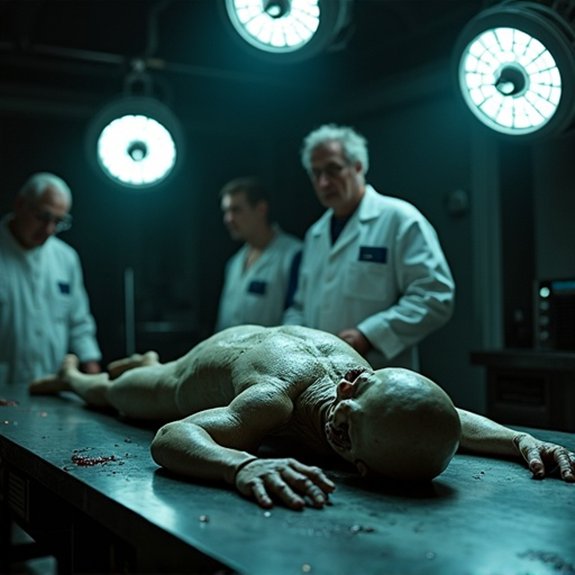
What if humanity’s most compelling evidence of extraterrestrial life turned out to be nothing more than an elaborate deception? In 1995, a grainy black-and-white film emerged, allegedly showing the autopsy of an alien recovered from the 1947 Roswell crash. British entrepreneur Ray Santilli claimed he’d purchased the footage from a retired military cameraman. The 17-minute film depicted medical personnel examining a humanoid figure with large eyes, six fingers, and no body hair.
The footage captivated millions worldwide, airing on television networks and sparking fierce debates among UFO enthusiasts, skeptics, and scientists. It became one of the most controversial pieces of alleged evidence in ufology history. For over a decade, people argued about its authenticity until Santilli’s shocking admission changed everything.
Ray Santilli’s 1995 Film Debut
Ray Santilli’s journey into UFO folklore began when he revealed the alien autopsy footage at the London Museum on May 5, 1995. The British music producer claimed he’d acquired the 17-minute black-and-white film from a retired U.S. military cameraman while searching for Elvis Presley footage in Cleveland, Ohio.
Santilli’s presentation captivated audiences worldwide. He insisted the grainy footage showed military personnel performing an autopsy on an extraterrestrial being recovered from the 1947 Roswell crash. The film displayed surgeons in protective gear dissecting a humanoid figure with large eyes and six fingers.
Media outlets scrambled to broadcast the footage. Fox Television’s special “Alien Autopsy: Fact or Fiction?” drew 11.7 million viewers. Santilli’s film sparked intense debates among UFO researchers, skeptics, and scientists about its authenticity.
Notable Cases or Sightings
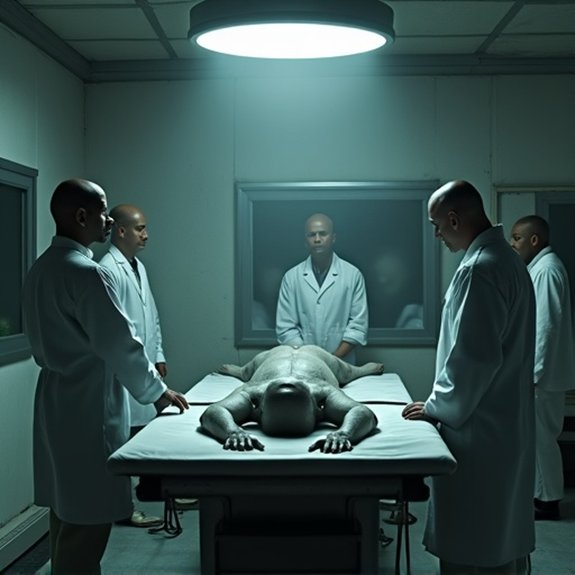
How did the alien autopsy film connect to history’s most famous UFO incident? Santilli claimed the footage showed an extraterrestrial recovered from the 1947 Roswell crash in New Mexico. He insisted a retired military cameraman secretly filmed the autopsy at a U.S. military base shortly after the incident. This connection to Roswell instantly elevated the film’s significance, as the New Mexico crash had already become UFO folklore‘s cornerstone event.
The timing wasn’t coincidental. Roswell’s popularity had surged throughout the 1990s, with new books, documentaries, and witness testimonies emerging regularly. Santilli’s film rode this wave perfectly, offering what believers desperately wanted: tangible proof of the government’s alleged alien recovery. The Roswell link transformed the autopsy footage from a curiosity into supposed smoking-gun evidence of extraterrestrial contact and governmental cover-up.
Common Theories or Explanations
The film’s release sparked immediate debate about its authenticity, with explanations ranging from elaborate hoax to genuine documentation. Skeptics pointed to inconsistencies in the alleged alien’s anatomy, noting it appeared too humanoid and lacked the complexity of genuine biological specimens. Film experts identified telltale signs of 1940s-era cinematography techniques that seemed artificially recreated.
Believers countered that the footage’s grainy quality and specific medical procedures matched military documentation protocols from 1947. They’ve argued the film’s deliberate suppression by authorities indicates its legitimacy. Some theorists propose it’s a recreation of real footage that couldn’t be publicly released.
The middle-ground explanation suggests it’s based on actual events but filmed later as a training exercise or psychological operation. Special effects professionals have demonstrated how rubber dummies and sheep organs could replicate the autopsy scenes convincingly.
Frequently Asked Questions
How Much Money Did Ray Santilli Make From the Alien Autopsy Film?
Ray Santilli reportedly made millions from the alien autopsy film through television rights, video sales, and licensing deals. He’s estimated to have earned between $10-15 million, though exact figures aren’t publicly confirmed since the 1995 release.
What Specific Camera Equipment Was Allegedly Used to Film the Original Footage?
Santilli claimed the original footage was shot using a 1940s Bell & Howell 16mm spring-wound camera. He said the military cameraman who’d allegedly filmed the autopsy in 1947 used this vintage equipment to capture the event.
Are There Any Similar Autopsy Films From Other Countries or Time Periods?
No authenticated alien autopsy films exist from other countries or periods. Russia’s leaked “KGB files” showing alleged alien autopsies proved fake. Various countries’ military archives don’t contain similar footage, despite numerous UFO incident claims worldwide.
What Legal Consequences Did Santilli Face After Admitting the Hoax?
Santilli didn’t face significant legal consequences after admitting the hoax in 2006. He wasn’t prosecuted for fraud, as he’d marketed it as entertainment rather than documentary evidence, and no formal charges were filed against him.
Which Special Effects Artists Were Involved in Creating the Dummy?
John Humphreys, a special effects sculptor who’d worked on films like Max Headroom, created the alien dummy. He’s confirmed building the prop using latex and filled it with sheep brains and chicken entrails.
The UFOs Over Phoenix (Phoenix Lights) — New Theories

Crop Circles: Hoaxes or Hidden Messages?

The EMF Link: UFOs and Electromagnetism
About The Author
