The Nazca UFO Hypothesis
The Nazca Lines stretch across Peru’s desert plateau, their massive geometric patterns and animal figures visible only from the air. Since Erich von Däniken’s controversial 1968 claims, these ancient geoglyphs have sparked intense debate about extraterrestrial involvement. While archaeologists dismiss the alien connection, unexplained precision in the lines’ construction and recurring UFO reports near the site keep the mystery alive. What’s drawn decades of researchers to these enigmatic markings?
Introduction
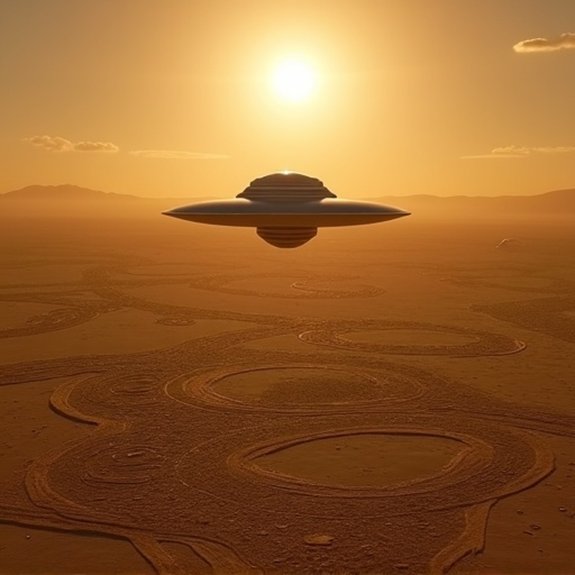
While the Nazca Lines have captivated archaeologists and tourists for decades with their massive geometric patterns and animal figures etched into Peru’s desert floor, they’ve also sparked one of archaeology’s most persistent fringe theories—that these ancient geoglyphs were created as landing strips or signals for extraterrestrial visitors. This hypothesis gained prominence in 1968 when Swiss author Erich von Däniken proposed it in his bestselling book “Chariots of the Gods?” He argued that the lines’ scale and precision couldn’t have been achieved without aerial guidance. The theory’s attracted millions of believers who’ve questioned how the Nazca people, working between 500 BCE and 500 CE, could create designs only fully visible from the sky. Despite mainstream archaeology’s rejection, the UFO hypothesis remains deeply embedded in popular culture.
Ancient Astronaut Theories Emerge
As post-World War II anxieties about technology and space exploration gripped the public imagination, a new genre of speculation emerged that would fundamentally reshape how millions viewed ancient history. In 1968, Swiss author Erich von Däniken published “Chariots of the Gods?” proposing that extraterrestrials visited Earth thousands of years ago. He claimed the Nazca Lines served as landing strips for alien spacecraft, arguing their scale and precision exceeded ancient human capabilities.
Von Däniken’s theory captivated readers despite archaeologists’ objections. He interpreted the geoglyphs’ animal figures as navigation markers visible only from above. The book sold millions of copies, spawning documentaries, lectures, and imitators. Though scientists demonstrated the lines’ construction required only simple tools and mathematics, the ancient astronaut hypothesis persisted in popular culture, transforming Nazca into UFO mythology’s ground zero.
Notable Cases or Sightings
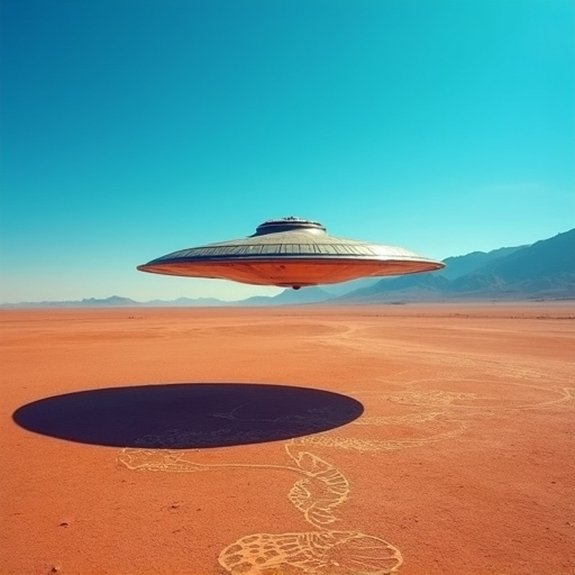
The ancient astronaut theories didn’t just fuel book sales—they attracted UFO enthusiasts who began reporting strange sightings above the Nazca plateau. In 1980, Eduardo Strauch photographed a disc-shaped object hovering near the Hummingbird line. Local pilot Carlos Vega documented three metallic spheres performing impossible maneuvers above the Spider figure in 1992.
Peru’s most publicized case occurred in 2007 when multiple witnesses filmed luminous objects zigzagging between the geoglyphs at sunset. The footage sparked international debate after analysis couldn’t identify conventional explanations. Tourist Maria Reiche’s foundation recorded seventeen separate incidents between 2010 and 2015, including daylight sightings of triangular craft.
While Peru’s air force attributes most reports to weather balloons and military exercises, believers point to consistent patterns: objects appearing near specific lines, electromagnetic interference with aircraft instruments, and witnesses describing identical formations years apart.
Common Theories or Explanations
Although mainstream archaeologists dismiss extraterrestrial connections, UFO researchers have developed several competing theories about Nazca’s alleged alien links. The “ancient runway” hypothesis suggests the lines served as landing strips for extraterrestrial craft, with Maria Reiche’s astronomical alignment discoveries supposedly supporting this view. Others propose the geoglyphs functioned as navigational beacons visible from orbit, helping alien visitors locate specific sites. The exploration of otherworldly encounters extends beyond ancient civilizations, as illustrated by the nimitz ufo encounter details explained. This incident involved U.S. Navy pilots encountering unidentified flying objects off the coast of San Diego in 2004, leading to intense scrutiny and debate within both military and scientific communities. As technology advances, the quest for understanding potential extraterrestrial activity continues to captivate public interest and fuel conspiracy theories worldwide.
The “star map” theory claims the figures represent constellations from the aliens’ home systems, while some researchers argue they’re messages intended for returning spacecraft. Erich von Däniken’s interpretation sees them as cargo cult artifacts—primitive attempts to summon back the “gods” who’d departed. More radical theorists suggest the lines mark underground alien bases or energy grids connecting global sacred sites. Each theory attempts to explain why ancient peoples would create massive designs only fully visible from the air.
Frequently Asked Questions
Can Tourists Visit the Nazca Lines to Investigate UFO Claims Themselves?
Tourists can’t directly investigate UFO claims at the Nazca Lines since Peru’s government prohibits walking on them. They’ll only see the geoglyphs from observation towers or aircraft tours, making personal ground-level investigation impossible.
What Equipment Do Researchers Use to Study Potential UFO Connections?
Researchers use ground-penetrating radar, magnetometers, and LIDAR scanning to map the lines’ full extent. They’ll employ spectroscopic analysis on soil samples, aerial drones for photography, and electromagnetic field detectors when investigating alleged anomalous activity.
Are There Any Ongoing Scientific Studies Examining the UFO Hypothesis?
Scientists aren’t conducting formal studies specifically on the Nazca UFO hypothesis. Mainstream archaeology’s dismissed these claims, though independent researchers continue examining the lines. NASA’s used satellite imagery for archaeological purposes, but they’re not investigating extraterrestrial connections.
Have Any Governments Officially Commented on the Nazca UFO Theories?
No government’s officially endorsed UFO theories about the Nazca Lines. Peru’s government promotes them as ancient cultural heritage sites. They’ve supported archaeological research that attributes the lines to the Nazca civilization’s religious and astronomical practices.
What Percentage of Archaeologists Support the Extraterrestrial Interpretation of Nazca?
Virtually no professional archaeologists support the extraterrestrial interpretation of the Nazca Lines. The archaeological community’s consensus maintains they’re ceremonial pathways and astronomical markers created by the Nazca culture between 500 BCE and 500 CE.

Crop Circles: Hoaxes or Hidden Messages?

Is Sleep Paralysis Actually Alien Contact?

Alien Life on Mars: Past Evidence?
About The Author
