UFO Waves During Wartime: Correlations?
Military conflicts throughout history have triggered mysterious surges in UFO sightings that defy conventional explanation. During World War II, Allied pilots encountered glowing orbs they called “foo fighters” that shadowed their aircraft over combat zones. These wartime waves weren’t isolated incidents—they’ve appeared during nearly every major conflict since. What drives this peculiar correlation between warfare and unexplained aerial phenomena? The answer challenges everything experts thought they knew.
Introduction
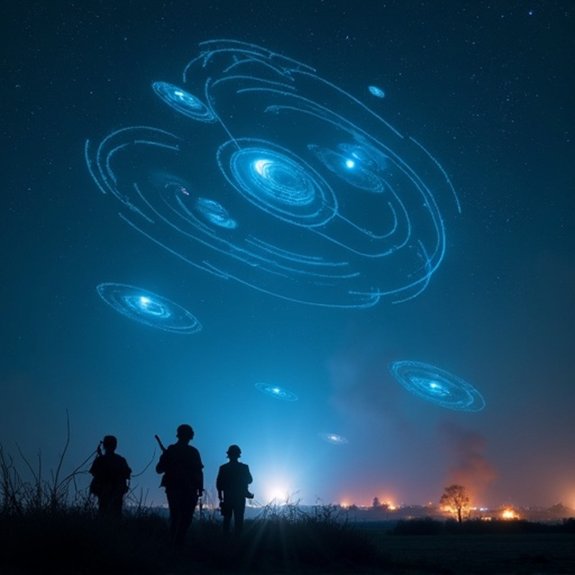
When nations clash in armed conflict, strange aerial phenomena often surge in frequency above battlefields and military installations. Historical records reveal distinct patterns: UFO sightings spike during major wars, from World War II’s “foo fighters” to Vietnam’s mysterious lights. These correlations aren’t coincidental. Military personnel, already scanning skies for enemy aircraft, become prime witnesses to unexplained objects. Their training makes them credible observers who can distinguish conventional aircraft from anomalies.
Researchers have documented waves of sightings during the Korean War, Six-Day War, and recent Middle Eastern conflicts. Whether these objects represent foreign surveillance technology, natural phenomena triggered by warfare’s electromagnetic signatures, or something else entirely remains debated. What’s clear is that war zones attract unusual aerial activity that defies conventional explanation.
World War II Foo Fighters
The first widespread reports of unexplained aerial phenomena during wartime emerged from Allied pilots flying missions over Europe and the Pacific. These mysterious objects, dubbed “foo fighters” by aircrews, appeared as glowing orbs that followed aircraft formations and performed impossible maneuvers. They’d dart between planes, match speeds instantly, and vanish without explanation.
Pilots initially suspected German secret weapons, but captured Nazi documents revealed German pilots reported identical encounters. The phenomena didn’t display hostile intent—they never attacked or interfered with missions. Reports peaked during late 1944 and early 1945, particularly over the Rhine Valley.
Military investigators couldn’t explain the sightings. Theories ranged from St. Elmo’s fire to enemy psychological warfare, but none adequately addressed the objects’ intelligent behavior and advanced flight characteristics.
Notable Cases or Sightings
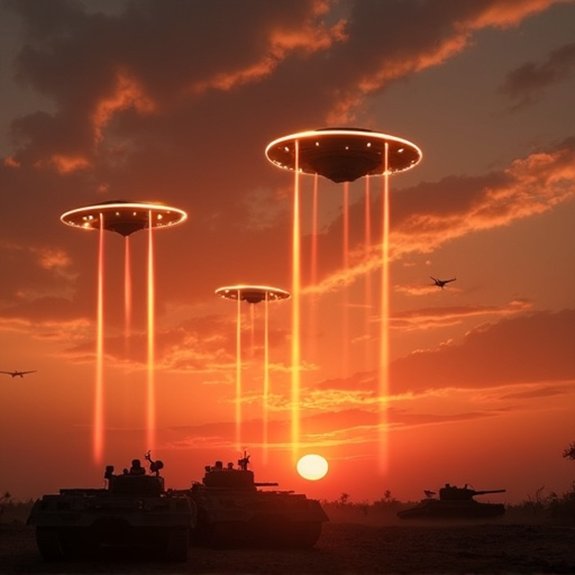
Several documented encounters stand out from the foo fighter phenomenon, each contributing unique details to the wartime mystery. On November 23, 1944, Lieutenant Edward Schlueter‘s crew reported orange lights following their bomber over the Rhine Valley. The objects matched their plane’s movements for thirty minutes before vanishing. Major William D. Leet encountered a glowing red fireball near his B-17 over Austria that couldn’t be outmaneuvered despite evasive actions.
The 415th Night Fighter Squadron logged multiple sightings throughout December 1944, describing objects that appeared metallic during daylight encounters. Japanese pilots reported similar phenomena over the Pacific, calling them “ball lightning” that pursued their aircraft. RAF crews documented silver spheres hovering motionless at 7,000 feet before accelerating beyond any known aircraft’s capability.
Common Theories or Explanations
Although military officials initially suspected enemy secret weapons, they couldn’t explain why these objects never attacked or caused damage. Scientists proposed atmospheric phenomena like ball lightning, temperature inversions, or electromagnetic disturbances caused by intense warfare activity. Some researchers suggested mass hysteria among combat-stressed personnel who’d misidentified conventional aircraft, flares, or weather balloons.
The plasma hypothesis gained traction, theorizing that electrical fields from bombing and artillery created luminous atmospheric effects. Others argued these sightings represented advanced reconnaissance technology from foreign powers testing equipment near conflict zones. Psychological explanations emphasized heightened alertness during wartime, causing observers to misinterpret mundane objects. Military analysts noted correlations between sighting clusters and radar installations, suggesting electromagnetic interference patterns. Despite numerous theories, no single explanation adequately addressed all reported characteristics across different conflicts.
Frequently Asked Questions
Do Military Personnel Receive Special Training for Reporting UFO Encounters During Combat Operations?
Military personnel don’t typically receive specialized UFO reporting training during combat operations. They’re trained to report any unusual aerial phenomena through standard channels, but there’s no widespread formal protocol specifically addressing unidentified flying objects.
Which Government Agencies Currently Investigate Wartime UFO Reports?
The Pentagon’s All-domain Anomaly Resolution Office (AARO) investigates military UFO reports, while the Office of Naval Intelligence analyzes naval encounters. They’re coordinating with intelligence agencies to assess potential threats during combat operations worldwide.
Are There International Protocols for Sharing UFO Data Between Allied Nations During Conflicts?
NATO’s established UAP protocols facilitate limited data sharing between allies, while Five Eyes nations maintain classified intelligence exchanges. They’ve developed informal channels for time-sensitive sightings near military operations, though extensive frameworks don’t publicly exist.
How Do Radar Operators Distinguish Between Enemy Aircraft and Unidentified Aerial Phenomena?
Radar operators distinguish enemy aircraft from UAPs by analyzing flight characteristics, speed profiles, and transponder signals. They’ll cross-reference known aircraft databases, check altitude capabilities, and observe acceleration patterns that exceed conventional aircraft performance limits.
What Percentage of Wartime UFO Sightings Remain Classified or Restricted?
Military officials haven’t disclosed exact percentages of classified wartime UFO sightings. Experts estimate 60-80% remain restricted, though recent declassification efforts’ve released some reports. Most Cold War and ongoing conflict sightings stay classified for national security.

Is There a Portal to Another World in Sedona?

Were the Nazca Lines Built for Aliens?

Are Abduction Stories Consistent Across Cultures?
About The Author
