Do Werewolves Still Stalk Eastern Europe?
In Eastern Europe, the legend of werewolves continues to intrigue communities despite modern skepticism. Ancient Slavic folklore has left an indelible mark, influencing tales that spark fear and fascination. Recent reports of strange sightings challenge rational explanations, suggesting that these mythical beings might still linger in the shadows. As locals discuss these eerie encounters, one has to wonder: what drives this enduring belief in werewolves, and what deeper anxieties do they reveal?
Introduction
In Eastern Europe, where folklore thrives, tales of werewolves have captured imaginations for centuries. These fearsome creatures, often believed to transform from human to wolf, embody both the primal and mystical. Legends suggest that a bite, a cursed bloodline, or certain rituals trigger this transformation. Communities have long feared and revered these beings, seeing them as harbingers of mystery and danger. In rural areas, stories of werewolves circulated as cautionary tales, keeping children close to home after dark. While some dismiss werewolf myths as mere superstition, they reflect deep-seated cultural anxieties and beliefs. Today, these legends continue to influence modern media, reminding audiences of the dark connection between humanity and the wild, and demonstrating folklore’s enduring power in shaping cultural narratives.
Ancient Slavic Folklore Influence
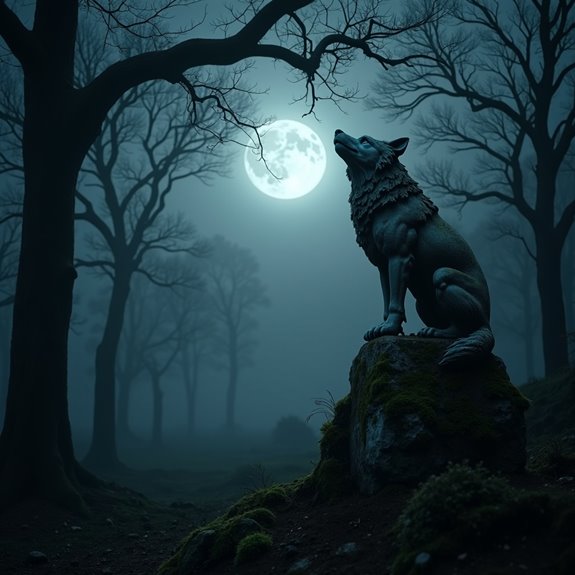
The rich tapestry of ancient Slavic folklore greatly influences modern werewolf legends in Eastern Europe. Stories of shape-shifting beings, often tied to the moon and nature, have shaped local beliefs and fears. In these tales, werewolves embody the duality of human and animal instincts, reflecting cultural anxieties toward the wilderness and the unknown. Traditional Slavic rituals, aimed at warding off evil spirits, also intertwine with werewolf lore, emphasizing humanity’s struggle against darker forces. Folkloric elements like transformations during the full moon or specific incantations resonate through generations, keeping the legends alive. Today, these influences persist in cultural references, films, and literature, where ancient beliefs find new life, demonstrating the enduring power of Slavic mythology in shaping perceptions of werewolves throughout the region.
Notable Cases or Sightings
Witnessing a werewolf sighting often ignites fascination and fear among locals in Eastern Europe. In 2008, a small village in Romania reported an unusual creature lurking near livestock, prompting residents to stay indoors after dark. Stories emerged of a shadowy figure seen darting through the trees, leading to a surge of local interest and speculation. In Poland, a 2015 account from hikers featured claims of a wolf-like beast with human-like features watching them from a distance, instilling terror. Similarly, in Ukraine, sightings continued in 2020 when villagers claimed to hear unearthly howls at night, reminiscent of folklore warnings. These instances keep the age-old legend alive, encouraging ongoing discussions about the possible existence of these mythical beings.
Common Theories or Explanations
Local sightings fuel a variety of theories attempting to explain the phenomenon of werewolves in Eastern Europe. Some believe that psychological factors, such as mass hysteria or folklore-induced delusions, lead people to report sightings. Others point to the influence of ancient superstitions and local legends, suggesting that cultural narratives shape these experiences. Some researchers argue that environmental factors, like rabid animals or wolf populations, may play a role, blurring the lines between reality and myth. Additionally, physiological conditions, such as hypertrichosis, have been proposed as possible explanations for individuals exhibiting wolf-like features. As science and folklore intersect, the mystery of werewolves endures, leaving room for both skepticism and belief among those captivated by the tales.
Frequently Asked Questions
Are There Any Scientific Studies on Werewolves in Eastern Europe?
There aren’t any credible scientific studies on werewolves specific to Eastern Europe. Most research focuses on folklore and cultural beliefs, while few scholars explore the psychological effects of such legends on local communities and individual behaviors.
How Has Popular Media Influenced Beliefs in Werewolves?
Popular media’s portrayal of werewolves has shaped public belief, blending myth with fascination. Movies and books amplify fear and wonder, leading many to view werewolves not just as folklore, but as persistent figures in cultural imagination.
What Other Mythical Creatures Are Found in Eastern European Folklore?
Eastern European folklore is rich with mythical creatures like vampires, witches, and the strigoi. Legends surrounding these beings shape cultural identities, revealing ancient fears and morals that continue to captivate the imagination of many today.
Do Local Governments Acknowledge Werewolf Sightings?
Local governments usually don’t acknowledge werewolf sightings, seeing them as folklore and myth. However, some communities embrace the stories, using them to attract tourists and preserve cultural heritage linked to regional legends and traditions.
How Do Werewolves Differ in Various Eastern European Cultures?
In various Eastern European cultures, werewolves might be seen as cursed humans, nature spirits, or even shapeshifters, with differing beliefs about their origins and abilities, highlighting unique folklore and traditions among different regions.

The Mystery of the Thunderbird in Native Lore

The Green Children of Woolpit Mystery

Are Mermaids Based on Real Encounters?
About The Author
