Ghost Brides: Legends of Women Who Wait
In rural villages across Asia, locals whisper about women in red wedding gowns who appear at crossroads after midnight. They’re ghost brides—spirits trapped between worlds, forever waiting for marriages that’ll never happen. These spectral figures don’t just haunt abandoned temples and empty houses; they’ve shaped centuries of cultural practices, from secret burial rituals to modern ghost marriages. Their stories reveal something darker about tradition’s grip on the living.
Introduction
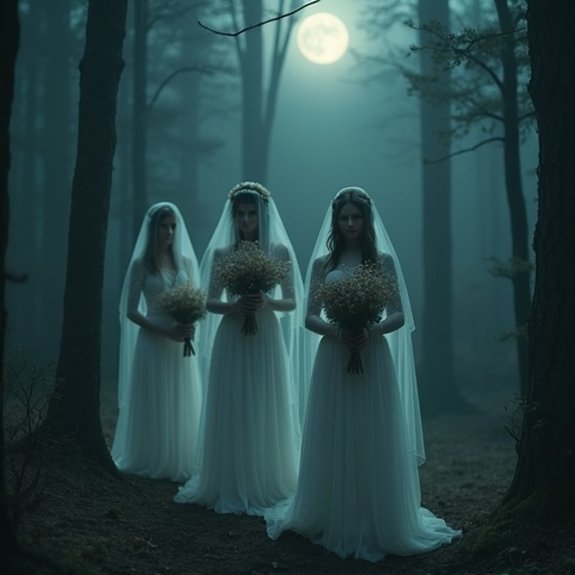
When darkness falls across rural villages in Asia, locals whisper tales of spectral women in red wedding dresses who wander lonely roads seeking companionship. These ghost brides represent one of the region’s most enduring supernatural legends, spanning cultures from China to Malaysia. They’re typically young women who died before their wedding day or perished tragically soon after marriage. Their restless spirits can’t move on, trapped between worlds by unfulfilled desires or violent deaths.
Stories vary by region, but common elements persist: the crimson bridal gown, the pale complexion, and the bride’s desperate search for a husband. Some legends portray them as benevolent spirits seeking closure, while others describe vengeful entities who’ll drag unsuspecting men to the afterlife. These tales reflect deep cultural anxieties about marriage, death, and women’s roles in traditional societies.
Ancient Chinese Burial Traditions
Though ancient Chinese society valued marriage as essential for maintaining family lineage, death before wedding ceremonies created a spiritual crisis that demanded supernatural solutions. Families believed unmarried daughters couldn’t find peace in the afterlife without a husband’s ancestral tablet to honor them. They’d wander as hungry ghosts, bringing misfortune to living relatives.
The practice of minghun, or ghost marriages, emerged to solve this dilemma. Parents arranged posthumous unions between deceased singles, conducting full wedding ceremonies with photographs, effigies, or empty chairs representing the dead. They’d burn paper offerings, exchange dowries, and unite the couple’s memorial tablets. Some regions even practiced “bride buying,” where poor families sold recently deceased daughters to wealthy families seeking ghost brides for their dead sons.
Notable Cases or Sightings

Three documented ghost bride encounters have captivated paranormal researchers across Asia for decades. In 1987, Malaysian taxi drivers reported picking up a young woman in red near Karak Highway who’d vanish before reaching her destination. She’d always request the same address—later discovered to be a cemetery.
Taiwan’s most famous case involves the 1959 sighting at Taipei’s Grand Hotel, where staff members witnessed a bride wandering the corridors searching for her groom. Security footage from 2012 allegedly captured her figure again.
Singapore’s Punggol Beach remains notorious for its 1950s ghost bride who appears during full moons. Witnesses describe her wearing a torn qipao, walking toward the water where she supposedly drowned. Local police have logged over forty reports since the initial sighting.
Common Theories or Explanations
Because cultural trauma often manifests in collective folklore, anthropologists suggest ghost bride legends reflect society’s anxieties about women’s autonomy and unfulfilled marriages. These stories emerged during periods when women couldn’t choose their partners or escape arranged unions. The tragic bride represents society’s guilt over denying women agency in their own lives.
Psychologists propose another explanation: the legends serve as cautionary tales about breaking social contracts. When families don’t honor marriage agreements or men abandon their betrothed, the ghost bride’s vengeance reinforces communal values about keeping promises.
Some researchers link these apparitions to sleep paralysis and grief hallucinations. Witnesses who’ve lost loved ones or feel guilty about broken engagements might project these emotions into supernatural encounters, creating shared narratives that validate their unresolved feelings.
Frequently Asked Questions
How Can Someone Protect Themselves From Encountering a Ghost Bride?
One can protect themselves from ghost brides by carrying protective amulets, avoiding isolated roads at night, and refusing gifts from unknown women. They shouldn’t follow mysterious brides or accept wedding invitations from strangers they’ve just met.
What Offerings or Rituals Might Appease a Ghost Bride’s Spirit?
Traditional offerings include wedding items she never received—red candles, bridal jewelry, or paper money. Practitioners might perform mock wedding ceremonies, burn incense at her grave, or commission monks to chant prayers releasing her spirit’s attachment.
Are Ghost Bride Legends Found in Cultures Outside of Asia?
Yes, ghost bride legends appear worldwide. Mexico’s La Llorona searches for children in her wedding dress. European folklore features White Ladies haunting castles. Slavic cultures tell of rusalka, drowned brides who’ve become water spirits.
Can Ghost Brides Physically Harm or Possess Living People?
In most legends, ghost brides can’t physically harm people but they’ll drain victims’ life energy through possession or supernatural influence. They’re typically portrayed as causing illness, madness, or death through spiritual rather than physical attacks.
What Time of Year Are Ghost Bride Sightings Most Commonly Reported?
Ghost bride sightings spike during autumn months, particularly October through November. They’re most frequently reported on Halloween, full moon nights, and wedding anniversary dates. Spring also sees increased encounters, especially during traditional wedding seasons in various cultures.

Do Household Spirits Still Linger in Europe?

The Water Horse of Scotland: Dangerous Fairy Tale?

The Legend of Kuchisake-Onna
About The Author
