The Lady in White Legends: Worldwide Survey
The Lady in White haunts countless cultures, her spectral form drifting through centuries of folklore. She’s appeared on moonlit bridges, abandoned castles, and misty waterways from Mexico to Malaysia. While her dress remains constant, her story doesn’t—each region claims its own tragic tale of betrayal, murder, or unbearable loss. What drives humanity’s obsession with these ghostly women, and why do they persist across such vastly different societies?
Introduction

While ghost stories come in countless varieties, few supernatural figures have captured the human imagination quite like the Lady in White. She’s appeared in folklore across continents, transcending cultural boundaries to become one of the world’s most recognizable spectral archetypes. These ethereal women, draped in flowing white garments, typically manifest near castles, bridges, roads, or bodies of water. They’re often portrayed as tragic figures—murdered brides, grieving mothers, or victims of betrayal seeking justice or warning travelers of danger. From Mexico’s La Llorona to Europe’s White Ladies and Asia’s pontianak, these spirits share remarkable similarities despite emerging from vastly different societies. Their enduring presence in global folklore reveals humanity’s universal fascination with loss, redemption, and the possibility that death isn’t always final.
Medieval European Folklore Roots
Before the printing press spread ghost stories across Europe, medieval communities passed down tales of spectral women through oral tradition, embedding them deeply in the continent’s cultural consciousness. These apparitions typically appeared as noblewomen who’d suffered tragic deaths—murdered brides, grief-stricken mothers, or betrayed lovers. Castle records from the 12th century describe white-clad spirits haunting battlements where women had leaped to their deaths.
The Church didn’t suppress these beliefs but incorporated them into cautionary tales about sin and redemption. Monks documented sightings in monastery chronicles, lending credibility to peasant folklore. Germanic tribes contributed the “Weiße Frau” archetype, while Celtic traditions offered banshee-like figures. These regional variations merged through trade routes and pilgrimages, creating a shared European mythology that’d persist for centuries.
Notable Cases or Sightings
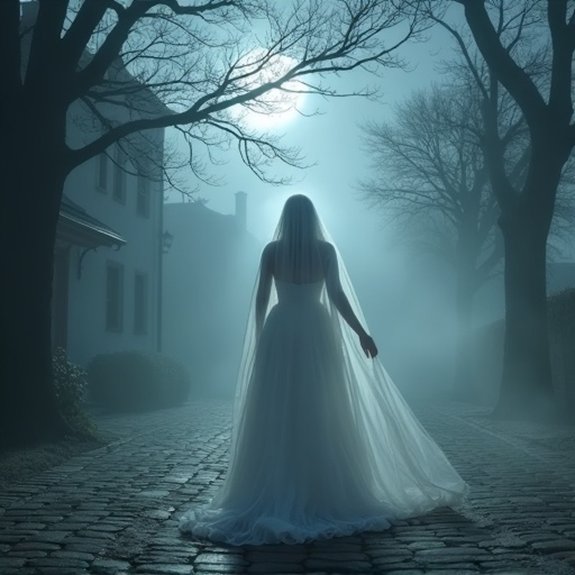
Several documented encounters have transformed local legends into internationally recognized hauntings. The White Lady of Hohenzollern Castle in Germany has appeared to countless visitors since the 15th century, often preceding deaths in the royal family. She’s been photographed multiple times, though skeptics dispute the images’ authenticity.
Mexico’s La Llorona sightings concentrate near waterways, where witnesses report hearing her distinctive wails before seeing her ethereal form. Police reports from Texas and New Mexico document drivers swerving to avoid a woman in white who vanishes upon approach.
The Philippines’ White Lady of Balete Drive has caused numerous accidents since the 1950s. Taxi drivers refuse fares to that area after midnight, claiming she appears in rearview mirrors or materializes in empty backseats.
Common Theories or Explanations
Although skeptics and believers offer vastly different explanations for White Lady phenomena, most theories fall into distinct categories that attempt to rationalize these widespread encounters. Paranormal researchers suggest these apparitions represent souls trapped between worlds, often women who’ve suffered traumatic deaths. They propose electromagnetic fields at haunting sites might preserve consciousness or memories.
Psychologists attribute sightings to pareidolia, where the brain creates familiar patterns from ambiguous stimuli, especially in low-light conditions. Sleep deprivation and grief can trigger hallucinations resembling ghostly figures. Cultural transmission theory explains how local folklore shapes expectations, making witnesses interpret unusual experiences through existing narrative frameworks.
Scientists point to atmospheric conditions creating light anomalies or fog formations that appear humanoid. Some cases involve deliberate hoaxes or misidentified living people wearing light-colored clothing at night.
Frequently Asked Questions
How Do Lady in White Legends Differ From Other Female Ghost Stories?
Lady in White legends typically feature tragic, lovelorn women who appear in white gowns near specific locations. They’re often benevolent warnings, unlike vengeful female spirits who actively harm people or poltergeists who cause disturbances.
What Should You Do if You Encounter a Lady in White?
Folk traditions suggest one shouldn’t approach or follow a lady in white. They’d best remain calm, avoid direct eye contact, and quietly leave the area. Some legends recommend saying prayers or carrying protective items like iron.
Are Lady in White Apparitions Considered Dangerous or Benevolent Spirits?
Lady in White apparitions aren’t uniformly categorized as dangerous or benevolent. They’re typically portrayed as tragic, sorrowful spirits seeking closure. Some warn travelers of danger, while others lure victims to their doom, varying by cultural tradition.
Which Countries Have the Most Reported Lady in White Sightings Today?
The Philippines, Mexico, and the United States report the most lady in white sightings today. These countries’ folklore traditions actively preserve such stories, with locals frequently claiming encounters along highways, historic sites, and old buildings.
Do Lady in White Legends Appear in Non-Western Cultures?
Yes, lady in white legends appear throughout non-Western cultures. Asia’s folklore features Japan’s Yuki-onna, the Philippines’ White Lady, and India’s churels. Latin America has La Llorona, while Middle Eastern cultures share their own spectral women stories.

The Trickster in African Diaspora Lore

Werewolves: Ancient Curse or Medical Mystery?

Global Legends of Giants and Titans
About The Author
