The Trickster in African Diaspora Lore
The spider’s thread stretches from West African villages to Caribbean plantations, carrying stories that’ve outlasted empires. Trickster figures like Anansi didn’t just entertain—they taught enslaved communities how to survive through cunning rather than force. These shape-shifting characters appear across the diaspora in different forms, each adaptation revealing something profound about resistance and cultural preservation. But there’s more to these tales than clever animals outsmarting their oppressors.
Introduction
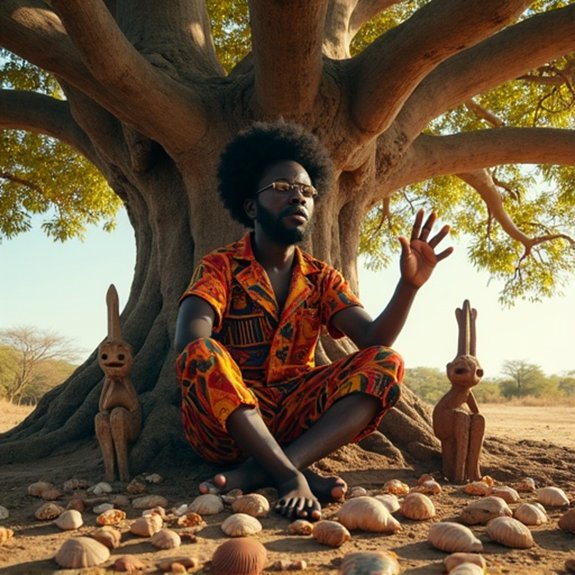
Across centuries of forced migration and cultural transformation, African peoples carried their trickster tales to new lands, where these cunning characters evolved into powerful symbols of resistance and survival. The trickster archetype—found in figures like West Africa’s Anansi, Yoruba’s Eshu-Elegba, and their New World descendants—embodies wit, adaptability, and subversion. These shape-shifters don’t simply entertain; they teach survival strategies to oppressed communities.
In the Americas, enslaved Africans transformed traditional tricksters into Brer Rabbit, Ti Malice, and other figures who outsmarted powerful oppressors through cleverness rather than force. The trickster’s dual nature—creator and destroyer, fool and sage—reflects diaspora experiences of maneuvering through hostile systems while preserving cultural identity. This enduring archetype continues shaping African diaspora literature, music, and oral traditions today.
West African Spider Deity Origins
The spider-god Anansi emerged from the Akan peoples of present-day Ghana and Côte d’Ivoire as both a divine messenger and cosmic troublemaker. He’s portrayed as a cunning shape-shifter who alternates between spider and human forms, using wit to overcome stronger opponents. The Akan traditionally credited Anansi with bringing wisdom, stories, and agricultural knowledge to humanity by stealing them from the sky god Nyame.
His tales served multiple functions in West African societies. They taught moral lessons, preserved cultural values, and provided entertainment during communal gatherings. Anansi’s cleverness often backfired, warning listeners about the consequences of excessive greed and pride. Through the transatlantic slave trade, these narratives spread throughout the Americas, where Anansi evolved into various regional incarnations while maintaining his core trickster attributes.
Notable Cases or Sightings

While Anansi remains primarily a mythological figure, several Caribbean and Southern U.S. communities have reported encounters with spider-like trickster entities that mirror his legendary behavior. In 1972, Jamaican farmers near Montego Bay claimed a massive spider rearranged their crop patterns overnight, creating geometric designs visible only from hilltops. Louisiana’s Creole communities documented similar incidents throughout the 1980s, where unexplained web formations appeared in cypress trees following local disputes.
Anthropologist Dr. Marcus Williams collected over forty testimonies from Trinidad describing encounters with shape-shifting spiders that spoke in riddles. These accounts consistently featured the entity’s tendency to appear during community conflicts, offering cryptic advice that’d later prove valuable. While skeptics attribute these sightings to folklore-influenced interpretations of natural phenomena, believers maintain they’re genuine manifestations of the ancient trickster’s enduring presence.
Common Theories or Explanations
Although scholars debate the origins of these trickster encounters, three primary theories dominate academic discourse. The cultural preservation theory suggests these stories serve as vehicles for maintaining African traditions within diaspora communities. Anthropologists argue that trickster tales encode survival strategies, teaching marginalized groups to navigate oppressive systems through wit rather than force.
The psychological framework proposes that trickster figures represent the collective unconscious‘s response to trauma and displacement. These characters embody the community’s need to reclaim agency through cleverness and subversion.
Finally, the syncretic interpretation views trickster manifestations as adaptive responses to new environments. African deities like Eshu merged with local folklore, creating hybrid figures that reflect both ancestral memory and contemporary experience. This theory explains variations across different diaspora regions.
Frequently Asked Questions
How Do Trickster Stories Differ Between Caribbean and North American African Diaspora Communities?
Caribbean trickster tales often feature Anansi the spider who’s cunning and humorous, while North American stories emphasize Brer Rabbit who outsmarts oppressors through wit. Caribbean versions retain more African elements; North American adaptations reflect plantation experiences.
What Role Did Trickster Tales Play in Resistance During Slavery?
Trickster tales served as coded resistance during slavery, allowing enslaved people to mock masters, share survival strategies, and preserve cultural identity. They’d disguise subversive messages as entertainment, teaching listeners how to outwit oppressors through cunning rather than force.
Are There Female Trickster Figures in African Diaspora Folklore?
Yes, female tricksters exist though they’re less common than male ones. Aunt Nancy sometimes appears as Anansi’s female counterpart, while Brazilian folklore features clever women who outsmart oppressors through wit and cunning rather than strength.
How Have Modern Media Adapted Traditional African Trickster Characters?
Modern media’s transformed African trickster characters into animated films, comic books, and TV shows. Disney’s adapted Anansi stories, while Marvel’s incorporated trickster elements into Black Panther. Contemporary authors’ve reimagined these figures in urban fantasy novels.
What Moral Lessons Do Trickster Stories Typically Teach Children?
Trickster stories teach children that wit’s often more powerful than strength, but they also warn against excessive greed and pride. They’ll learn that actions have consequences and that cleverness shouldn’t replace kindness or community values.

The Vetala: Indian Spirits Who Possess Corpses

What Happens If You Speak the Name of a Skinwalker?

Do Golems of Jewish Lore Still Have Power Today?
About The Author
