Ancient Roads Beneath Modern Cities
Cities across the world conceal an ancient secret beneath their bustling streets. Archaeological excavations have revealed networks of roads that predate modern civilization by centuries, yet they’ve shaped today’s urban landscapes in unexpected ways. London’s financial district follows paths Roman engineers carved two thousand years ago. These buried thoroughfares aren’t just historical curiosities—they’re active influences on how millions navigate their daily lives without knowing what lies beneath their feet.
Introduction

When modern construction crews break through layers of asphalt and concrete, they sometimes discover an unexpected link to the past: ancient roads that have shaped today’s urban landscapes for thousands of years. These hidden thoroughfares reveal how cities’ve evolved along the same routes that merchants, armies, and pilgrims once traveled. From Rome’s Via Appia beneath bustling Italian streets to London’s Roman roads under the Thames Valley, ancient pathways determine where modern highways run and neighborhoods develop. Archaeological evidence shows that humans naturally follow efficient routes between settlements, water sources, and trading posts. Today’s urban planners often unknowingly trace patterns established by Bronze Age traders or Roman engineers. Understanding these buried roads helps explain why certain intersections feel inevitable and why some city layouts persist despite centuries of rebuilding.
Roman Engineering Beneath London
The City of London sits atop a network of Roman roads that’ve directed traffic patterns for nearly two millennia. Watling Street, now partly the A5, once connected Dover to Wroxeter through Londinium’s heart. Modern Cheapside follows the exact path Romans paved in 47 AD, while Bishopsgate traces the ancient route to York.
Archaeological excavations reveal these roads’ sophisticated construction: gravel foundations, cambered surfaces for drainage, and ditches that prevented flooding. The Romans built them arrow-straight wherever terrain permitted, using surveying techniques that engineers still admire today.
London’s financial district preserves the Roman street grid beneath its skyscrapers. Construction projects regularly uncover these stone highways, forcing developers to work around history. Today’s commuters unknowingly follow paths Roman soldiers marched, proving that good infrastructure transcends centuries.
Notable Cases or Sightings
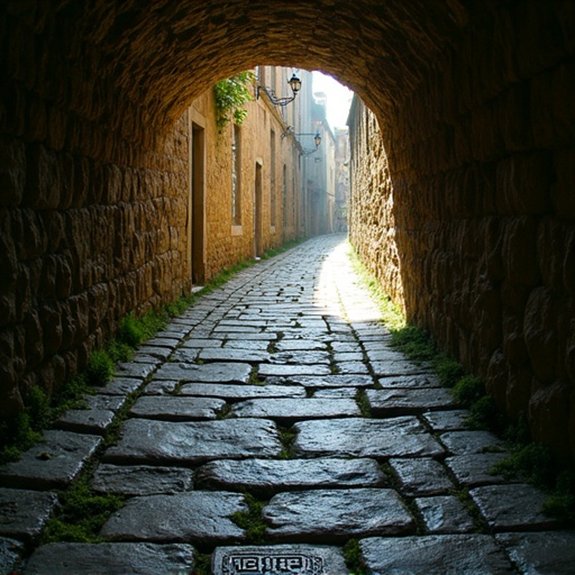
Several major cities worldwide have uncovered remarkable ancient roadways during routine construction work. In 2016, Athens’ metro expansion revealed a pristine marble-paved Byzantine road complete with drainage channels. Workers in Mexico City discovered sections of a pre-Hispanic causeway while installing new water pipes in 2020.
Jerusalem’s light rail construction exposed a 2,000-year-old street that once connected the city’s upper quarters to the Pool of Siloam. Istanbul’s Marmaray tunnel project unearthed the ancient harbor of Theodosius, along with Byzantine roads that hadn’t seen daylight for fifteen centuries. In Rome, subway Line C’s excavation brought forth an entire military barracks complex with its original stone streets intact. These discoveries haven’t just enriched archaeological knowledge—they’ve forced engineers to redesign modern infrastructure around irreplaceable heritage.
Common Theories or Explanations
Although modern cities sprawl across landscapes that have hosted human settlements for millennia, urban archaeologists‘ve developed several compelling theories about why ancient roads persist beneath contemporary streets. They’ve identified practical continuity as the primary factor—successive civilizations built upon existing infrastructure because established routes already connected water sources, markets, and defensive positions.
Geographic constraints also explain this phenomenon. Rivers, valleys, and mountain passes dictate natural pathways that haven’t changed. Engineers throughout history’ve chosen similar solutions to identical topographical challenges.
Additionally, property boundaries often preserve ancient road alignments. Legal frameworks protecting land ownership’ve maintained these routes even as building materials and transportation methods evolved. Archaeological evidence confirms that Roman roads in London, Aztec causeways in Mexico City, and medieval paths in Paris still influence modern traffic patterns.
Frequently Asked Questions
Can I Visit Ancient Roads Discovered Beneath My City?
Visitors can’t typically access most ancient roads beneath cities since they’re usually buried under buildings or infrastructure. However, some cities’ve opened archaeological sites, museums, or guided tours where people can view exposed sections of historic roadways.
How Much Does It Cost to Preserve Underground Ancient Roads?
Preservation costs for underground ancient roads vary widely, typically ranging from hundreds of thousands to millions of dollars. Cities’ll spend on structural support, climate control, waterproofing, and ongoing maintenance to protect these archaeological treasures.
What Tools Do Archaeologists Use to Detect Buried Ancient Roads?
Archaeologists detect buried ancient roads using ground-penetrating radar that sends electromagnetic waves underground. They’ll also employ magnetometers to identify stone patterns, aerial photography for crop marks, and LiDAR technology that reveals hidden surface features beneath vegetation.
Are Property Values Affected by Ancient Roads Beneath Buildings?
Property values aren’t typically affected by ancient roads beneath buildings unless they’re designated as protected archaeological sites. Restrictions on development or renovation can lower values, while prestigious historical associations sometimes increase property appeal and prices.
Which Modern Cities Have the Most Extensive Ancient Road Networks Underground?
Rome’s underground contains the most extensive ancient road network, with hundreds of miles of original Roman streets. London’s also preserved significant Roman roads beneath modern streets, while Istanbul’s layered Byzantine and Roman infrastructure remains largely intact.



About The Author
