The Chachapoya Cloud Warriors
The Chachapoya civilization controlled Peru’s cloud forests for nearly eight centuries, building massive stone fortresses that still perplex archaeologists today. They’ve earned their “Cloud Warriors” nickname through fierce resistance against the Inca Empire and their mountaintop settlements shrouded in mist. Yet something doesn’t add up about their sudden disappearance. Recent discoveries in their cliff-side tombs suggest these ancient people possessed knowledge that challenges conventional understanding of pre-Columbian societies.
Introduction
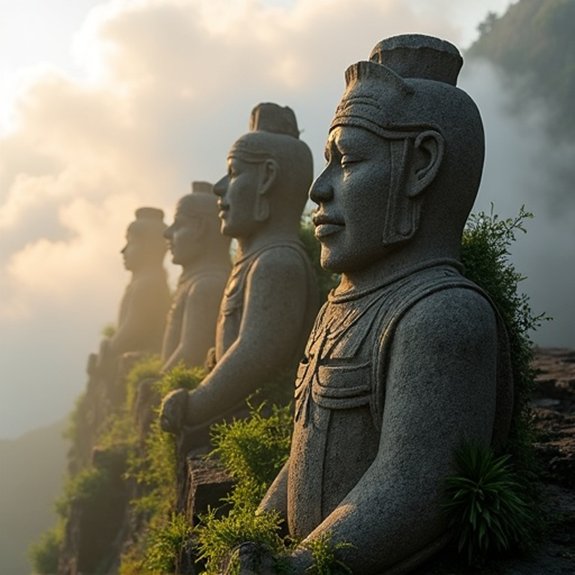
Although the Inca Empire called them “Chachapoya” after the Quechua words for “cloud people,” these fierce warriors who inhabited Peru’s northern highlands from 800 to 1570 CE preferred to call themselves by their own tribal names. They’d built their civilization across 25,000 square miles of cloud forest between the Marañón and Huallaga rivers, constructing fortified cities on mountain ridges above 10,000 feet.
The Chachapoya weren’t a unified nation but rather independent groups sharing similar customs, architecture, and burial practices. They’re renowned for their circular stone structures, elaborate sarcophagi, and cliff-side mausoleums that still cling to vertical rock faces. Their resistance against Inca expansion lasted decades before Tupac Yupanqui finally conquered them around 1470. Spanish chroniclers later documented their tall stature, fair skin, and reputation as formidable warriors.
Pre-Incan Andean Mountain Civilization
While most Andean civilizations flourished in valleys or coastal regions, the Chachapoya developed their sophisticated culture in one of South America’s most challenging environments—the eastern slopes of the Andes where dense cloud forests meet vertical limestone cliffs. Between 800 and 1470 CE, they built fortified cities on mountain ridges at elevations exceeding 3,000 meters, connected by stone roads carved into precipitous slopes.
They’re renowned for constructing circular stone houses with conical thatched roofs and decorating buildings with distinctive zigzag friezes. Their agricultural terraces transformed steep mountainsides into productive farmland, while their mummification practices rivaled Egyptian techniques. The Chachapoya controlled trade routes between the Amazon basin and highland regions, exchanging exotic feathers, medicinal plants, and hardwoods for ceramics and textiles.
Notable Cases or Sightings
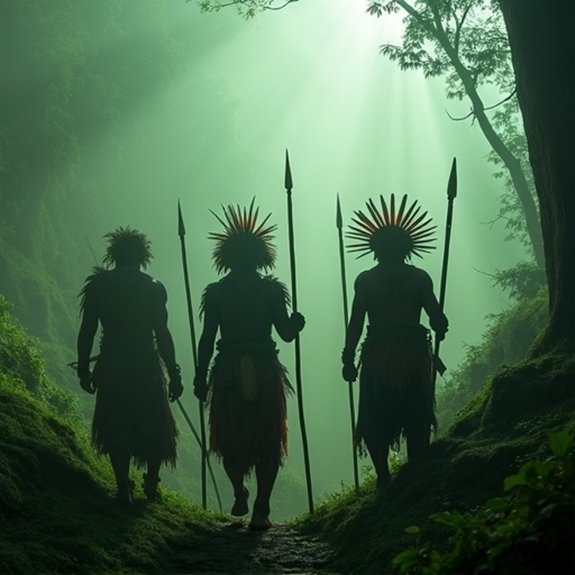
The Chachapoya’s mountain strongholds remained hidden from Spanish conquistadors for decades after the fall of the Inca Empire, leading to numerous documented encounters that sparked legends of lost cities filled with gold. In 1843, Juan Crisóstomo Nieto discovered the fortress of Kuelap while surveying northern Peru’s cloud forests. The massive stone structure with its 60-foot walls stunned explorers who’d assumed the region contained only primitive settlements.
Explorer Gene Savoy located Gran Pajatén in 1965, revealing elaborate stone mosaics and circular buildings that contradicted Spanish accounts of “savage mountain tribes.” His team documented over thirty sites across the Utcubamba Valley. Most remarkably, farmers accidentally uncovered 219 mummies at Laguna de los Cóndores in 1996. The well-preserved bodies wore elaborate textiles and sat facing the sunrise, providing archaeologists with unprecedented insights into Chachapoya burial practices.
Common Theories or Explanations
Since archaeologists began studying the Chachapoya in earnest during the 1960s, they’ve proposed several theories about this civilization’s unique characteristics and eventual disappearance. Their pale skin and light hair have sparked debates about possible European or Asian ancestry, though DNA analysis suggests indigenous Andean origins with minimal outside influence.
Researchers attribute their cliff-dwelling architecture to defensive strategies against Incan expansion and rival tribes. The vertical settlements maximized limited arable land while providing natural fortification. Their sophisticated mummification practices likely developed from the region’s humid climate, requiring advanced preservation techniques.
The civilization’s decline resulted from multiple factors: Incan conquest in 1470, followed by Spanish diseases that decimated the population. Some scholars propose internal conflicts weakened them before external threats arrived, explaining their relatively quick subjugation despite fierce resistance.
Frequently Asked Questions
What Modern DNA Analysis Reveals About Chachapoya Descendants Living Today?
Modern DNA analysis reveals Chachapoya descendants carry unique genetic markers linking them to ancient populations. They’ve maintained distinct ancestry despite centuries of mixing, showing connections to both Andean and Amazonian groups while preserving indigenous heritage.
How Can Tourists Visit Chachapoya Archaeological Sites Safely and Responsibly?
Tourists can visit Chachapoya sites by hiring certified local guides, obtaining permits for restricted areas, using established trails, and booking tours through reputable agencies. They shouldn’t remove artifacts or damage structures while exploring these ruins.
What Preservation Efforts Protect Remaining Chachapoya Ruins From Environmental Damage?
Preservation teams install drainage systems to prevent water damage, apply consolidation treatments to fragile structures, and build protective roofs over vulnerable areas. They’re also removing invasive vegetation, monitoring structural stability, and restricting visitor access to endangered sections.
Which Museums Display Authentic Chachapoya Artifacts and Mummies?
Lima’s National Museum of Archaeology displays authentic Chachapoya mummies and textiles. Leymebamba Museum houses over 200 mummies and artifacts from Laguna de los Cóndores. Chachapoyas’ local museum exhibits pottery, tools, and ceremonial objects they’ve recovered.
What Role Did Chachapoya Women Play in Their Society?
Chachapoya women held significant roles as textile producers, creating intricate weavings that were highly valued. They’d participate in agricultural work, manage households, and some evidence suggests they served as priestesses in religious ceremonies.

The Lost City of Khemt: What If It Exists?

The Myth of the Lost Twin

The Identity of the Man in the Iron Mask
About The Author
