The Conspiracy of the Dead Sea Scrolls
The Dead Sea Scrolls‘ discovery in 1947 sparked decades of scholarly gatekeeping and Vatican interference allegations. While religious authorities controlled access to these ancient texts, conspiracy theorists claimed they’d hidden manuscripts that threatened Christianity’s foundations. Even after full publication in 1991, questions persist about what wasn’t revealed—and why certain scholars monopolized the scrolls for nearly fifty years while the world waited for answers.
Introduction
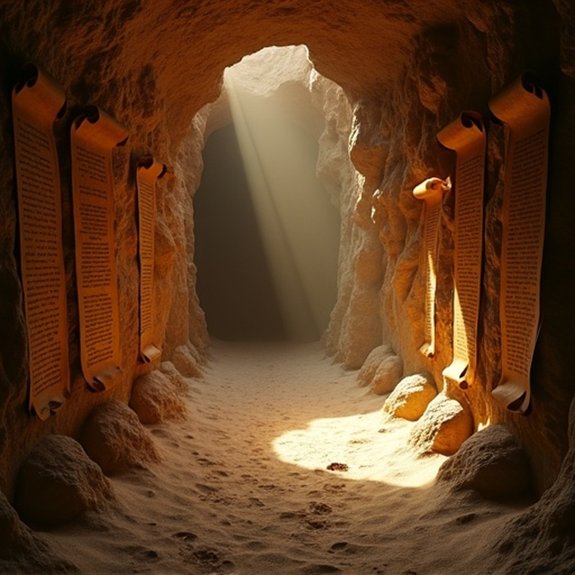
When shepherds stumbled upon ancient manuscripts in caves near Qumran in 1947, they couldn’t have imagined the decades of controversy their discovery would provoke. The Dead Sea Scrolls, containing biblical texts and sectarian writings from the Second Temple period, became archaeology’s most significant find of the twentieth century. Yet their story’s taken darker turns through allegations of academic suppression, religious censorship, and deliberate withholding of controversial texts.
Scholars initially restricted access to the scrolls for over forty years, fueling suspicions about what they’d discovered. Critics argued that religious authorities feared the manuscripts contained revelations that’d undermine Christianity’s foundations. Others claimed academic elites monopolized the texts for personal gain. These theories’ve persisted despite the scrolls’ full publication in 1991, with believers insisting that damaging materials remain hidden.
Discovery at Qumran Caves
Muhammad edh-Dhib, a Bedouin shepherd, threw a stone into a cave while searching for a stray goat in early 1947. The stone’s impact shattered pottery inside, revealing the first Dead Sea Scrolls near Qumran. He’d stumbled upon ancient manuscripts hidden for nearly two millennia.
Bedouins retrieved seven scrolls from what’s now called Cave 1, selling them to antiquities dealers in Bethlehem. Archaeological excavations followed between 1947 and 1956, uncovering eleven caves containing scroll fragments. Cave 4 yielded the most significant finds—15,000 fragments from over 600 texts.
The caves’ dry climate and darkness preserved these documents extraordinarily well. Archaeologists discovered biblical manuscripts, sectarian writings, and community rules. The Qumran ruins nearby suggested an Essene settlement connected to the scrolls’ origins, though this link remains debated.
Notable Cases or Sightings
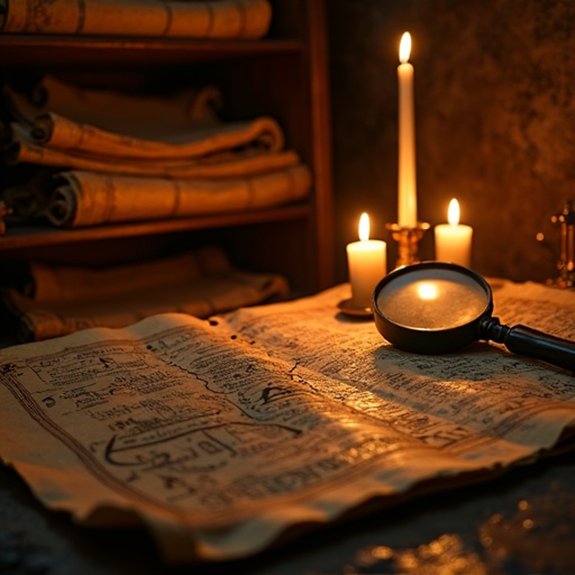
Examining the scrolls’ delayed publication sparked the most prominent conspiracy theories surrounding the Dead Sea Scrolls. Scholar Robert Eisenman’s 1990s claims fueled widespread speculation that the Vatican deliberately suppressed texts contradicting Christian doctrine. He’d argued that the scrolls contained explosive revelations about early Christianity that authorities wanted hidden.
Michael Baigent and Richard Leigh’s book “The Dead Sea Scrolls Deception” popularized theories about Catholic Church interference. They’ve accused the École Biblique’s Dominican scholars of orchestrating a cover-up to protect Church interests. The decades-long restriction of scroll access to a small academic circle strengthened these suspicions.
John Allegro’s controversial interpretations added another dimension. He’d claimed the scrolls revealed Christianity’s origins in a hallucinogenic mushroom cult, though scholars universally rejected his theories as unfounded sensationalism.
Common Theories or Explanations
While most scholars dismiss grand conspiracy claims, several theories attempt to explain the scrolls’ controversial history. The Vatican suppression theory suggests Catholic authorities deliberately delayed publication to protect church doctrine from texts that might challenge Christianity’s origins. Proponents claim the scrolls contain evidence of early Christian teachings that predate Jesus.
Another explanation centers on academic monopoly. A small group of scholars controlled scroll access for decades, possibly to maintain prestige and publishing rights. This “cartel” theory doesn’t require malicious intent but explains the forty-year publication delay.
Some theorists propose the scrolls reveal connections between early Christianity and the Essene sect, information religious institutions supposedly wanted hidden. Others suggest the delays weren’t conspiratorial but resulted from the texts’ complexity, fragmentary condition, and legitimate scholarly disputes over translation and interpretation.
Frequently Asked Questions
How Much Would an Authentic Dead Sea Scroll Fragment Cost Today?
An authentic Dead Sea Scroll fragment would cost millions of dollars today if legally sold. However, they’re considered priceless cultural artifacts belonging to Israel and Jordan, making legitimate private sales virtually impossible in today’s market.
Can Tourists Visit the Actual Caves Where the Scrolls Were Found?
Yes, tourists can visit several Qumran caves where the Dead Sea Scrolls were discovered. They’ll find Cave 4 most accessible through organized tours, though it’s viewed from below. Israel’s National Parks Authority manages the archaeological site.
What Preservation Techniques Are Used to Prevent Further Deterioration?
Conservation experts maintain the Dead Sea Scrolls in climate-controlled environments with precise temperature and humidity levels. They’ve developed specialized housing using acid-free materials, limit light exposure, and employ advanced imaging technologies for digital preservation.
Which Museums Currently Display Original Dead Sea Scroll Fragments?
The Israel Museum in Jerusalem displays most original fragments in its Shrine of the Book. Jordan’s Museum houses several scrolls, while institutions like Chicago’s Oriental Institute and California’s Azusa Pacific University exhibit individual fragments.
Are There Legal Penalties for Trafficking Fake Dead Sea Scroll Pieces?
Yes, traffickers face serious legal consequences. They’re charged with fraud, which can bring hefty fines and prison time. The FBI’s investigated several cases, and sellers have faced both criminal prosecution and civil lawsuits from deceived buyers.
The Lost Laboratory of Archimedes
The Mystery of Oak Island’s Flood Tunnels
The Lost Civilization in the Sahara
About The Author
