The Ghost City of Ki by Mongolian Lore
The Ghost City of Ki doesn’t appear on any modern map, yet thirteenth-century merchants swore they’d traded within its black-walled markets. Mongolian herders still whisper about the settlement that vanished between seasons, taking thousands of residents into oblivion. While skeptics dismiss Ki as folklore, recently discovered caravan logs describe its exact location along forgotten Silk Road branches. What they don’t explain is why every expedition sent to find it never returned.
Introduction
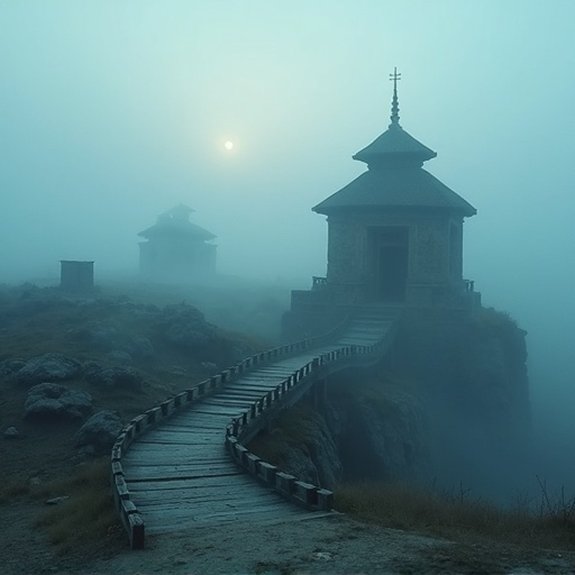
Why do some cities vanish while others endure for millennia? The Ghost City of Ki stands as Mongolia’s most enigmatic lost settlement, a place that once thrived along ancient trade routes before disappearing entirely from maps and memory. According to Mongolian oral traditions, Ki wasn’t destroyed by war or abandoned due to plague—it simply ceased to exist overnight. Shepherds who’d traded there for decades suddenly couldn’t find the road back. Merchants discovered their usual route led only to empty steppes. The city’s disappearance became legend, passed down through generations of herders who still debate whether Ki fell victim to supernatural forces or natural catastrophe. Today, archaeologists search for evidence of this phantom metropolis, hoping to solve Mongolia’s greatest geographical mystery.
Ancient Silk Road Testimonies
While most vanished cities leave behind ruins or foundations, Ki’s existence rests primarily on written accounts from Silk Road merchants who documented their visits between the 11th and 13th centuries. Persian trader Ibrahim al-Kashani described Ki’s distinctive black stone walls and underground water channels in his 1147 journal. Chinese merchant Wang Zhen noted the city’s peculiar custom of conducting all business transactions after sunset, claiming Ki’s residents believed daylight trading brought misfortune.
These testimonies share striking consistencies. Multiple accounts mention Ki’s three-tiered marketplace, its population of roughly 8,000 inhabitants, and the city’s sudden abandonment around 1260. Venetian explorer Niccolò Polo reportedly visited Ki just months before its desertion, describing empty streets despite intact homes filled with merchants’ goods. His account remains the last known Western documentation of the city.
Notable Cases or Sightings
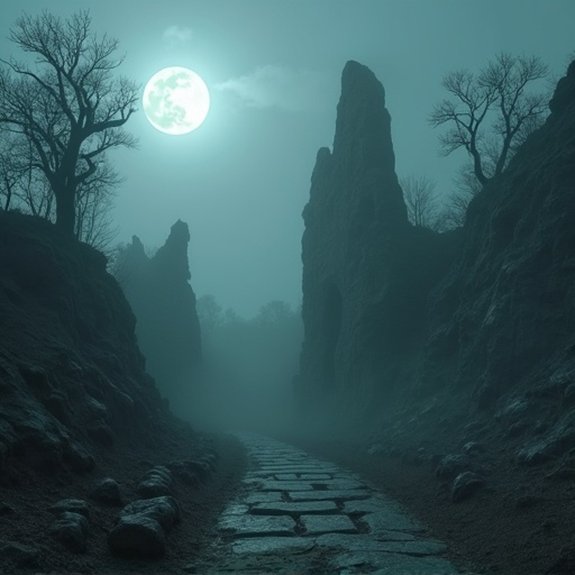
The abandoned city that Niccolò Polo witnessed in 1260 hasn’t stayed silent. Three centuries later, Ming dynasty merchant Liu Wei documented strange lights flickering through Ki’s empty towers during a sandstorm. He’d heard voices speaking an unknown dialect when no living soul stood nearby.
In 1923, Russian explorer Viktor Kozlov’s expedition reported finding fresh footprints in undisturbed sand within Ki’s central plaza. They’d vanished by morning. His photographer, Dmitri Volkov, captured what appeared to be human silhouettes in doorways, though the team insisted they’d explored alone.
Most recently, satellite imagery from 2019 showed thermal signatures moving through Ki’s streets at night. Ground teams found nothing. Local herders won’t approach the ruins after dark, claiming they’ve seen processions of figures wearing ancient Mongol armor walking the city’s main thoroughfare.
Common Theories or Explanations
Even though Ki’s phenomena defy easy explanation, researchers have proposed several theories grounded in natural science. Atmospheric scientists suggest temperature inversions create acoustic channels that carry sounds from distant settlements across the steppe. These conditions could amplify and distort normal sounds into the ethereal music witnesses describe.
Geologists point to underground caverns beneath Ki’s supposed location. Wind flowing through these spaces might generate resonant frequencies that produce the mysterious tones. Some propose electromagnetic anomalies in the region’s mineral deposits affect human perception, triggering auditory hallucinations.
Psychologists offer a different perspective. They argue mass suggestion and cultural conditioning prime travelers to experience what they expect. The isolation, fatigue, and sensory deprivation common in desert travel can induce hallucinations that align with local folklore about Ki’s ghostly presence.
Frequently Asked Questions
Can Tourists Visit the Alleged Location of Ki Today?
Tourists can’t visit Ki’s specific location since it’s a mythical ghost city from Mongolian folklore that doesn’t have a confirmed physical site. The legend describes it as appearing and disappearing mysteriously in Mongolia’s remote regions.
What Equipment Do Paranormal Investigators Recommend for Documenting Ki Phenomena?
Paranormal investigators recommend bringing EMF detectors, thermal cameras, and digital audio recorders to Ki’s alleged site. They’ll also suggest full-spectrum cameras for capturing anomalies and portable motion sensors to detect unexplained movements in the area.
Are There Any Traditional Mongolian Rituals to Protect Against Ki’s Influence?
Traditional Mongolian shamans perform protective rituals against Ki’s influence including burning juniper incense, chanting sacred mantras, wearing blessed amulets, and creating salt circles. They’ll also offer milk tea and butter lamps to appease wandering spirits.
Has the Mongolian Government Issued Official Statements About Ki?
The Mongolian government hasn’t issued official statements about Ki, as it’s considered folklore rather than a matter requiring governmental response. Authorities typically don’t comment on supernatural legends, focusing instead on tangible cultural heritage preservation efforts.
What Time of Year Do Locals Say Ki Appearances Are Most Frequent?
Locals claim Ki’s ghostly appearances peak during autumn’s changing months, particularly late September through October when desert winds shift. They’ve noted increased sightings during dust storms and temperature inversions that create atmospheric mirages across Mongolia’s steppes.

Underwater Pyramids in Yonaguni

The Lost Pools of Atlantis

Is There an Ice Man Frozen in a Glacier in Alaska?
About The Author
