The Lost City of Atlantis: New Theories
Archaeological discoveries in Spain and Santorini have reignited serious academic interest in Atlantis’s possible historical origins. While Plato’s tale has long been dismissed as philosophical allegory, submerged structures and evidence of advanced Mediterranean civilizations now suggest something more intriguing. Scientists aren’t claiming they’ve found the mythical city itself, but they’re uncovering compelling parallels between real ancient disasters and Plato’s detailed descriptions. The line between myth and history has suddenly become less clear.
Introduction
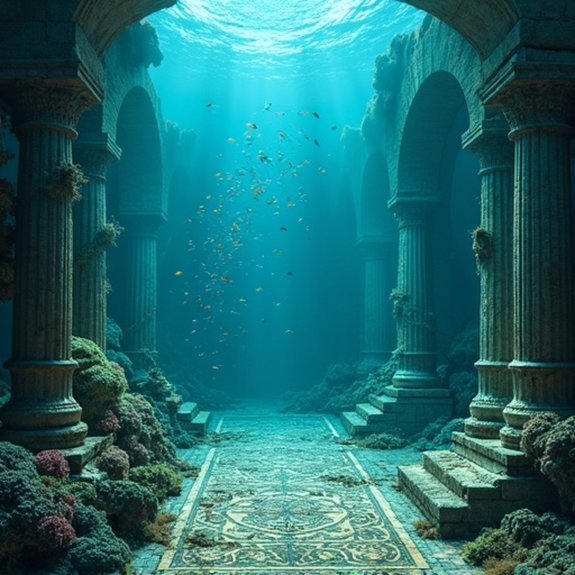
Three major archaeological discoveries in the past decade have reignited scientific debate about whether Atlantis was more than just Plato’s philosophical allegory. Marine archaeologists’ve uncovered submerged structures off Spain’s coast that match Plato’s descriptions of concentric rings and harbor systems. Advanced sonar mapping near Santorini’s revealed extensive Bronze Age settlements destroyed by volcanic eruption around 1600 BCE. Most intriguingly, researchers’ve identified megalithic ruins beneath Antarctica’s ice sheets through satellite imaging.
These findings’ve prompted historians to reconsider ancient flood myths across Mediterranean cultures. While skeptics maintain Plato invented Atlantis to illustrate political philosophy, proponents argue he’d based his account on collective memories of actual catastrophes. The convergence of geological evidence, ancient texts, and underwater archaeology’s created unprecedented momentum in Atlantis research, transforming what many dismissed as fantasy into legitimate scientific inquiry.
Plato’s Timaeus Dialogue Excerpt
The original source material that’s sparked centuries of speculation comes from Plato’s dialogues written around 360 BCE. In his “Timaeus,” Plato describes Atlantis as a powerful island nation located beyond the Pillars of Hercules. He claims Egyptian priests told Solon, an Athenian statesman, about this advanced civilization that existed 9,000 years before their time.
According to Plato’s account, Atlantis possessed sophisticated technology, massive naval forces, and controlled parts of Europe and Africa. The island featured concentric rings of water and land, elaborate palaces, and a central temple dedicated to Poseidon. Plato writes that the Atlanteans became morally corrupt, prompting the gods to destroy them. In a single day and night, earthquakes and floods sank the entire island into the ocean.
Notable Cases or Sightings
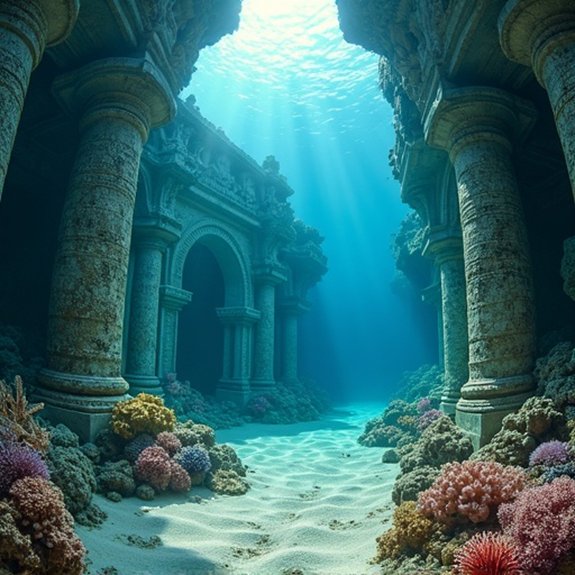
Where have modern explorers claimed to find evidence of Atlantis? In the 1960s, marine archaeologist Jacques Cousteau explored the Mediterranean’s eastern basin, searching near Santorini’s volcanic caldera. He didn’t find conclusive proof, but his expedition sparked renewed interest.
Robert Ballard, who discovered the Titanic, investigated the Black Sea in 2000. He found ancient shorelines and settlements 300 feet underwater, suggesting massive flooding occurred 7,500 years ago. While he doesn’t claim these ruins are Atlantis, some researchers link them to Plato’s story.
The Bimini Road near the Bahamas attracts significant attention. Discovered in 1968, this underwater rock formation resembles a paved pathway. Geologists explain it’s natural beachrock, but believers insist it’s Atlantean construction. Similar claims surround structures off Cuba’s coast and Japan’s Yonaguni Monument.
Common Theories or Explanations
Although Plato likely invented Atlantis as a philosophical allegory about hubris and corruption, scholars have proposed various historical inspirations for his tale. The Minoan civilization on Crete, destroyed around 1450 BCE by volcanic eruptions and tsunamis, shares striking parallels with Plato’s description. Others point to the Bronze Age collapse or the flooding of Doggerland as potential sources.
Some researchers argue Atlantis represents a cultural memory of actual prehistoric floods. They’ve identified submerged landmasses worldwide, from the Mediterranean to the Caribbean, as possible locations. Alternative theories suggest Plato drew from contemporary events, like Athens’ failed invasion of Sicily or Helike’s destruction by earthquake in 373 BCE. While most academics dismiss literal interpretations, these theories demonstrate humanity’s persistent fascination with lost civilizations and catastrophic change.
Frequently Asked Questions
What Modern Technologies Are Being Used to Search for Atlantis Today?
Researchers’re using satellite imagery, underwater drones, sonar mapping, and LiDAR technology to scan ocean floors and coastal regions. They’ve deployed magnetometers to detect buried structures and ground-penetrating radar to explore potential archaeological sites worldwide.
How Much Funding Goes Into Atlantis Research Expeditions Annually?
Researchers don’t track specific annual funding for Atlantis expeditions since they’re often privately financed or embedded within broader archaeological projects. Estimates suggest enthusiasts and institutions spend between $2-10 million yearly on various searches worldwide.
Which Universities Offer Courses or Degrees Focused on Atlantis Studies?
No accredited universities offer degrees specifically in Atlantis studies. However, scholars can explore Atlantis through classical studies, archaeology, or philosophy programs at various institutions. It’s typically studied as mythology or ancient literature rather than factual history.
Are There Any Planned Future Expeditions to Potential Atlantis Sites?
Several archaeological teams haven’t announced confirmed expeditions specifically for Atlantis. However, ongoing underwater surveys in the Mediterranean, particularly near Santorini and off Spain’s coast, continue examining ancient settlements that some researchers link to Atlantis theories.
What Qualifications Do Researchers Need to Join Atlantis Exploration Teams?
Researchers typically need advanced degrees in archaeology, marine geology, or oceanography. They’ll require diving certifications, underwater excavation experience, and expertise in ancient civilizations. Physical fitness, sonar operation skills, and multilingual abilities often prove essential.

The Riddle of the Senkaku Ruins

The Beale Ciphers: A Treasure Still Buried?

The Underwater Ruins of Dwarka
About The Author
