The Lost City of Ubar: Atlantis of the Sands
The Lost City of Ubar, often dubbed the “Atlantis of the Sands,” presents a fascinating puzzle in the annals of ancient history. Once a thriving trade center for incense and spices, its allure lies in its mysterious disappearance beneath the sands of the Arabian Peninsula. Despite numerous expeditions aimed at uncovering its secrets, the city remains elusive. What drives the intrigue surrounding Ubar, and what might it reveal about our past?
Introduction
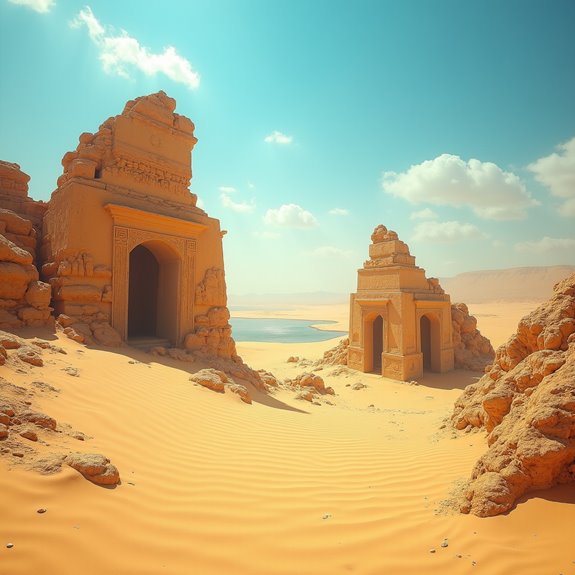
The Lost City of Ubar, often shrouded in mystery, has captivated explorers and historians alike for centuries. Fabled as the “Atlantis of the Sands,” it’s been described in ancient texts as a prosperous city housing wealth and wisdom. Located somewhere in the Arabian Peninsula, many have undertaken journeys to uncover its secrets, but Ubar remains elusive. Tales suggest it met a catastrophic end, swallowed by a catastrophic sandstorm or an earthquake, leaving no trace behind. Despite numerous expeditions, the city’s ruins haven’t been definitively discovered, fueling speculation and debate. The enchantment of Ubar lies in its myths and the quest for truth, inspiring many to search for a lost world that might still be hidden beneath the sands of time.
Ancient Trade Routes’ Significance
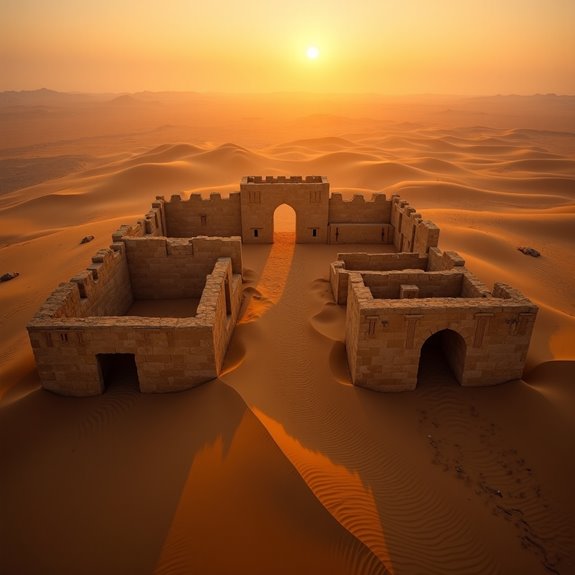
While many myths surround the Lost City of Ubar, the significance of ancient trade routes plays an essential role in understanding its historical context. Ubar’s wealth likely stemmed from its strategic location along major trade routes connecting the Arabian Peninsula to Africa and Asia. These routes facilitated the exchange of goods like frankincense, myrrh, and spices, making the city a commercial hub. Merchants traveled through the region, spreading culture and knowledge, further enriching Ubar’s influence. The trade routes also contributed to the city’s eventual decline, as shifting trade patterns and environmental changes led to diminished prosperity. Investigating these routes helps scholars piece together Ubar’s legacy and its fundamental relationship with the ancient world’s economic networks.
Notable Cases or Sightings
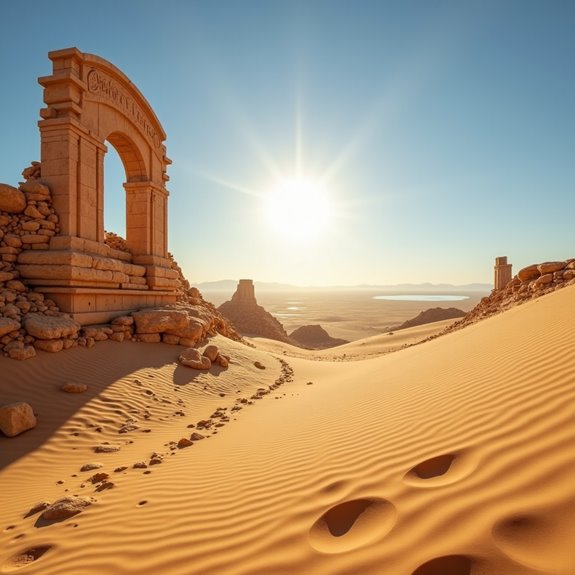
Many explorers and archaeologists have reported intriguing cases and sightings related to the Lost City of Ubar throughout history. In the 3rd century, the Greek geographer Ptolemy mentioned a great city in the Arabian Peninsula, igniting curiosity and subsequent quests. In the 19th century, explorer Bertram Thomas claimed to have uncovered ruins in the Rub’ al Khali desert, hinting at Ubar’s existence. Similarly, Wilfred Thesiger, who trekked the vast desert in the 1940s, encountered tales of a sunken city from local tribes. More recently, satellite imagery in 2014 revealed structures resembling ancient settlements beneath the sands, sparking excitement among researchers. Each of these sightings fueled the ongoing fascination with Ubar, connecting the past to modern exploration efforts.
Common Theories or Explanations
Given the intriguing accounts of explorers and the allure of ancient mysteries, several theories have emerged regarding the Lost City of Ubar. Some believe Ubar was a prosperous trade hub, thriving on the incense trade, while others suggest it symbolized a moral decay that led to its downfall. Another popular theory ties Ubar to geological phenomena, positing that shifting sands could have buried the city. Some researchers argue that Ubar may have never existed, viewing it as a myth inspired by real locations. Additionally, archaeologists speculate that certain ancient sites in Oman or Yemen might hold the key to Ubar’s secrets. Each theory reflects humanity’s enduring fascination with lost civilizations and their lessons for future generations.
Frequently Asked Questions
What Modern Technologies Aid in the Search for Ubar?
Modern technologies, like satellite imaging, ground-penetrating radar, and aerial drones, greatly enhance the search for Ubar. These tools help researchers analyze terrain and identify potential archaeological sites, increasing the chances of uncovering the lost city.
Are There Any Archaeological Findings Related to Ubar?
Recent archaeological findings haven’t definitively pinpointed Ubar’s location. However, explorers have unearthed ancient artifacts and inscriptions in the Arabian Peninsula, suggesting a once-thriving civilization. These discoveries ignite curiosity and fuel ongoing investigations into Ubar’s ancient mystery.
How Does Ubar Relate to Other Lost Cities?
Ubar shares similarities with other lost cities, such as Atlantis and El Dorado, in its mythical status and the allure of hidden treasures. Explorers and researchers seek these legendary places, searching for lost civilizations and untold stories.
What Cultural Impact Has Ubar Had in Literature?
Ubar’s allure has inspired countless literary works, beckoning authors to explore themes of adventure, mystery, and lost civilizations. Its mythical qualities captivate readers, encouraging a deeper appreciation for vanished cultures and the human spirit’s quest for discovery.
Are There Organized Expeditions to Find Ubar Today?
Yes, organized expeditions continue to search for Ubar today. Adventurers and archaeologists collaborate, exploring various regions in hopes of uncovering its mysteries, driven by historical accounts and the allure of lost treasures buried beneath the sands.

The Forgotten Tomb Beneath the Louvre

The Lost City of El Dorado

The Mystery of Kites in Ancient Geoglyphs
About The Author
