The Lost Kingdom in Madagascar
Madagascar’s highlands have yielded an archaeological revelation that’s rewriting the island’s history. Between 800 and 1200 CE, a sophisticated kingdom flourished across twelve square kilometers, complete with defensive walls and evidence of Arabian trade routes. Yet this thriving civilization vanished around 1200 CE without signs of conflict or catastrophe. What drove these ancient builders to abandon their impressive settlement, and where did they go?
Introduction
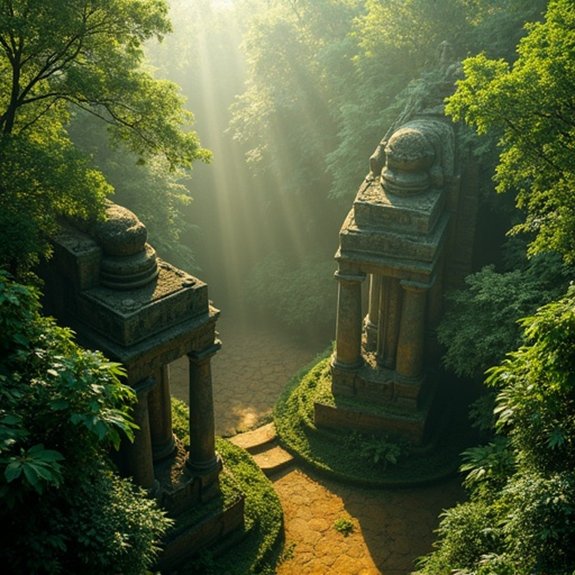
When archaeologists first stumbled upon the ancient stone structures hidden deep in Madagascar’s remote highlands, they couldn’t have imagined they’d discovered evidence of a lost kingdom that thrived for centuries before mysteriously vanishing. The ruins, located near Ankazobe Province, reveal sophisticated architecture unlike anything previously documented on the island. Carbon dating suggests the civilization flourished between 800 and 1200 CE, predating known Malagasy kingdoms.
The site spans twelve square kilometers and includes defensive walls, residential complexes, and ceremonial platforms. Pottery fragments show trade connections with East Africa and Arabia. Most intriguingly, inscriptions feature an unknown script that’s resisted translation attempts. The kingdom’s sudden abandonment around 1200 CE remains unexplained. No signs of warfare or natural disaster exist, leaving researchers puzzled about what caused an entire civilization to disappear.
Ancient Malagasy Royal Chronicles
How did Madagascar’s ancient royal families document their histories before written records became common? They relied on oral traditions passed through generations of court historians called “mpitantara.” These storytellers memorized vast genealogies, battles, and royal decrees with remarkable accuracy. They’d perform ritualized recitations during ceremonies, ensuring multiple witnesses could verify the accounts.
When Arabic script arrived through coastal traders in the 10th century, some kingdoms began recording their histories in “sorabe” manuscripts. These documents, written on tree bark paper, blended Malagasy oral traditions with Arabic writing systems. The Antemoro people particularly excelled at maintaining these chronicles, which tracked royal successions, territorial disputes, and diplomatic agreements. Today’s historians cross-reference these written sources with continuing oral traditions to reconstruct Madagascar’s complex royal past.
Notable Cases or Sightings
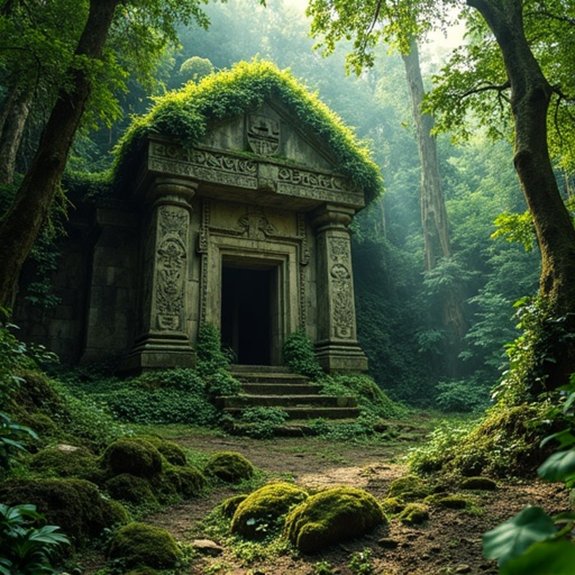
Although French colonial maps from the 1890s dismissed reports of hidden settlements in Madagascar’s remote highlands, explorers have documented several compelling discoveries over the past century. In 1932, botanist Henri Perrier stumbled upon carved stone pillars bearing royal insignia near Andringitra’s peaks. He’d photographed the monuments before a landslide buried them three days later.
British archaeologist James Whitmore reported finding terraced foundations in 1967 while tracking lemurs through Marojejy’s forests. His team couldn’t relocate the site during subsequent expeditions. Most recently, satellite imagery from 2018 revealed geometric patterns beneath Makay Massif’s vegetation that weren’t natural formations. Ground surveys haven’t reached these coordinates due to the terrain’s inaccessibility. Each discovery strengthens theories about Madagascar’s lost highland kingdom.
Common Theories or Explanations
Since these discoveries can’t be easily explained by conventional archaeology, researchers have proposed three main theories about the lost kingdom’s origins. The first suggests pre-Austronesian settlers arrived from Africa millennia before Madagascar’s accepted colonization date. They’d have developed an advanced civilization that later vanished through natural disasters or disease.
The second theory proposes contact with ancient Mediterranean or Middle Eastern traders who established a trading post that evolved into a kingdom. This’d explain the non-African architectural elements and advanced metallurgy found at various sites.
The third, more controversial theory involves Tamil merchants from India creating a maritime empire hub in Madagascar. Proponents cite linguistic similarities and shared agricultural techniques as evidence. Each theory attempts to reconcile the anachronistic artifacts with Madagascar’s known history, though none fully explains all discoveries.
Frequently Asked Questions
What Modern Technology Has Been Used to Search for the Lost Kingdom?
Archaeologists’ve employed satellite imagery, LiDAR technology, and ground-penetrating radar to search for the lost kingdom. They’ve also used drone surveys, GPS mapping, and advanced dating techniques to analyze potential sites and artifacts across Madagascar’s terrain.
How Can Tourists Safely Visit Areas Associated With the Lost Kingdom?
Tourists can safely explore Madagascar’s historical sites by hiring certified local guides, joining organized tours, respecting sacred spaces, and visiting during dry season. They’ll need proper permits, vaccinations, and should avoid remote areas without escorts.
What Permits Are Required for Archaeological Excavations in Madagascar?
Archaeological teams need Madagascar’s Ministry of Culture’s excavation permit, which they’ll obtain after submitting detailed research proposals. They’re also required to secure environmental clearance and collaborate with Madagascar’s Institute of Civilizations for site access.
Which Museums Display Artifacts Potentially Linked to the Lost Kingdom?
Madagascar’s National Museum in Antananarivo displays pottery fragments and stone tools that archaeologists believe could link to ancient kingdoms. The University of Antananarivo’s Archaeological Museum also houses similar artifacts, though they haven’t definitively confirmed connections.
How Much Funding Has Been Allocated for Lost Kingdom Research?
No specific funding amounts have been publicly disclosed for Lost Kingdom research in Madagascar. Archaeological projects there typically receive grants ranging from thousands to millions of dollars through international foundations, universities, and Madagascar’s government agencies.

Lost Languages Still Untranslatable

What’s Buried Beneath the Mounds of Cahokia?

The Lost Villages Under the Caspian
About The Author
