The Lost Mines of the Pharaohs
Ancient Egypt’s pharaohs controlled vast mining operations that’ve vanished beneath millennia of sand and time. These sites once yielded gold, turquoise, and precious stones that adorned royal tombs and funded empires. Modern archaeologists chase fragments of hieroglyphic maps and weathered inscriptions, yet most locations remain hidden. What drove thousands of workers into the desert’s harsh depths, and why did these lucrative operations disappear so completely from historical record?
Introduction
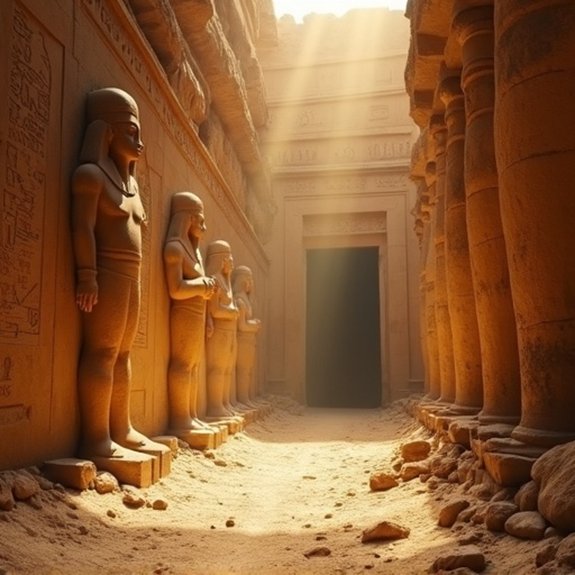
While ancient Egypt’s pyramids and temples have captivated archaeologists for centuries, the pharaohs’ lost mines remain one of history’s most tantalizing mysteries. These legendary sites once supplied the gold, turquoise, and precious stones that adorned royal tombs and funded massive construction projects. Ancient papyri and hieroglyphic inscriptions describe mines scattered across Egypt’s Eastern Desert and the Sinai Peninsula, but many locations have vanished beneath shifting sands.
The pharaohs didn’t just seek wealth—they pursued divine materials believed to possess magical properties. Gold represented the flesh of gods, while lapis lazuli symbolized the heavens. Modern expeditions have uncovered evidence of extensive mining operations, including workers’ settlements, tools, and inscribed markers. Yet countless mines mentioned in ancient texts haven’t been found, taking their treasures and secrets with them.
Ancient Egyptian Mining Expeditions
How did ancient Egyptian rulers organize expeditions to extract precious materials from the desert’s most remote and treacherous regions? Pharaohs deployed massive mining operations that involved thousands of workers, soldiers, and specialized craftsmen. They’d establish temporary settlements near extraction sites, complete with housing, workshops, and temples to maintain morale during months-long campaigns.
Royal scribes documented these ventures meticulously. Expeditions to Sinai’s turquoise mines required 3,000 men, while gold extraction in Nubia’s Eastern Desert demanded even larger forces. Officials coordinated complex logistics—water transport, food supplies, and tool maintenance across hundreds of miles of harsh terrain. Mining teams used copper chisels, stone hammers, and fire-setting techniques to break through solid rock. These state-sponsored missions weren’t just economic ventures; they demonstrated pharaonic power and secured materials essential for royal regalia and religious artifacts.
Notable Cases or Sightings
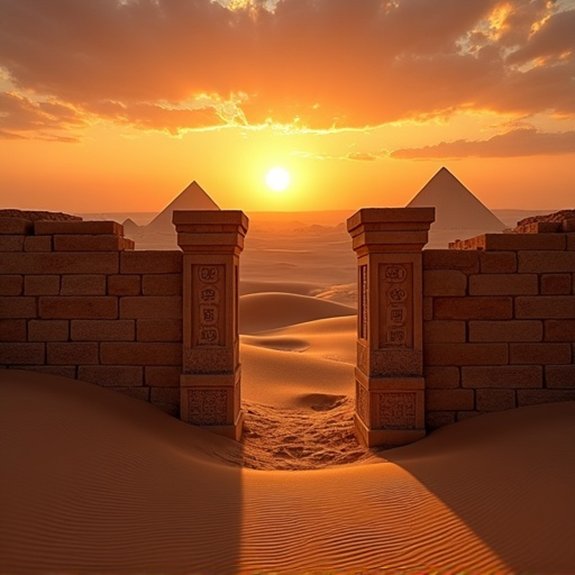
Throughout history, treasure hunters and archaeologists have reported discovering evidence of Egypt’s legendary lost mines. In 1905, British explorer Arthur Weigall claimed he’d found ancient turquoise workings in Sinai’s Wadi Maghara, complete with hieroglyphic inscriptions naming Pharaoh Sneferu. German geologist Georg Schweinfurth documented abandoned gold mines near Wadi Hammamat in 1885, noting tool marks and pottery fragments dating to the Middle Kingdom.
More recently, satellite imagery has revealed potential mining sites in the Eastern Desert. In 2019, Egyptian archaeologists announced they’d located what might be Cleopatra’s emerald mines near Sikait. Local Bedouins have long shared stories of stumbling upon ancient shafts filled with copper ore. These discoveries haven’t yielded the mythical treasures many seek, but they’ve provided valuable insights into ancient Egyptian mining techniques.
Common Theories or Explanations
Although ancient Egyptian texts describe vast mineral wealth flowing from desert mines, modern scholars can’t agree on where these riches actually came from. Some archaeologists believe the mines weren’t lost but exhausted, their locations abandoned once depleted. Others argue that shifting sand dunes have buried entrance shafts, making rediscovery nearly impossible without extensive excavation.
Climate change theories suggest ancient water sources dried up, forcing miners to abandon otherwise productive sites. Several researchers propose that pharaohs deliberately obscured mine locations through false records and executed workers to protect state secrets. A competing explanation holds that later Roman and Byzantine mining operations destroyed Egyptian markers and maps. Geographic theories point to tectonic activity altering landscapes beyond recognition. Most experts now think multiple factors combined to hide these legendary sources of gold, turquoise, and copper.
Frequently Asked Questions
What Modern Technology Is Used to Search for Lost Egyptian Mines Today?
Archaeologists use satellite imagery, ground-penetrating radar, and LiDAR technology to locate lost Egyptian mines. They’re employing drones for aerial surveys, magnetometers to detect mineral deposits, and GPS mapping systems to document potential ancient mining sites.
Can Tourists Visit Any Rediscovered Ancient Egyptian Mine Sites?
Yes, tourists can visit several rediscovered ancient Egyptian mine sites. They’ll find the turquoise mines at Serabit el-Khadim in Sinai accessible, and Wadi Hammamat’s stone quarries offer guided tours showcasing ancient mining inscriptions and techniques.
What Permits Are Required for Archaeological Excavation of Potential Mine Locations?
Archaeological teams need excavation permits from Egypt’s Ministry of Tourism and Antiquities. They’ll require security clearances, environmental impact assessments, and partnership agreements with Egyptian institutions. Foreign missions must also obtain diplomatic approval through their embassies.
How Much Would Artifacts From Lost Pharaonic Mines Be Worth Today?
Artifacts from lost pharaonic mines could fetch millions at auction, though experts can’t estimate precise values without seeing them. Ancient tools might sell for thousands, while decorated items or royal insignia would command exponentially higher prices.
Are There Any Active Expeditions Currently Searching for Undiscovered Mines?
Yes, several archaeological teams are actively searching for undiscovered pharaonic mines in Egypt’s Eastern Desert and Sinai Peninsula. They’re using satellite imaging, ground-penetrating radar, and studying ancient papyri that reference mining locations from antiquity.



About The Author
